Episode Transcript
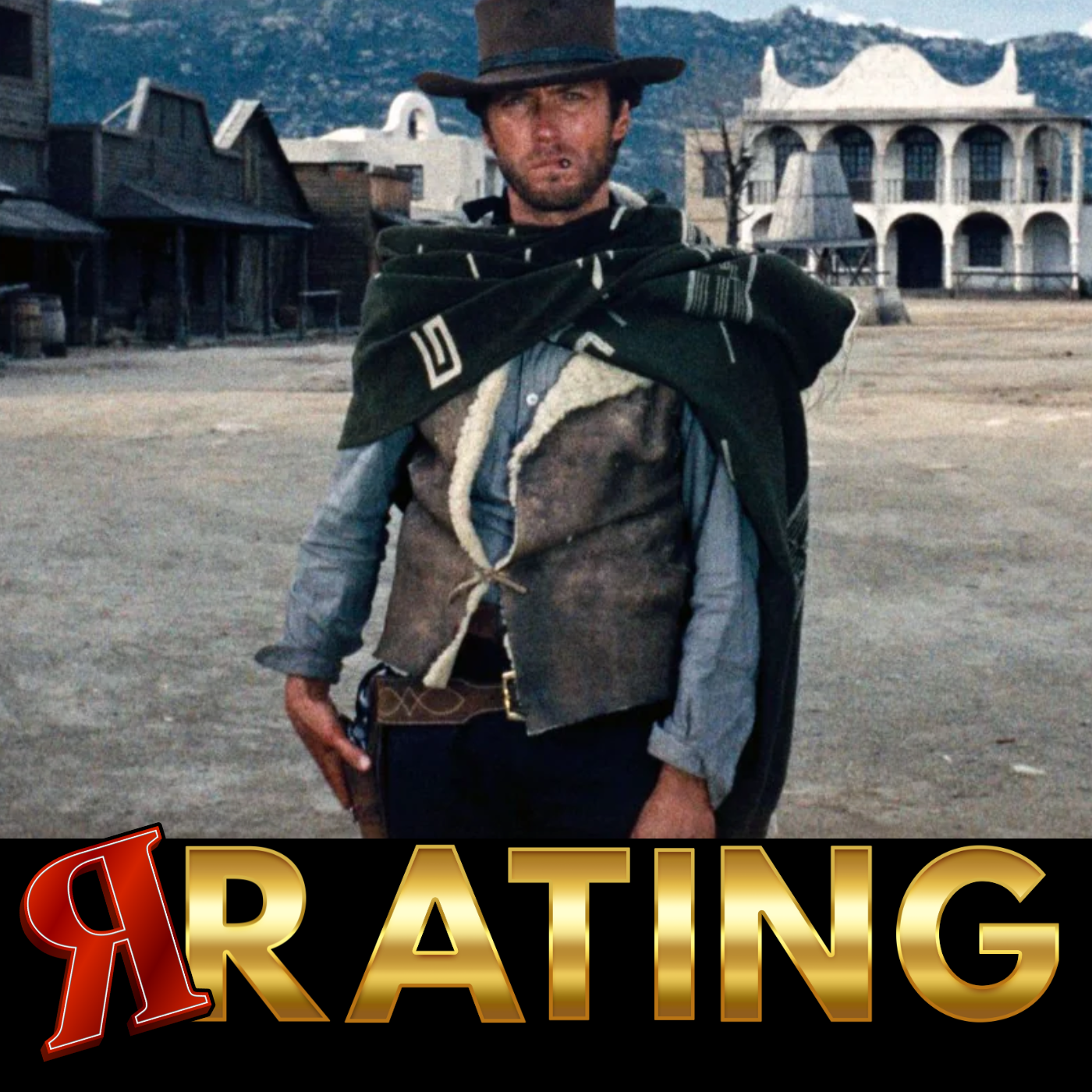
[00:00:00] Speaker A: A fistful of dollars.
[00:00:02] Speaker B: 1964.
San Miguel is bogged down by greed and corruption as two gangs compete to keep the town under their thumb.
That is, until a stranger wanders through. A man who is equally quick with a pistol as he is quick witted. A man with steely eyes and a heart of gold.
A man who comes for a fistful of dollars believes the hero of San Miguel.
[00:00:35] Speaker C: All right. Of course, this week we are talking about A Fistful of Dollars. Well done, Will. Thank you very much for that. Sorry, Brian, you're about to say something.
[00:00:41] Speaker A: Correct me if I'm wrong, but he ends up leaving empty handed.
[00:00:44] Speaker C: Right?
[00:00:44] Speaker A: I mean, he doesn't.
[00:00:45] Speaker C: Yeah, that was the impression I got.
[00:00:48] Speaker A: We'll get there.
[00:00:49] Speaker C: Yeah.
[00:00:49] Speaker B: Heart of Gold. Heart of gold.
[00:00:53] Speaker C: All right, Brian, you were saying just before we got started, you just found out what the term spaghetti western came from. Do you want to enlighten us before we get started into this one?
[00:01:01] Speaker A: So it is my impersonation, and you're right, these hats are super fun and super gone.
So it's. It's my understanding that spaghetti westerns were actually filmed over in Spain, whatever, where they make spaghetti.
I'm an American, as you can tell, so I don't know my geography, but that's why they're called.
They're filmed over there. And that's, that's what I was told is why it's spaghetti. Right.
So that's all I know.
[00:01:33] Speaker B: Nice.
[00:01:34] Speaker C: So I'm gonna assume then I, I kind of guessed that, but I'm gonna assume that's why some of the voices and the actual, like, mouthing seemed a little bit off. Is. Yes, they are filmed in Spanish and then dubbed over.
Is that including Clint Eastwood? Is he also dubbed over or is he speaking?
[00:01:52] Speaker B: He dubbed. Yeah. So he was dubbed for the release in Europe and then he dubbed himself when it released in America.
[00:02:01] Speaker C: Gotcha.
[00:02:01] Speaker B: Because they filmed. They filmed with no. No sound at all on set.
[00:02:05] Speaker C: I wondered about that. I wonder if that's how they got such clear sound as they did like a sound booth for like the actual lines and then just kind of put it over top of. Yeah, whatever. Because like, for the time, like this movie came out, 1964 was probably made 62. 63.
[00:02:16] Speaker B: Somehow it was made in 64.
[00:02:18] Speaker C: Okay.
[00:02:19] Speaker B: Release 64 in Europe and then released in 67 in Americas.
[00:02:24] Speaker C: Sure. But then they would have been filming it in probably 63. 64. So like, at that time.
[00:02:28] Speaker B: Yeah, maybe 63. Yeah.
[00:02:29] Speaker C: Like getting that kind of sound quality outside in the middle of nowhere. Where they were filming this, I thought was pretty good. But that makes sense if they're actually recording it in a film booth and then dubbing it over after the fact.
This is my first time watching this. This might be my first time ever watching a spaghetti Western. Brian, I believe you're the biggest Western fan among us. Have you. Is this a revisit for you? Is this your first time?
[00:02:50] Speaker A: Yeah, I saw this long time ago when I was a young man and I didn't remember much about it. I do remember it being better than it was, but this is my second time back into the movie. Will, how many times have you seen this? Probably like two dozen, I'm guessing. No, no, no.
[00:03:06] Speaker C: I. I was gonna say, really, I
[00:03:09] Speaker B: don't watch a lot of western movies. I. I've seen this movie again countless years ago.
Yeah, I've seen it. I haven't revisited in any time in the near present. So it was a. It was a fun re watch for me because it was almost like it was new again.
[00:03:28] Speaker C: Fair enough. And as I mentioned, this is my first time watching this one. My family's away, but I actually got to watch this with my dad. I don't get to watch a lot of movies with him. So that was actually kind of fun for me, just having him over and explaining experiencing that with him. I believe it was his first time watching it as well. If you had seen it before, he didn't make any comment about that. So for both of us visiting this for the first time, it was not what I was expecting it to be, but I still enjoyed it for what it was. Now, that being said, these Sergio Leone movies are really highly regarded, and I don't know if I'd put it up quite at that level based off of just this movie. But from what I hear, they just get better and better as this franchise goes on, which is unlikely. Like most of the time with franchises, we've been watching them. The first movie is great, and then it kind of falls off after that looking like this builds up to the point where, like the Good, the Bad and the Ugly, the third movie in this franchise, is by far the best one. I've never seen it, so I don't know.
[00:04:22] Speaker B: I think a little bit, but a lot of people do lean that way.
[00:04:27] Speaker A: Okay, a couple of things. So it's my understanding that one, the character Clint Eastwood plays is the man with no Name. Although they do call him Joe in this movie. Or Josie, I've heard also. So I'm not sure I didn't stick around for the credits, because I, too, did watch this with my father, actually my mother as well, which is weird because they're divorced. That was a whole different story. Anyway, so I didn't stick around for the credits to see what his actual name was for the character, but he is known as the man with no Name, so I'm curious about that. But also I'm told that all three of these movies have no connection whatsoever other than the character Clint plays in all three of them.
[00:05:10] Speaker C: Yeah, I was kind of getting the impression that this might be another Mad Max kind of a story. Like, just somebody comes in out of nowhere, does what he's going to do in the town, leaves, and it's almost like he's a legendary character more than an actual character. Hence, he doesn't even have a name in this.
I don't know if that's accurate or not.
I was looking a little bit. I should have researched this particular part a little bit more. It looked like potentially these movies take place in reverse order. Like, Fistful of Dollars is actually the third one, even though it was made first.
[00:05:37] Speaker A: And Goodbye, you should watch the back, is what I was told.
[00:05:41] Speaker C: And I wasn't told that, but that kind of makes sense.
[00:05:43] Speaker A: And be like, which way are we watching these?
[00:05:46] Speaker C: Yeah, I was doing chronology in the way they were made, as usually that's the way the story is told, but. Sorry. Well, you look like you're chomping at the bit.
[00:05:53] Speaker A: There's so much to talk about.
[00:05:54] Speaker B: Dan was worried.
[00:05:55] Speaker A: There's not much to talk about.
[00:05:56] Speaker B: There's so much to talk about.
[00:05:57] Speaker C: I was worried. I don't have much to say as
[00:05:59] Speaker B: far as, like, the chronological order.
The Good, the Bad and the Ugly takes place during the war, so it is the earliest, bar none. There's a grave stone in this movie that says 73 in it, I believe. And then I believe in A Few Dollars More, there's a something that states the date is 72. So I do believe it's before, but it could be after. I'm not 100 on that, but.
Oh, man, you guys said so much. And now there's. I. I just don't know where to go from there. The man with no Name was specifically created as a marketing ploy by.
I think it's. What's the company name? It's the United States company that distributed the film when it came to the Americas. And they marketed as the man with no Name trilogy because all three of the films came out in the same year, 1967.
Because One, the first film A Few Dollars More had legal issues with a Japanese filmmaker because he was claiming that this was a remake of his film, and so it. It delayed being distributed.
[00:07:15] Speaker A: And that was actually a question I had for you, Will. I hear that a lot of these are either copies or remakes or whatever of some sort of, like, ronin stories, of Japanese warrior, samurai warrior stories. And I know that a lot of westerns do translate well to that idea. The lone warrior coming into a town and settling a feud between two fighting gangs. This is. This is similar in both Westerns and samurai movies. Yeah, so I know.
[00:07:45] Speaker C: Sorry. Well, just out of curiosity, I. Sorry, Brian, I didn't mean to step on you. I didn't. I thought you were done. Was the Japanese director, was it Akira Kurosawa?
[00:07:53] Speaker B: Yes. And his film was Yojimbo, which was a 1961 film about a ronin samurai with no home.
And he goes into a town that has two feuding gangs trying to take over the gambling market in that town, and he plays the gangs against each other. And so much so their. Their lines are, like, lifted from the page.
Not only that, like, so here's the one line, like, right at the beginning, Yojimbo's script is casket maker, two coffins. He goes and kills three guys.
Nope, better make it three. As he walks away. And then a fistful of dollars. Get three coffins ready. And then he goes and kills the guys. My mistake. Four coffins. So it's like literally the same words.
And then throughout the protagonist in the Japanese samurai film, he's, like, constantly playing with his beard hair. And I don't know if you noticed Clint Eastwood also doing the same with his beard. Like, very, very similar stories. And obviously Akira.
[00:09:01] Speaker A: I didn't even notice the beard thing, but maybe that's because I do it all the time myself.
[00:09:04] Speaker B: Maybe. Yeah, yeah, yeah. So Akira Kurosawa wrote to Leone and. And demanded, you know, a little bit of something, and he got 15 of distribution of this movie and actually made more money off of this movie than any of his own movies, actually, so.
[00:09:21] Speaker C: Oh, really?
[00:09:22] Speaker A: Okay, now, a member of our chat points out, and. And we don't fact check here because, well, I'm American, so I never fact check. Technically, this was based off a book called Red Harvest, Yojimbo. And the Last Man Standing was also.
So. I mean, if they were both based off of the same story, they could just draw similar concepts. Maybe they didn't rip one another off, they were just both kind of coming from the same source material. I don't know.
[00:09:45] Speaker B: It's very Possible. I haven't read that book, but I've just seen each movie and, like, the correlation is pretty abundant there.
[00:09:53] Speaker C: So, yeah, like, the line you quoted is pretty much dead on. It's hard to argue.
[00:09:58] Speaker B: And even the mannerisms, down to the mannerisms of the. Of the protagonist is. Is kind of undeniable. So. Okay, yeah, it's an interesting backstory, so it's crazy in that way, but you're right. Also, Brian, a lot of western movies kind of mirror that of old Japanese movies as well. Like Magnificent Seven was kind of a remake of Seven Samurai. Seven, Seven Samurai and things like that. And you see it throughout because, again, it just really plays well in the west because it's kind of this lawless frontier and it's the end of the samurai era into the lawlessness there as well. So it just. It just kind of goes hand in hand.
[00:10:38] Speaker A: It seems Chat's pretty hot on these western movies. I'm glad they're getting excited. And if. For those of you watching this video on YouTube, you can always come to Dan's channel and on Twitch and watch us do this live while we record these and get involved in that conversation. Though we don't communicate too much with Chat, we're always reading what they have to say.
[00:10:58] Speaker C: Twitch tv, the Mongolie show, just in case you're curious.
[00:11:01] Speaker A: There we go.
[00:11:02] Speaker C: Not Dan's channel. That won't get you very far.
[00:11:03] Speaker A: In the links below is what I usually say because I can't remember stuff.
So the big question, guys, did you enjoy this movie? Was it fun for you? Did it entertain you? Because I did. I watched it with my family. We had a good laugh at a couple of sequences in this that were kind of hokey or whatever. And there were some interesting things in this that kept me engaged. It wasn't the most riveting story ever, but I did have fun watching this movie. I like westerns and this was good for me. Dan, how about you? Was it. Was it something you really liked?
[00:11:34] Speaker C: Oh, you're jumping straight to me. Okay. I was gonna go to Will.
I am not a huge western fan. I love Tombstone, and there have been a couple others that are. Are enjoyable for me, but I'm not a big fan of the genre as a whole, as so I don't seek them out. So I don't have a whole lot to compare this to on that front.
That being said, watching it with my dad, I did enjoy this movie. I didn't love it. I don't know that it's one that I'm going to revisit over and over again. But I enjoyed it enough that I'm actually really looking forward to watching Few Dollars More and the Good, the Bad and the Ugly to see where this character goes, where the story goes, where Sergio Leone grows as a director. You hear about how incredible he is as a director. I'm not entirely sure I feel all of that based off of this movie alone. But that's also why I wanted to have this conversation with you guys, because it might be that fact where, like, I'm not giving him enough credit for starting some of the things that he started. I know, Brian, we've talked about Citizen Kane in the past. I absolutely love that movie. You didn't enjoy it as much. And a chunk of that is because, like, a lot of what happens, that movie is like happening for the very first time. And I get the impression that might be happening with this one, but I'm just not aware of it now. That being said, you asked if I enjoyed this movie. Yes, I did. I really, I. There are parts of it that I found really interesting. There are definitely qualms that I have with it. I didn't love it. I didn't think that this is perfect by any stretch of the imagination.
But I'm really happy that I watched it. I'm really curious to see where the rest of the franchise goes. What about you, Will?
[00:12:55] Speaker B: You know me, I'm a sucker for low budget films and that is exactly what this is. I believe it was like maybe Leone's second or third movie. So he's really kind of just finding himself and I really love watching that unfold on the screen. And he does take a lot of things that weren't in typical westerns and push that into the forefront to the point where this movie kind of revitalized Westerns as a whole.
Westerns kind of were fading into obscurity by the late 50s, into the 60s, and this kind of really reignited the flame because it was such a different take.
Not only the, the music behind it and the composition of the music, which is wonderful, I think, but also the, the protagonist.
Typically cowboy heroes were clean shaven and morally good to their bones. And in this movie you've got Clint Eastwood's character, who is not clean shaven, he is a little bit shady. He's pitting two gangs against each other. He's just in it to get a fistful of dollars. And I think that was like a really interesting take compared to the old classic westerns.
And so I really appreciate a lot of the Things that happen in this movie. And like you said, a lot of people think that Leone just grows as a director as he comes into his own. But this was that starting point. And I really like seeing the starting point of people's genius, I guess.
[00:14:27] Speaker C: Yeah.
I will say this is also the youngest Clint Eastwood I've ever seen. I don't know if this is his first movie, but it's got to be early on. He's a good looking man. Like, I, I'm used to him being an old man, you know what I mean?
[00:14:38] Speaker B: Right.
[00:14:39] Speaker C: So, like seeing him as a young man, like, you're right. Like, he's not clean shaven. He's kind of a badass. He's kind of funny in this movie, but like, he is a leading man. And again, I don't know if this is his first movie, but if this is like, it is a strong start for him.
[00:14:54] Speaker B: Yeah.
[00:14:54] Speaker C: Even though he doesn't have a lot of lines necessarily.
[00:14:56] Speaker B: But no, for sure, it is his first lead role in a movie and it did kind of rocket him to stardom once it kind of took off.
And he actually kind of went back and forth with the director about cutting lines out of the script for him because he thought he had too many lines in it. And it kind of took away from the character's mystery and all that kind of stuff. So I think that was a really good, good choice.
[00:15:22] Speaker A: Speaking of his character, I had a little bit of a hard time getting a hold of which way he was going because I kept expecting this lone wanderer who's just in the wrong place at the wrong time. But that wasn't the case.
He intentionally went here and found opportunist.
Yeah. An opportunity to get in between two people and make a bunch of money. And he was really trying to do that. It was a hustle for him and I wasn't expecting that. And he kept acting like the lone wanderer who wanted to be left alone, but that wasn't who he was. And so it was, it was a little challenging. And then, and then he, he like, smiles and laughs in this movie a little bit. I don't remember seeing Clint Eastwood ever smile or laugh in any movie. And it was like, wait a minute, he can do that.
[00:16:10] Speaker C: Is that a Bentley?
[00:16:11] Speaker A: Yeah, like it was. So I did have a little trouble grasping the character. And I'm not sure if that's with the direction or the script or maybe it was my expectations. Did you guys like his character or did you think it should have gone a different way?
[00:16:24] Speaker C: I walked into this expecting a revenge story. I don't know why this. Maybe that's what I assume Westerns are. I expected a revenge story.
[00:16:32] Speaker A: Yeah.
[00:16:33] Speaker C: And he comes in and, like, he's in a town he doesn't know. He doesn't know anybody there.
I. I struggle with. You know, we do, like, the five categories as far as, like, music, stuff like that. I like this movie as far as the plot goes. I don't really understand who this character is, what his motivations are, why he's doing anything. Like, he doesn't. Like the movie's called A Fistful of Dollars. We see him asking people for money, but he's not paying off his debt with the hotel guy. He's not keeping any for himself. And as you mentioned, it's like he leaves the end of the movie broke.
[00:17:04] Speaker A: And, like, what is his motivation? What is he doing to Mariosa or Mary, whatever her name was. Yeah, Marisol.
[00:17:11] Speaker B: Thank you.
[00:17:11] Speaker A: And she's like, why are you doing this? And he's like, I knew somebody like you, and there wasn't anybody to protect them.
And that's it. That's all we have for his reasoning of giving the money away.
And I was like, there's so much that could be going on there. So I'm hoping that we get more in the sort of quote unquote prequels that are sort of gonna. I don't know how the chronological of this, you know, so I'm hoping we get to understand more of. Of where his character developed and why he. He made that choice. But I had trouble grasping the character and those things. Just like you said, Dan.
[00:17:45] Speaker B: Yeah, I didn't hate it as much, actually. I don't know why. Maybe because it was like. It's different for a Western hero to. To be so ambiguous, to be so clouded in morality. I thought that made him more intriguing not knowing why.
[00:18:02] Speaker A: I agree. I didn't hate it, but it was uncomfortable for me because I'm not used to that. And I was kind of like, I do, like when they leave things untold. Like, there is this backstory of why he gave her the money that I don't know about. And it leaves me wondering. And I. I enjoy those kinds of things. But there was a lot of his character where I was expecting one thing and it went another way. It was a bit ambiguous, and it was just a little bit hard for me to watch because I'm not used to that.
[00:18:27] Speaker B: Yeah, for me, I just. I thought it was like, oh, I don't know what's gonna happen. Next. Because I don't know what this guy's endgame is aside from is he gonna get caught? Damn, I hope not. Because he's kind of cool.
He's a cool gunslinger.
[00:18:44] Speaker A: Yeah.
[00:18:44] Speaker B: And so you don't want him to get caught, but you don't know how he's gonna weave his two gangs. And so I thought it was really interesting. And then you do find out he's got this heart of.
[00:18:55] Speaker A: Heart of gold, I think die at
[00:18:57] Speaker B: the end of the day.
[00:18:58] Speaker A: Right?
[00:18:59] Speaker B: Oh, what did I, did I?
[00:19:03] Speaker C: Yeah, but you're back.
[00:19:05] Speaker B: Okay. Sorry. Yeah, he does have this heart of gold. And he, he does. He's just a big hero in the end, but he's still not, he's not this straightforward straight shooting gunner. He's, he's, he's got his own issues, he's got his own past and he's mysterious and I like that part of it.
[00:19:23] Speaker A: I don't know.
The little boy. Jesus,
[00:19:35] Speaker B: That was terrible.
[00:19:36] Speaker A: You know. You know I was gonna say that.
[00:19:38] Speaker C: Oh, I was gonna bring it up.
[00:19:39] Speaker A: Yeah.
[00:19:39] Speaker C: I was gonna ask you, like, maybe
[00:19:44] Speaker A: it was the audio dubbing over him by like a 40 year old man
[00:19:49] Speaker B: trying to do a kid's voice. That was a little rough.
[00:19:55] Speaker C: I stopped making notes pretty quickly because I was just enjoying the film. But the very first note was opening. Child actor ask run.
[00:20:03] Speaker A: Yeah, that was pretty terrible.
I was like, that's okay though. They didn't, they didn't put much talk in the kid actors back then.
[00:20:10] Speaker C: It was fine for what it was. You got the point across. Yeah.
Yeah.
[00:20:16] Speaker A: So I've got. I'd like to talk about a few things that bothered me about the film.
Wine. Clint Eastwood was like looking around a corner, shooting from the hip and shooting rope at like 50 paces.
And the guy who's standing underneath the thing held by the rope is off looking the wrong direction, even though the gunshots are coming from over here.
And I was just like, this whole scene is just stupid beyond belief.
Fun, but really stupid.
There were lots of things where they're shooting from the hip or shooting a rifle from the hip. And they're just extraordinarily good marksmen.
Kind of, kind of crazy. I know that they had to set up, you know, he's shooting the heart on the breastplate because he always shoots for the heart. But then they were kind of pounding at home when Eastwood was wearing the breastplate underneath. And he's like, always aim for the heart. Be sure to hit the heart over and over. And I'm like, dude, at this point, why are you shooting him in the head? Like, come on. He's obviously like.
So there's. There's those things and then the special effects at night, and.
And this is the special effects in general, from the blood to the lack of blood when they get shot, and they're just like.
And they fall over and there's no bullet wound. They didn't have squids back then, so probably that's normal, I guess. I'm not really sure.
And then the nighttime scenes, which were obviously shot in the day and then filtered to make darker.
I understand they didn't have the lighting effects. I did appreciate when they went into a room and it was very dark and someone would turn on a lantern. And of course, the entire room gets lit up because they're using stage lighting. But it did. It did look cool. I was like, that's a good way to showcase that this is at night and it's candlelit, and they would turn on land. And they did it several times throughout the movie. I was like, that's kind of neat. But the special effects. I just don't know how to grade this movie because the special effects are crazy. So there's two things there. One, the ridiculous shooting and stuff, and then two, the special effects. And I need to ask you guys about special effects. What do you guys think about them? Were they good for this era or was this terrible?
[00:22:30] Speaker C: I. I hit the things you're talking about. I hit a few more, but the. I didn't even consider that it was shot during the day and then made to look at night. That makes kind of more sense. But the scene you're talking about where, like, there's one guard and he's, like, shooting from one direction, he's looking the other direction was clearly midnight. Like, that was dark.
[00:22:48] Speaker A: Yeah.
[00:22:48] Speaker C: And then at the same time that that's happening, they're riding through the countryside and, like, it is daylight. You can see clouds, the sun is shining. You're just like, what is going on?
[00:22:59] Speaker A: That's what they did because they didn't have the camera ability to. To film at night. I think Will can attest to this. And so they would. They would film in the daytime, and then they'd filter it to make it look darker. They'd put the little, you know, around the edges of the border. It would be really dark.
[00:23:12] Speaker C: And that makes perfect sense, knowing that now, looking back at it. But when me and my dad were watching it, we're just like, wasn't it, like. Wasn't it midnight? Like, a second ago. And now it's dawn, and then you're back to midday. Like, the next thing, you're just like.
I assumed an editor missed something, but that does. You. You bring up a good point that I hadn't thought of. That does make sense.
[00:23:29] Speaker A: I just don't know if. If that was good for the time or not. So I don't know how to grade this. If they're. If the special effects were on par. The blood on Clint Eastwood's face after he got beat up looked stupid. It looked like somebody threw red jelly on him. Like, it. Like red jelly would have looked better, actually, I think, than what they did. It just. It looked absurd. And then, of course, there were lack of bullet holes when someone got shot because I don't think they had invented squids at the time. Squids are, by the way, little packets, like ketchup packets basically, that are set to explode with the. When the gun trigger is pulled so it looks realistic, like they're getting hit.
[00:23:59] Speaker C: The lack of blood didn't bother me as much as. And maybe this is a. You know, I grew up in the 90s with, like, die Hard and stuff like that was the lack of, like, any, like, what's it called? Like, muzzle flare. Like, the Gatling gun is going off and they're taking out the entire, like, squadron in the army. And, like, if you had that on mute, you would not know that anything was happening. You know what I mean? Like, it's just. He's just like.
[00:24:20] Speaker A: You'd be like, why. Why is this entire troop. Why is he aiming at dancing and falling over all the time? Like, there's no blood.
[00:24:27] Speaker C: There's no muzzle flare.
[00:24:28] Speaker A: Do like a spin. As they fall to the ground.
[00:24:32] Speaker C: They usually stand up more like they're on the ground, like, shooting the gun and they go.
[00:24:40] Speaker A: But yeah, no, that.
[00:24:40] Speaker C: That bothered me a little bit where I was just like, okay. Like, I don't. I don't know if that was normal for the time. I don't. That kind of gun would make a muzzle flare, but it just kind of looked like nothing was happening. And it was like. Okay. What about you? Well, you're. You know more about the actual inside the industry stuff.
[00:24:54] Speaker B: Yeah, sure you do.
[00:24:56] Speaker C: Oh, yeah.
[00:24:56] Speaker B: Well, they're called, I think. Are you saying squid or squib?
[00:25:01] Speaker A: Sorry, you're right. It's squib. I was saying squid. You're right. Okay.
[00:25:04] Speaker B: There were squids around. They didn't use them much in film, I believe.
[00:25:09] Speaker C: All black ink.
[00:25:11] Speaker B: I also believe there are. There were squibs at that time as well. But I just feel like this was such a low budget picture. They didn't even bother with any of that thing. You know, it's just an expense. They had trouble finishing this movie. That's how. That's how tight it was.
And so, you know, going in, kind of knowing that kind of stuff, it doesn't bother me as much. And I also feel like western movies, especially the spaghetti westerns, that this kind of like, propelled into the. Into the forthcoming future is cowboys are like the superheroes of the West. Right? Like, these gunslingers are the superheroes. They are the samurai. They're the unstoppable. And so they're gonna be able to hit shots like crazy. It's near impossible. They've done tests. It's near impossible to shoot a rope with a bullet.
[00:26:04] Speaker A: It's.
[00:26:05] Speaker B: It. It. But it's in how many countless movies?
[00:26:08] Speaker C: Robin Hood Western. Yeah, it's a. It's a thing.
[00:26:11] Speaker A: Robin Hood. They have a broadhead arrow that could, if it's in the right direction, slice the rope in half. But a bullet? No. Yeah.
[00:26:18] Speaker B: So there's obviously a lot of weird things. And I didn't mind the lack of blood at the beginning, like when everybody's getting mowed down and things. And I thought the reasoning for the blood at the end, because I believe Clint had blood after he got beat up. And then I think maybe the. The main Ramon got. Had blood at the end.
[00:26:36] Speaker C: I'm pretty sure when he throws the machete, there's blood on that.
[00:26:39] Speaker B: Maybe there is.
[00:26:40] Speaker C: And it was one of those, like, all right, like, if you're gonna go bloodless, go bloodless. And like, him getting beaten up to show that he was beaten up. I'm fine with that.
[00:26:47] Speaker B: Yeah.
[00:26:47] Speaker C: But then there was just one random person who died and had blood. He was like, I could have just left that out.
[00:26:51] Speaker B: I would love to see the man who can throw a machete right in through the middle of the body.
[00:26:57] Speaker C: Yeah, I don't want to see that person. Oh, I'm good.
[00:27:00] Speaker B: I mean, to me, it's like. It's like the superhero westerns. I. I'm okay with it. It's just like this. You're in this fantasy world of this guy is unstoppable and he's up against Ramon, who's unstoppable, and it is what it is.
[00:27:13] Speaker A: When he threw the machete through that guy, I looked over at my sister who was in the room, and I would stick around and she knew exactly what I was referencing. And we Had a good chuckle. Yeah, yeah.
[00:27:26] Speaker B: And like, you're almost like, that could have been in this movie, right? Like, it would have fit. It would have almost fit in this movie because it's like so amped up. And I think this is coming after. And it's in the intro as well. Like the title sequence. We didn't really talk about where it's like this animated sequence. And, you know, that's the crazy soundtrack happening, then the animated cowboys riding. It was very James Bond esque. And I think that's what they were playing into. Right. Like, this is the new action movies of the west. And I think they were playing up. We want it to be like the James Bonds. We want it to be action packed. And so I, you know, I kind of got that vibe from the get. And so I just let it ride, baby. Just let it ride.
[00:28:10] Speaker C: This is 64. When did they start making James Bond movies?
Like, when Dr. No is the first one. So when's that? While you're looking that up? Just one of the things I found that I thought was kind of funny.
This is from 1964. We don't know how accurate this is, but the box office says the budget was about $200,000 for this movie. And they made 14.5 million in Canada and the US which is a great return on investment. But then if you go worldwide is 14,516,000. So like 14.5 million in North America and 16,000 in the rest of the world.
[00:28:46] Speaker A: You're the target audience there.
[00:28:50] Speaker B: Dr. No. Is 62.
[00:28:52] Speaker C: Okay. So it's also just starting, like right around this time.
[00:28:54] Speaker B: Yeah, a couple years.
[00:28:59] Speaker C: Oh, okay.
[00:29:00] Speaker A: Okay. So I don't. The only other thing that I didn't like about this movie, like, like anything that I didn't like about this movie was really minute. Was really minuscule kind of stuff I didn't like. Okay, so the big chain gun, not chain gun, machine gun scene. I didn't notice the lack of muzzle flare. I should have.
I didn't notice the lack of blood. I should have. I was too distracted by the fact that there's like 50 dudes and no one's trying to return fire. And not a single horse hit. So a win for PETA for sure on this one. I don't know. It's a very precise soldier, but not a single horse with that machine gun. Like I said, everything I really didn't like about this movie was. Was pretty minuscule there. There's just like little bitty flaws throughout the film.
But I was so intrigued with how they did things, knowing that this was such an old film and they're coming out of the gates and where this is coming from and where it's going to go and stuff. Really kind of. I was just intrigued. I really enjoyed watching and picking it apart and seeing the scenes and the sequences. There was a scene that was really amazing, and I've never seen them do this before.
They're all riding in on horseback, and a couple of them are having a conversation, and they are really on horseback.
[00:30:19] Speaker B: Right.
[00:30:20] Speaker A: Chris Pratt can suck it, man. He was faking that horse ride and wasn't even saying anything. These guys were holding a conversation. And I could hear them, obviously, because the sound was dubbed over. Right. But it was an amazing. Like, they rode in and I was like, whoa. I've never seen them ride in on real horses and have audio that plays. They always have them on the back of a fake horse behind a truck or something, or a sound stage or whatever. And I was like, that is very impressive to me. And it just looked so smooth and clean. I really like that scene.
[00:30:53] Speaker C: My dad pointed out a couple things that I didn't know, and maybe people who are more familiar with this kind of thing can. Can weigh in on this. I don't know if either of you are. There was a couple of scenes where I was wondering if it was filmed one way and then reversed because my dad at least was pointing out, like, when you see. I think it's Marisol riding in on a horse.
When you're riding side saddle, you're supposed to ride on the left and she was riding on the right. And that's not how the saddles are designed. And then another time, when Clint Eastwood gets on his horse, he gets on it from.
Again, there's one side you're supposed to get on a horse from, and the saddles are designed for that, so it doesn't hurt. And he was getting on from the other side.
[00:31:29] Speaker A: As. As Americans go, yeah, he's, you know,
[00:31:31] Speaker C: a badass, so he can get on a horse wherever he wants. But it was just one of those, like, okay, they did that enough times where you're just like, did they, like. I know they're dubbed over this movie. Is there any chance they were filmed this and just like, oh, it looks better if we do it, or they mirrored it. Yeah.
[00:31:45] Speaker A: When he climbs on the horse, doesn't he. He kind of, like, has a little trouble almost getting on the horse from the wrong side because the stirrups wants to swing forward as he's coming over. It. And it could be because he literally just climbed on from the wrong way.
[00:31:59] Speaker C: Well, he was getting away from the other. The bad guys at that time, so it might make sense. He's just like, I just gotta get on quickly. Yeah. But there's also a couple of times where it felt like in the editing, things were done just a little bit weird. Like, maybe I'm wrong on this, but, like, when he saves Marisol and her family and he's, like, giving her money and be like, go, get out of here. And they start walking away. All the people coming in horseback, it felt like they were coming from the exact same direction. So Marisol and her family would have walked right past them. And I was just like, okay. Like, maybe I'm wrong, but that's the way the geography felt. That's what the editing made it look like. They were leaving town in the same way that people were coming into town. I'm like, you're dead.
[00:32:36] Speaker B: I didn't see him.
Yeah, I don't know.
[00:32:39] Speaker C: I don't know.
[00:32:40] Speaker A: I didn't really notice those. Those.
[00:32:44] Speaker C: As I mentioned, my dad pointed them out. I would never have realized that women are supposed to ride a certain way when they ride side satellite. It's not my world, so.
[00:32:50] Speaker A: Oh, you know, one of the biggest. The biggest little loophole plot flood failure. Like, everybody in the room. Because I was watching this whole family, and everybody in the room all stopped and went, wait a minute.
Clint Eastwood is locked in the room with the barrels, right? Yes.
[00:33:07] Speaker B: I noticed this.
[00:33:08] Speaker A: He crawls out and he sets fire to the doorway so nobody can get out, keeping him from leaving. And everyone goes, let's get out of here. And they go out the back, just like that.
And everybody in the room went, why didn't Clint go out the back? What was that about?
[00:33:29] Speaker B: Why?
Must have been a secret hatch there somewhere, I guess.
[00:33:33] Speaker A: It was so funny. Funny to me. I was like, wait a minute.
[00:33:36] Speaker B: Yeah, I did notice that as well. I was like, man, that's a little weird.
[00:33:41] Speaker A: Why did he have to set fire to the doorway? Why not just close the door and latch it? Like, he was too hurt.
[00:33:47] Speaker B: He was too hurt.
[00:33:48] Speaker C: He wasn't too hurt to climb up to the rafters, get the barrel set up, have the rail, you know, like he said, that's fine. He couldn't even stand up afterwards. Like, he. Like he's rolling all over the place, crawling.
[00:34:00] Speaker B: I'm like, crawling around.
[00:34:01] Speaker C: Crawling is taking more effort than just standing wood
[00:34:06] Speaker A: up into the casket. Yeah, it was.
It was kind of funny.
[00:34:11] Speaker C: It was A good time.
All right.
I got. Not a whole lot else to go on this. You guys wanted to cover everything and
[00:34:19] Speaker A: then some on this. And Will answered so many of my questions on. Yeah, you know what?
[00:34:24] Speaker C: I am going to throw one more out there. Just a question, because maybe I just completely missed it because Chad is talking about him being a bounty hunter and other stuff. So maybe I just didn't quite catch some stuff.
[00:34:33] Speaker B: Other movie influences, I believe.
[00:34:35] Speaker C: Okay, what was the beef between the Baxters and the Rojos based on Rojos. Am I pronouncing that properly?
[00:34:42] Speaker B: Yeah, yeah.
[00:34:43] Speaker C: Okay.
[00:34:44] Speaker A: One sold liquor, one sold guns, and they were vying for control over the town. That was all I got from it, really. And there was. There was one.
[00:34:51] Speaker C: You're not even selling the same muscle
[00:34:53] Speaker A: than the other is all I got.
[00:34:54] Speaker C: You're not even selling the same stuff. Like, I'll sell you liquor, you sell us guns, everybody makes money. Who. Who cares? Like, I. I don't. I didn't get it. Like.
Like, I was expecting there to be like, oh, they shot my dad, or something.
[00:35:08] Speaker B: Maybe they explain it better in Yijimbo that it is always better to have one ruler than two, because two rulers get too greedy and will always try to one up the other.
But.
[00:35:21] Speaker C: Okay. Okay. So was the Rojo's plan to take the Baxters out and start selling liquor?
[00:35:26] Speaker B: I guess, because that didn't cut.
[00:35:28] Speaker C: Like, it was never. I don't know. It was just one of those things where, like, I don't understand any of what's happening. I don't understand his motivation. I don't understand their motivation. I don't understand the beef. He's just a guy who shows up in a town and kills everybody. End of film. I'm like, all right, cool.
[00:35:41] Speaker A: And then. And then decides to not take the money after all and. And gets back on his mule and. And rides into the sunset.
[00:35:47] Speaker B: Rides with.
[00:35:48] Speaker A: Or into the night set or whatever it was.
[00:35:50] Speaker C: I don't know.
[00:35:51] Speaker B: Because they do. Yeah.
[00:35:52] Speaker A: Day, night sequences at the same time.
[00:35:54] Speaker B: Yeah, I think it was daytime at the end, although.
Yeah.
[00:36:02] Speaker C: All right, Brian, why don't you start us off here?
[00:36:04] Speaker A: All right. Okay. So I made some slight adjustments as we talked about some things. Thank you guys for helping me kind of bounce some of these ideas off.
I thought the acting was great. I never noticed anything that was really kind of weird.
I mean, being. It's kind of audio dubbed over and a little different. That. That was something else. But, like, none of the characters, aside from the child pulled me out of it. I was in it. Like, I was just in it, even though I didn't understand it. Like Will said, because the character was so ambiguous, it kept you intrigued. I was paying closer attention to it, if anything. So acting was great. I don't necessarily understand the script, but it was fun.
I think maybe the direction of this film was a bit lost, but had such great ideas and intentions, and I'm thinking that we're probably going to see it pulled together better in the subsequent films. I'm hoping so, because I'm hoping this score comes up in the next ones on down the list. The music was amazing.
The sound effects of some of the gunshots and bullets, maybe it's because of the lack of muzzle flare, I'm not really sure. But they didn't sync up quite well enough for me, and it was a little bit distracting.
Dialogue was a little weird, but good. But most of. Most of all, I did have a lot of fun with this movie. So lots of little. Little problems in the film for me, but nothing that really took me away. It was more of an interesting choice on a lot of this stuff and interesting little things that they did, and if anything, it pulled me into the film almost more so. I. I kind of liked it for its flaws.
For me, this movie doesn't come in super hot because of all the little things that are technically wrong with it, but overall, I gave this a 69. I thought it was a solid Western, a good place to start with a lot of interesting things going on in it. And I'm curious where we're gonna go from here.
[00:38:11] Speaker C: Very nice. All right, Will, you want to go next? You want me to take over?
[00:38:16] Speaker B: Player's choice.
[00:38:18] Speaker C: All right, then I'm gonna mirror almost everything Brian just said. I.
I really enjoyed the music in this one. The sound effects were. Were fine, but, yeah, they didn't. They weren't great. I don't know exactly what a pistol from back then should sound like, but they sounded a little weird to me. But overall, I thought the music design was really well. I thought the. The composition of the songs was really cool, and it's not as iconic as other songs we're going to get later on in the franchise, but it was really cool for what it was. The act. The cinematography, I thought, looked good, like the actual countryside. Everything about this looked great. Some of the shots were really cool. It did a great job of making Clint Eastwood look like a badass, look imposing, like. I thought he did really well. As far as the acting itself goes, I liked Clint Eastwood in this movie.
Nobody else, little kid aside, took me out of it, but nobody else really brought me in either. With the possible exception of. I actually really liked the.
The Gravekeeper. He was kind of funny. But everybody else in this movie was very forgettable to me, including like the main. The main female, who I thought was supposed to be his love interest and clearly wasn't, has I think one line in the entire movie and it's just like, why are you doing this? The plot on this one just lost me. I didn't.
I needed something from somebody. I understand that it's called the man with no Name. You're not supposed to know who he is or where he comes from or something. But like, literally any motivation from any character would have been nice.
Maybe I just missed it. I don't know. It wasn't there for me. But overall, I did enjoy this movie and I'm hoping that when I see the other two, it'll make a little bit more sense to me. It'll connect some dots and I will enjoy it even more after that. But I didn't love this movie and it's not necessarily one I'm looking to revisit anytime soon.
I gave this one a 61 and that score did fluctuate mildly after talking to these guys. They did bring up some good points, but overall it. I didn't love it. I liked it quite a bit. I'm really glad I saw it. I just didn't love it.
[00:40:17] Speaker B: All right, looks like I'm here to save the day again. Chat. Don't worry, I'm not even a big western fan, but I know quality when I see it and maybe it's my biased. A little bit of, of new filmmakers finding their vision and, and getting their feet wet. I don't know what that is. I, I really love seeing the potential in directors, writers first times and, and I, I found that a lot in this movie.
Again, I'm going to mirror a lot of the good things that they said. I'm not going to talk about any of the bad things they said. And I'm going to tell you right now, their score was pretty ugly, but mine is pretty decent. You see what I did there? Anyway, yes, the composition of the music is incredible to the point where the music was made before the movie. He didn't, he didn't compose the music to the movie. It was made prior to the movie. And the director actually lets scenes go longer because he, he loved the music so much, so he let the scenes ride out longer just to finish the music and I, I can feel that vibe throughout this movie. And it was the right call. And we're just going to get more and more great music from this composer, Ennio Morricon. Morricone. I can't.
I'm not Italian. I'm not even French. Anyway, I'm just rambling at this point. This movie draws you in immediately with the lead character being such a badass and just going up to one of the gangs and often for their guys and being like, what now? Let's go talk to the other group and see if we can strike a deal up. Like, you're just invested. It's such an amazing scene. And then the end scene is also just incredible where he's like blowing up dynamite around the town and he just appears in this cloud of smoke just to get into the head of the villain, being like, you think your rifle outdoes my six shooter? Give me your best shot over and over and over again. And the use of the, the close ups on the eyes and you can see Ramon going from this overly confident badass to questioning everything he's ever known about guns and killing. And he's a train killer.
And it's just so cool to see so much emotion just portrayed in these, in these eyes throughout the movie. It's just, it's really well done. I really enjoyed this movie. Does it have its issues? Is it a little old? Yeah, it's an old movie. It, I still think it holds up. It really rockets westerns into action movies, and I like action movies, so I'm okay with it.
Overall, this movie got an 85 out of 100 for me.
I think it nails the genre. The acting is great. The writing is simple but effective. The direction is just filled with so much potential that I hope we get to see progress in the later films. And I believe as a, as a Western, it holds up time and time again. I've heard that this trilogy is like the pinnacle of western movies, so I, I, I can't argue that this movie doesn't hold up
[00:43:44] Speaker C: very nice.
[00:43:46] Speaker A: I, I gotta say, the cinematography, those close ups on the faces, those were intense. I, I think the cinematography in this movie was just fantastic all around.
I, I do, I forgot about that. I didn't understand the dynamite going off in the background until you explained it as, I just want to make a damn entrance.
[00:44:03] Speaker B: He's making an entrance.
[00:44:05] Speaker A: In that effect, it's badass. But I didn't see it that way when I first watched it. And I was like, why'd you just waste a stick of dynamite.
So, yeah, no, I, I, I dig it. I dig the character. This fun movie. Fun movie.
[00:44:24] Speaker B: I mean, it sounds like we all have fun. So at the end of the day,
[00:44:27] Speaker A: I definitely have step up from a couple of movies we've watched recently. Yeah.
[00:44:31] Speaker C: Honestly, I'm just glad this wasn't a bitch fest.
I don't know if I could have taken much more than I like. I love this show. I love hanging out with you guys. But I did not want this to just be like one hour of complaining every week. Just like, let's have something. We can talk more about the boat.
[00:44:45] Speaker A: You're welcome.
[00:44:45] Speaker B: Chat. You're welcome. I saved the Westerns for us.
[00:44:48] Speaker A: I'm really looking forward to the next ones to see where they go from here. Because like I said, and Will said this to tons of potential with the direction of this movie. Tons of potential. I just don't feel like some of these shots were pulled off well. And there were just little flaws for me all over the place. But those flaws made it interesting. They did. They made it interesting. I just, I felt like the quality of this franchise has yet to be seen. The potential is through the roof now. Can we hit the marks on the next film or the film after? We'll have to see.
[00:45:25] Speaker B: And I didn't mention this, but when this movie did first air, first release, it did get mixed reviews. There was a lot of like, yeah, this isn't how cowboy should act.
You know, this is, this isn't the stories we want to see.
But through time, audiences prevailed of, like, this is great. This is awesome. This is, oh, this is the next cool, you know, cowboy. I want to be like, see, for
[00:45:49] Speaker A: me, I haven't seen many westerns that predate these films. And so for me, this is how a Western should be. This is what sets the tone of Westerns that I like.
Aside from the fact that he's more of a hustler in this. And I was expecting the lone warrior who's just trying to get through. Right. I'm expecting Rambo walking through here like, just leave me in peace or I'm going to just mess you up. And instead I, I get a guy who's 11.
Yeah, yeah. I'm okay with it, though. It was a good, it was a good twist to this. And I was like, oh, okay. I just don't know where we're going.
[00:46:24] Speaker C: So, yeah, out of curiosity, at the very beginning, he rides in on his mule and the people shoot, like the mule's feet kind of a thing. We hear about them Being badasses and scaring everybody out and pretty much killing all everybody. Like that's why the, the coffin maker is in such high demand.
Why didn't they just shoot him in the back? Like if they're gonna be badass is gonna be like dicks.
[00:46:45] Speaker A: Like, like they wanted to prolong their fun.
And it worked well for him in the back because his little monologue about making about laughing at his mule was so good.
[00:46:58] Speaker C: That was great.
[00:46:59] Speaker A: I'll give you that. That was so good. Yeah.
[00:47:01] Speaker C: Yeah, for sure.
[00:47:04] Speaker A: All right. I'm okay with it. But my mule is having a hard time. You know.
[00:47:07] Speaker B: It's great.
[00:47:10] Speaker C: So that puts our rating of this one after only one movie, damn near the top tied with Aliens just under Home Alone, which is a travesty and we need to finish that franchise.
And I, I have to assume this is only going to get better. I, I think this is going to be our top movie possibly for a while.
Top franchise. I should say. Sorry because Aliens started strong and took a bit of a dive and that really hurt it. And over the course of seven movies it didn't get a whole lot better.
Again, $trilogy for everything I've heard these just get better. Like this is the franchise that goes against the rule.
So there's a really good chance especially when we finally finish Home Alone and that tanks like way down to the 40s.
This is going to be the king for a little bit.
[00:47:52] Speaker A: So I normally don't complain about where movies lie on this list. I'm usually pretty happy with them. Honestly. I think Will's number is high.
I think it's high. Will doesn't and that's cool.
I think that's pretty high and I don't necessarily understand it and I think.
[00:48:10] Speaker B: Welcome to Jurassic World, my friend.
[00:48:16] Speaker C: Touche.
[00:48:18] Speaker A: So the Dollars, the Dollars trilogy coming in this high on the list is a bit of a surprise to me at this point.
But seeing the potential of this and hearing the rumors and some of. Because I've seen bits of the rest of it, I will. I would not be surprised if it makes or surpasses Aliens to be at the top. I just didn't expect it to come in quite so high right out the gate.
[00:48:46] Speaker B: Yeah. So. And again, like this is me. Dad's always like, hey, if you like something, let me know. You know, like speak your opinion, your bias. This is my bias is this is first time filmmakers or damn near close to and, and seeing their potential and pulling together something that seems impossible and, and actually achieving beyond what they ever thought. Would happen with a movie. And to me, that rings true in this movie.
Will my ratings going on match everybody else's, as in they get better? I don't know. Because again, I love seeing the potential and seeing the risks that taken more than I enjoy seeing the perfected product. I don't know. That's just me.
[00:49:35] Speaker A: That's just me.
[00:49:37] Speaker B: So that I'm. I'm not. I'm not guaranteeing that I'm going up on this one, like a lot of people's thoughts on these, on these, on this trilogy goes. But I do feel like this trilogy is going to be pretty, Pretty solid compared to a lot of franchises.
[00:49:52] Speaker A: Whereas my scoring is a bit more technical and is held back by the early flaws. Though I liked the direction and the attempt. I just felt like the attempt didn't hit the mark. It's on the board, but it didn't hit the mark. And I liked where they're going and hopefully they hit the marks going forward and I can give higher scores for the rest because it was. It was great. It was great.
[00:50:14] Speaker C: Yeah. All right. That was our rating of A Fistful of Dollars. What was yours? Let us know in the comments down below. I would love to hear from you. How far off were we? Are you actually pretty okay with where this ended up on our board? It's. I mean, pretty much at the top. You can't be too sad about that, I would think, but maybe it should be even higher. I have no idea.
[00:50:29] Speaker B: Let me know if.
[00:50:30] Speaker C: What you think you can reach us over at Twitch tv, the show. If you want to watch this live or if you made it this far in the video, consider hitting the like and subscribe button so that I see you in the next one.