Episode Transcript
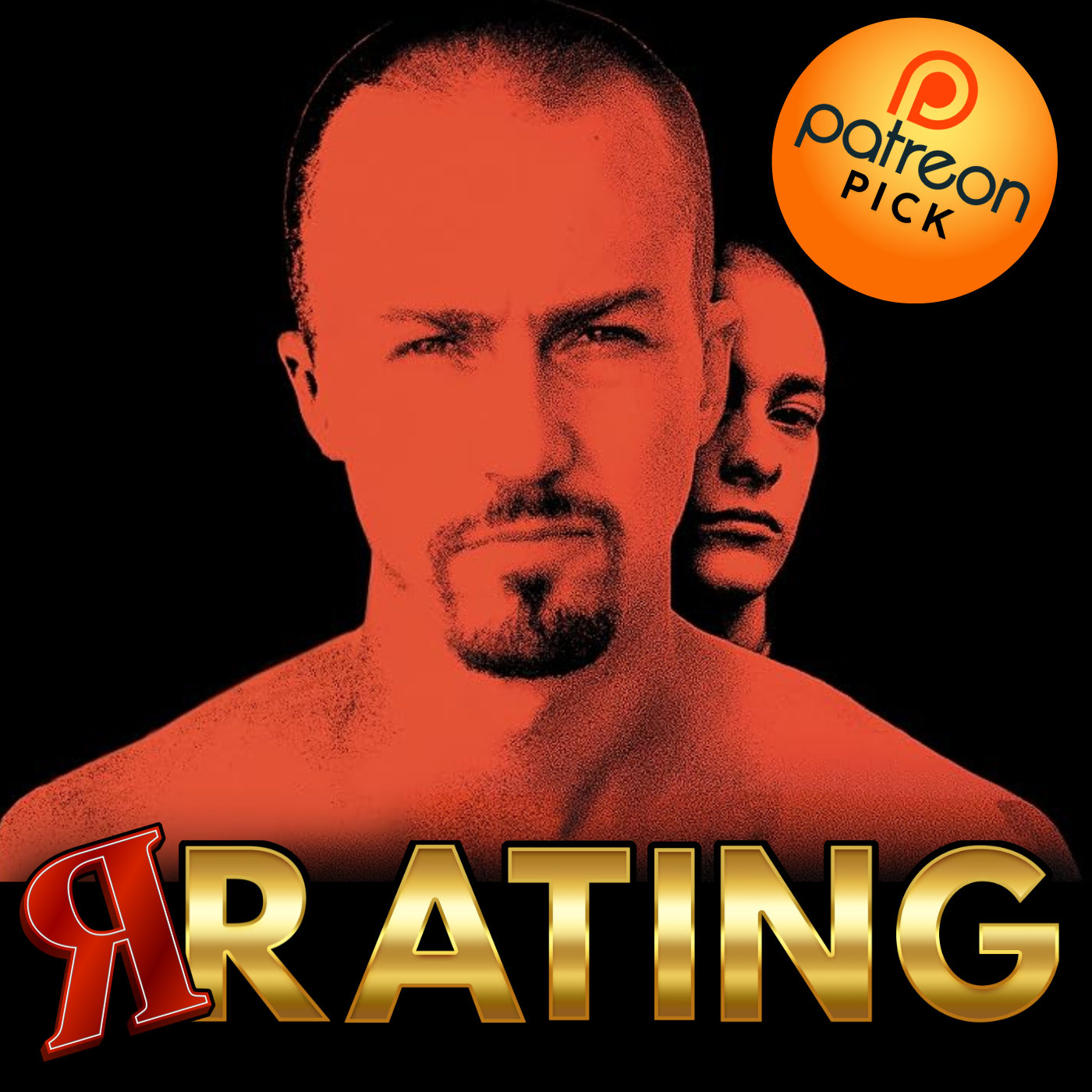
[00:00:00] Speaker A: American History X, 1998. Derek's struggle with hate, anger and grief quickly leads to a life of crime, violence, and imprisonment. When Derek tries to change his ways, he hopes to save his younger brother Danny from traveling down a similar path.
[00:00:24] Speaker B: Completely overrated.
[00:00:26] Speaker C: Hello, everybody, and welcome back to our rating. The show where I get together with two of my buddies, we take a movie franchise, break it down by actual film, give it an overall score, and then throw it back up on the board. Now, this week we are talking about our Patreon pick. So you guys actually get to decide what movie we're going to discuss. And this month, you guys decided to talk about American History X. I'm joined, as always, by my co hosts, Brian and Will. Will, how are you doing tonight?
[00:00:47] Speaker A: I am happy to be here and interested to see where the discussion takes us to tonight.
[00:00:53] Speaker C: Absolutely. What about you, Brian? How you doing this week?
[00:00:56] Speaker B: I'm doing good, Dan. I finished up some things. I'm starting to relax a little bit. Weird that we're one night off on our schedule, but that's okay for those people who like to come watch us live on Twitch. We normally broadcast our rating on Thursday nights. Tonight we're here on Friday.
[00:01:12] Speaker C: Yes. I wasn't going to address that because YouTube, but sure, yeah, that was on me. I had something happen last night. So I apologize for being late, but I appreciate everybody being here for hanging out with us.
[00:01:23] Speaker A: Absolutely.
[00:01:24] Speaker C: Also, thank you for the raid. I appreciate that, Will. I don't. I. I think we all watch this for the watch party, but this is nobody's first time here, right? We've all seen this one before.
[00:01:35] Speaker A: Correct. This is a movie I put in the watch once and never watch again until our rating comes along and ruins everything.
So I have seen this once.
[00:01:46] Speaker C: This. This does feel like a. A topic that keeps coming up on our rating. The. I never wanted to watch it. I never wanted to again. And then our rating came and ruined everything.
I appreciate you giving so much of your soul to this show.
[00:02:00] Speaker A: You're welcome. You're welcome.
[00:02:01] Speaker C: We just keep ruining you every single week. Brian, what about you? Can you remember the first time you saw this or have you seen this before?
[00:02:07] Speaker B: Saw it twice before. Long time ago.
Right when it came out. I saw it because everybody was talking about it. And then I rewatched it again not too long ago and. Or not too long after that. And then it has been a long period of time since probably 20 years maybe since I've seen this or because I kind of watched it right when it first came out. Very, very edgy film. Tough topics for us to cover here.
And, you know, there's, I, I kind of think there's going to be some opinions on, on this one that are going to be interesting and hot takes.
[00:02:42] Speaker C: It's definitely possible.
Similar to you, I also watched this when it first came out because it was all anybody would talk about. The Edward Norton performance specifically was very, he'd just come off of, like, Primal Fear. Fight Club was just around the corner. Like, this was a very, like the late 90s. Like, Ed Norton owned that period.
[00:02:59] Speaker B: Right.
[00:02:59] Speaker C: Like, he was very popular.
I feel like I've seen this movie considerably more than both of you. Probably like half a dozen times, but again, probably not in the last 15 to 20 years. Like, it's, it's been a while, but back then I did watch it quite a bit. Mostly for the performances, like, mostly for Ed Norton, Edward Furlong, the principal, even, even Ethan Supley. As much as he discussed me having seen him in so many comedies, seeing him in this role was just such a shock. It was relatively well done for what it was.
So I think I, I, I really appreciate this movie from a performance and cinematography standpoint, but as far as, like, the actual material of the movie, I do find this to be a bit of a harder watch, a bit less, less in, less engaging, less fun than, than I tend to go to movies for. Which is not to say that it's bad. I, I think I agree with Will in the sense that, like, there's a lot of movies where you should see them once, right? To know what it's about, to get the history.
[00:03:56] Speaker B: This is going to be kind of a City of God type of film. Strong, harsh content that grips you. It's riveting, it's shocking, it's, it's hard to consume in places, but it's definitely a standout film that's going to get some high marks.
[00:04:12] Speaker C: Well, I hope so. I hope we'll, we'll see it. We'll see where we end up at
[00:04:14] Speaker D: the end of the night.
[00:04:16] Speaker C: Yeah, I, I would put this, like you say, City of God. I always think of Schindler's List where it's like, it's a powerful film. You have to see it. You're not putting it on for fun on a Friday night, right? Like, it's just, it just is a little too real, if you will.
What'd you guys think of the cinematography in this movie? The way it bounces back and forth between color and black and white, based on the time zone Whether we're in. I think it's 1994 or 1998, I think of the two time periods. Or is it 93 and 98?
[00:04:42] Speaker A: Yeah, I'm not sure the timeline, but to answer your question, it's good.
[00:04:47] Speaker B: It's.
[00:04:48] Speaker A: It's effective.
It also is like, not only is it like these are the past sequences, but it's like this is when Derek's character saw the world in black and white. And only that, right. There was no consideration for anything else. So I think that also adds to the. The black and white footage because everything is so just his way or the highway, you know, what he believes, or nothing at all.
So that. That really felt interesting. When watching.
[00:05:19] Speaker C: Damn it. That is a good take that I've never picked up on. I always just did it with the time zones I never put together. Like, that's the way he's seeing the world. That is so freaking smart. I'm so glad we have you on the show.
[00:05:33] Speaker B: And, you know, not only the black and white, but they have a very adaptive cinematography style for what scene they're doing when they're dealing with skinheads and Nazis. It's a very aggressive, zoomed in camera angle, usually from a somewhat lower perspective. So the viewer feels like they are in the room. They are a person taking place in those conversations. And you feel a bit oppressed because you're looking up at these people who are shouting and angry and they're very close and close to you, the viewer. So it's harsh and it's scary. And then in other sequences, they pan back a little bit. They come in from a steeper angle, so you're looking down on things and it gives you a feeling of superiority as the viewer. And this changes fluidly throughout the film depending on the scene that they're in. I find it amazing. You combine that with the black and white.
For those, you know, telling the old stories when he was of one mindset to the color cinematography, where it's present day and you're mixing different opinions together, it's incredible. The cinematography on this film is amazing.
There's a little bit of kind of raw footage to it that I think that's just because of the time. Nowadays we've got gimbals and super expensive cameras that make that a bit smoother.
So that didn't hold up as well. But honestly, that's. That's nothing. This is an amazingly shot film.
[00:07:07] Speaker C: Yeah, I'd have to absolutely agree with pretty much everything you just said.
It's interesting because it does go Back like again, the time aspect of the black and white versus the color. It's not jarring in any way. Like you're so engaged in the storytelling of the film that it kind of does go seamlessly back and forth and you're not really like, oh, what's happening now? What's like you're just, I, I just, I feel like I am just in this story from beginning to end.
[00:07:32] Speaker B: Right. When somebody mentioned in the Watch party, hey, I love it when they do the black and white scenes. I was like, what black and white scenes? I had forgotten it. Is it you do. You're, you're so engaged in the story. It's seamless and it's kind of strange that it can switch from black and white to color and you don't even pick up on it. It just allows you to understand where you're at and reinforces the ideas being portrayed at that moment.
[00:07:55] Speaker C: What did you think of the acting in this one? I mean we already touched on a little bit. Edward Norton is absolutely incredible. But honestly I think pretty much every, I can't think of any weak links in the acting in this. I feel like everybody's kind of firing on all cylinders. Ed Norton, Ed Furlong, Stacy Kees is another one. Cameron, the, the, the main bad guy if you will or antagonist.
Just such a creepy performance.
[00:08:20] Speaker A: 100. I think he's, isn't he creepy in all of his performances? Like he, he plays those kind of characters really well. The bad guy type. The, yeah. But also comes across very smart and cunning and manipulative and it plays really well.
I, I agree there, there's no bad performances really in this the even like Ed Norton was the only one nominated and a lot of people say he was robbed which I, I, I, I won't agree or disagree with that.
[00:08:53] Speaker B: I don't know what his competition was at the time, but I think it was definitely worthy.
[00:08:56] Speaker A: Yeah, I do know the winner was the what's his name from Life is Beautiful.
Okay. That Italian guy. I can't remember his name off the top of my head. But also a brilliant movie in its own right and another very hard watch movie as well. But to me, in my eyes the Oscars skew to more artsy type movies and that one definitely is, it kind of fantasizes things and, and plays into that, that role of we're making an arts piece. Whereas this one is more, this is extreme and I think it's beyond reality this movie as well. But, but obviously a little closer to reality than Life is Beautiful.
[00:09:40] Speaker B: So yeah, so I actually had a problem with Edward Furlong's performance in this film. I think he came in strong when he was in Sweeney's office in the beginning and he's dealing with the principal. That was a good scene and it was a solid performance.
But there were some parts where I remember, I can't think of it actually specifically, but there were some parts where I kind of felt like, oh yes, it was a scene when he's sitting in Cameron's office and Cameron is talking to him and he's just kind of hearing this and you can tell there's a part of him that is on the fence but doesn't want to offend the person he's talking to. And he just kind of sits there and I, I wanted a little bit better performance there in that moment. He just kind of sat there and listened and he was there. And there were some other times when that was his role is to just be there and be the observer.
And I couldn't experience enough of his emotion to know what this character is feeling inside. He was just there.
Not a bad performance by any means. And he did have some scenes, especially the, the black and white scene when the guys are breaking into his car. There was some good, some good stuff there from Edward Furlong in those. So up and down on that character throughout the movie. The rest of it I think top notch all the way through.
[00:10:58] Speaker C: Now I do have a question for you about that because this is the first time again I saw this movie a bunch of times when I was like 19 to early 20s, but not a lot until now.
Do you think Danny, Edward Furlong's character, do you think he actually believes everything that he's going along with? Or do you think he's going along with it because of how much he idolizes his brother? Because there's quite a few scenes in this one where.
Like what? Like when Seth Ethan Suple's character is recording him and he's giving him smart ass answers and like, well, they're not all bad. Like they're kind of okay. He seems to have some respect for the principal at the beginning of the movie. I mean, he's disrespectful to him, but you can tell he's not like hateful towards him. And then like his brother comes back and like we should get rid of this. And they rip everything down like instantly. Like he just gives it up right away. It's like, oh yeah.
[00:11:43] Speaker B: And that's, that's my problem with his character is that I'm not certain where he stands on this throughout the film.
Sometimes he comes off very aggressive, like when he blows smoke into the kid's face in the bathroom.
Then there's times when he's talking with Sweeney and he seems like he knows exactly what he wants to do. Maybe he can show respect to people in certain circumstances, but he has.
He knows where he stands. Then you come into other scenes, like when he's with Seth and he seems a little more wishy washy, but when he's listening to Cameron talk to him, he seems wishy washy. And I couldn't nail down where his character stood at any given time. Maybe that's what I have a problem with. Maybe that's what they were going for is that they wanted to show that he was uncertain through times. But it didn't feel.
It didn't feel as intentional as I wanted it to be as a viewer.
[00:12:38] Speaker C: That's fair. Where do you land on that, Will?
[00:12:40] Speaker A: I feel similarly. I, I think as a whole the movie kind of that, that turning point of Derek's kind of like he spins on a dime really. And I feel like the first half of the movie is so dark and, and real and scary that when he turns on the dime, his character, like it's a three year period, is in prison. And we get a little bit of the backstory as to why he changes his, his views. But it, it's such a hard turn in the movie that it's hard to like buy it. 100 and so I kind of feel like Danny being like, wait, we were on this side, now. Now you're flipping like, what's going on here?
But I, I agree that it, it makes for like a, it leaves you wanting more out of the movie a little bit as far as like the storyline and, and because the characters are so interesting and so well developed in a lot of ways that it just feels like it's just a hard turn that I couldn't quite keep up with.
Or maybe I just. I wanted more from the story. The middle portion of the story we don't get.
[00:13:55] Speaker B: I don't know if I took it in the pooper from all the people who was carrying my belief system. I'd probably turn on a dime too. That was such an incredibly shocking moment that. And of course, it didn't exactly happen on a dime either. It happened to him and caused him to have a serious breakdown and look at what is going on in a realization of, of how fake all of it can be. And then you had an extended period of time in his eyes. We saw it in a scene or two where he finishes up his sentence and nothing happens to him from the other races in the prison.
And so I think from his perspective, it's actually a hard clash. And then a lot of time to reflect on the error of his ways and his big mistake, assuming everybody had his beliefs to their core like he did.
But you're right, in. In the film, as we watch it chronologically, that takes place in like 10 minutes. He goes from left to right immediately.
And so it is. It is a switch. And then he passes that on to Danny, who also seems to easily accept it in Switch, which. That was a little harsher for me to take.
[00:15:08] Speaker C: Yeah, so I. I think that Danny switches a lot. I mean, obviously Danny switch literally happens in one night. Like. Yeah, the. The Derek switch happens over the course of three years, even though we only see 10 minutes of it or however much screen time it actually is. But the Danny one is why I was more like maybe he doesn't really believe this in the first place. Like, maybe he's just kind of going along with it because it's what he feels like he's supposed to.
[00:15:29] Speaker B: An impressionable young man who idolizes his older brother. Yeah, exactly. That makes. That makes sense. Yeah, that makes sense.
[00:15:36] Speaker C: As far as Derek goes, you also have to remember that while he's in prison, he's seeing a lot of hypocrisy of the people who claim to believe the same things he does.
[00:15:46] Speaker A: Right? Yeah.
[00:15:47] Speaker C: So he's not only seeing this African American person that he's stuck working with just being a real person, but he's seeing all the white supremacist people being fake through and through. Like they don't believe in anything they're going with. They're playing with all the other teams at all given times. Like they're just.
They're doing it for fashion almost. And I think it just really not demoralize them. That's not the right word. But, you know, it really makes him see how silly everything that he's doing is to some extent.
I don't know, it's rushed per se, but it's also a movie.
There's only so much time we can dictate everything. Which brings up another scene, which is the dinner table with his dad, where we had a conversation after the watch party and a lot of people were like, wow, that scene feels so silly because it's so short and it's just this little window of time. It's like, yeah, but it's. It's One scene in a movie. We don't want the movie to be three hours long.
[00:16:39] Speaker B: It's a very necessary scene. Exactly.
[00:16:42] Speaker A: It's the core of the movie really. I think in my mind it's where.
[00:16:47] Speaker B: It's where the issue starts. The father who, who Derek looks up to is now preaching this hate to his son. And his son, who was interested in Sweeney and his books and his ideology and expanding his horizons, decides to throw all that away to impress his father. And that's where it begins. Now I took issue with this and maybe I should have stuck around to the watch party and I need to hear your guys opinions on this. His dad did mention some things that in this film were played off as solid racism and was just wrong and bad.
And that had to do with immigrants coming into our country.
And his father was talking about some illegal immigrants, but also talking about legal migration too.
And this is a thing that I personally have problems with because in America we have laws against migrating here outside of the law, and that's illegal. And you get deported when it happens.
And we have a lot of people in my country also that are opposed to that idea and think that it's racist that we deport people who come here illegally.
And I'm gonna say this, and maybe this is the wrong thing to say on a public forum, but I think that if you break the law, you should pay the consequences. And that's unfortunate because I also think that our migration laws to. To immigrate here from other countries are a little too strict, a little too rigid, a little too much red tape there and take way too long for people who want to come here and be a part of this blessed country.
So I invite all people to come here legally. And I do have problems when it happens illegally. And I think that we should be looking into that. But it bothers me when that idea, which seems so square and sound to me, is proposed to me that I am now racist because I look at it that way.
So I don't know, am I racist for looking it that way?
Is this a gray area? Is this an overreaction? I don't know. But watching this movie triggers this conversation. And I think that is a good conversation to have and a good thing that this movie is doing, bringing up this idea.
Don't want to touch that with a ticket.
[00:19:12] Speaker A: Go ahead.
[00:19:12] Speaker C: Well, what are your thoughts on racism in America?
[00:19:17] Speaker B: You guys are Canadian, so you got an outside perspective?
[00:19:21] Speaker A: Sure, yeah. We have immigration laws and all that as well. Obviously like that. Every country does.
I didn't Go that direction with the movie, though, or that scene. Really?
[00:19:34] Speaker B: Yeah, this scene just touched on it a little bit.
[00:19:37] Speaker A: That's the thing.
[00:19:37] Speaker B: It's like, I think there were side topics going on in the side, and I was like, I don't feel comfortable weighing in because I feel like they're gonna call me a racist if I put out my perspective, my honest perspective on it.
[00:19:48] Speaker A: To me, the movie isn't saying, hey, anybody who believes, you know, illegal immigrants should be deported, and that makes you racist. I didn't think that at all when I saw that scene. What I saw was they put in deliberately. And the director, David McKenna, actually speaks to this a little bit in interviews, that his idea of this script was based somewhat on real life experiences and that racism is a learned thing.
Not.
It's not normal. It's not. And it's not happening in nature. It's a learned behavior. And he drew from his life experiences, from his family where racism had come up, and. And things like that, and it made him reflect on that. And so to me, I feel like. Yes. Is this guy come across as, like, maybe a conservative person? Sure.
That's not the relevant point of the scene. The point of the scene is you see the trickling down of racism in the way he talks. And.
And the son latches onto that, and that's what propels him forward when his father is murdered.
And so that's where the hate and anger comes from.
That. That propels this whole story forward.
[00:21:09] Speaker B: Absolutely. Yes. You're right. That that scene was to showcase where the hate originates from.
I just think that there.
There's room in the conversation for shades of gray and that it is not just black and white. And it's very, very complex. This movie kind of proposes things as black and white.
[00:21:29] Speaker C: I. I'm gonna kind of go in between here.
I. I think the dad was snubbing out the conversation on that one. Like, Derek is saying, like. Well, I don't know. Like, this teacher seems pretty good. Like, because he's not so much. Forgive me, I don't have the speech remembered off the top of my head, but I feel like the data is talking about DEI more so than illegal immigration. Like, right. People on my force aren't getting the job because these other people are getting the job instead.
[00:21:55] Speaker B: Right.
[00:21:56] Speaker C: That's not right.
Clearly, you've got a black teacher. He must have done the exact same thing. So he shouldn't be in a position of power. He shouldn't be telling you what to read. He shouldn't be teaching you these Things and he says it over and over and over again. That's. No, no, no. And because Derek's like, well, I don't know. He seems. Okay, no, no, that's.
So he is snubbing out any. Anything from that conversation. He is making it black and white.
[00:22:20] Speaker B: Yeah.
[00:22:20] Speaker C: That's where I think the racism comes in. Not the fact that everything he says is purely racist, but the fact that he is just taking away any nuance from that conversation and just being like, no, yes, that's wrong. Don't, don't. Don't listen to him. Don't learn anything he has to say. It's all.
That's where I think I have the issue with that. So when people like Bubba Hotep was saying in chat that night and tonight, the scene is too abrupt and it's too, like. There's too much of a nuanced conversation. I don't think the data is allowing there to be nuance in that conversation.
[00:22:48] Speaker B: Exactly.
[00:22:48] Speaker C: That's the point.
[00:22:50] Speaker B: And, and, and I, I.
The movie isn't long enough to cover every splinter of, of the conversation and, and everything. So this is just. I guess it's my own personal prejudice or fears that because I, I hold to the belief that you should immigrate legally and others think I'm a racist because I hold that belief. It's frustrating when I see hints of that in the movie and then they're snubbed out by this absolutely racist father who has no time to explain or hear them out or anything.
And it's like, okay, well, you had an opportunity to make a sound argument about a realistic problem that could be based in truth and honesty, but instead you jump to, black people are bad. Everything's bullshit. You need to be my way. And it kind of sucks. It's a short. It's a very short sequence. It is the core of the film and could have led to so many other things. But this movie has a particular point it's making and it sticks to it. And my point is not part of this movie. It's a thing that I deal with.
And I just. It rubbed up against it in that scene and I felt it.
[00:24:03] Speaker C: No, that's totally fair. I think. I think that scene and a good chunk of this movie is hate has to be taught. Right. Like, nobody is born hating. You are taught hatred. He is taught it from his father. Danny is taught it from Derek.
[00:24:18] Speaker A: Yeah.
[00:24:19] Speaker C: And I mean, obviously Cameron's character in there is giving it, like, a voice and a direction, but it would be hard to mold those same Children if they didn't have a father figure or a somebody at home.
[00:24:35] Speaker B: Cameron manipulated Derek, who was already on that path. He saw that Derek, all on his own, all because of Derek's father and the way Derek was raised and what happened to his father.
Cameron saw that he was going to become a powerful influencer.
So he, you know, became a lens for Derek and pointed him in a certain direction to gain momentum for his own source of power. He was a leech. He was a parasite to Derek. He didn't really do anything but road Derek and built this unfortunate coalition of. Of. Of horrible people.
[00:25:13] Speaker C: Yeah, yeah. And you even see, like, he's. The one scene where he drops Derek off and darts. You want to stick around and see this? Like, no, no, no, I can't. You know, I'd love to, but I don't want to get my hands dirty kind of a thing. Like, he's. He's squeaky clean and the police have nothing on him for a reason.
[00:25:27] Speaker B: Yeah.
[00:25:28] Speaker C: It's because he's never had the courage of his convictions to do anything he actually believes in. He's just leading these kids astray and letting them do all the dirty work for him. So they are the ones spending time in jail while he lives in his mansion off of the. Whatever that he gets from them.
[00:25:42] Speaker B: Again, a great.
A great role, a great character, great portrayal. What a horrible human being.
You love to hate this guy. And for all the wrong reasons. It's, it's. It was. It was really good. Really well done. Really hard to see.
[00:25:59] Speaker C: Yeah.
[00:26:01] Speaker B: Speaking of hard to see. And Will chose the perfect background for this. There is a tough scene to watch, which is the sequence of the movie that really throws things out. They come back to it a couple times and it gets worse and worse and worse every time you revisit it. And that's when they're breaking into Derek's vehicle. And he goes out there with a gun, shoots one curb, stomps the other guy.
And it's brutal. You see it from a distance. It's raw, it's tough. And then, of course, the police come and arrest him. And you've got the big sequence where he goes down on his knees. He's excited, he's happy, he's pumped. And then he turns into anger. All this emotion going on. Edward Norton's face. That was an incredible scene to. To see take place.
But, man, I cringed so hard during that scene. It was so. I had to look away. It was so graphic and so violent and so over the top. Do you guys Think that they pushed that scene a little too far, or do you think that that was perfect?
[00:27:06] Speaker C: My understanding, and maybe Will can correct me on this one, is they actually went much, much, much further with that scene and then dialed it way back for the actual theatrical release. Like, my understanding, because, like, you don't like. Okay, so you. He puts his. His mouth on the curb and like, you can hear his teeth, which is.
[00:27:25] Speaker B: That's the worst part. Gives me goosebumps just talking about it. Yeah.
[00:27:28] Speaker C: And you see his boot come up and then you're watching his face when the boot comes down, like you're not really seeing anything. And apparently you saw everything in the original cut and it was like, nope, that was. That's too much. I think there's a fraction of a
[00:27:42] Speaker B: second where you see the.
Yeah, there's a fraction of a second where you see him stomp the guy's head onto the curb. From a distance from, from Danny's perspective, it's just a fraction. I know because it's burned into my mind after watching it at the watch party. It's going to take me another two decades to get it out of there. I wish I would have looked away.
[00:28:01] Speaker A: This is why I only watched the movie once.
[00:28:03] Speaker C: Yeah, it's.
[00:28:04] Speaker B: It's so hard for me to watch just the. The absolute mistreatment of another human being in such a despicable way. I don't care what anybody does. That's uncalled for. It's horrible.
[00:28:17] Speaker C: And as you mentioned, the joy on his face afterwards, like he is so proud of himself after the fact. And it's not until the police officer touches him that he likes. Turns to rage. And you're right. Like the, the performance from Ed Norton that, like that speechless scene where you're just seeing the emotions portrayed on his face is just riveting. I don't know, heart wrenching, whatever you want to go with. But it is.
It's intense.
[00:28:43] Speaker A: Yeah, it is intense. Yeah. I mean, as far as the question, did they go too far? I don't think so. I think, I think that was the point. Right. They're trying to push. Push the envelope and, and show the audience how far this can go. They want you to be uncomfortable in this movie.
In many different elements of this movie, they want you to be uncomfortable. And this, this one, the beginning, you only see the beginning half of this scene and it's uncomfortable. And then midway through the movie, you see the end of it and it's just like it just. It just one ups itself purposely to just show you how far this has gone again, making it hard for me to be like, oh, he's a changed man. Cool. He's got his white sweater on, so he's obviously a good guy now.
And I don't know if that's that they want, but how it comes across, and I'm just like, oh, how do you.
[00:29:40] Speaker C: How can you.
[00:29:41] Speaker A: How can you buy into this?
[00:29:42] Speaker C: Like, now, obviously, Will and I are Canadian, so very, very different rules up here.
But he kills at least two people, if not the guy in the car as well, and he's out in, what, three and a half years?
[00:29:56] Speaker B: Three years, Yep.
[00:29:57] Speaker C: That's wild. I mean, like, I understand that you got, like, mentioned your house, castle and whatnot, but it's.
[00:30:04] Speaker B: Yeah. Danny didn't testify against him, so otherwise it would have been life.
[00:30:12] Speaker C: But there's a huge gap between three years and life, though.
[00:30:15] Speaker B: Yeah, I know it's ridiculous.
And, you know, they don't say any of this in the film, but. And I. I can only speculate.
But if the. If the color of skin had been reversed, I think a black man doing that to white people would have no chance at all of three years.
[00:30:36] Speaker A: They do. They do go into that in the movie because.
[00:30:39] Speaker B: Oh, do they drop the tv.
[00:30:40] Speaker C: Yeah.
[00:30:41] Speaker B: Oh, yes, you're right. The guy who dropped the TV on the. On the cop's foot got six years.
[00:30:45] Speaker A: Whether he dropped the TV or not,
[00:30:47] Speaker B: I've obviously is up stomp a person to death, you know, like.
[00:30:52] Speaker A: Yes, yes.
[00:30:53] Speaker C: I'll do you one better if you switch the races. I don't think he does any jail time at all. I don't think he makes it to prison.
[00:30:59] Speaker B: Yeah, yeah.
I mean, it's all speculation because we don't see that that's not what was written into the film, but this is what we deal with in. In real life.
[00:31:08] Speaker C: Yeah.
[00:31:08] Speaker B: And. And it's unfortunate, of course.
So big spoiler here. At the end of the film, Edward Furlong's character, Danny, is shot and killed in the bathroom by the same black kid that. He blew smoke into his face. I was told that there were multiple different endings to this film.
Do either of you know more information on that? And do you like this ending with Danny dying?
[00:31:35] Speaker C: The only other ending I'm vaguely familiar with, and I've never seen it, is Derek dies instead of Danny.
I don't know. That would have hit as hard. I think the fact that it is the more innocent of the two that dies. Obviously not purely innocent, but the more innocent of the two.
[00:31:53] Speaker B: Yeah.
[00:31:53] Speaker C: That dies for the simple act. I mean, racism, all that, but like the simple act of blowing smoke in his face, just the disrespect.
[00:32:01] Speaker A: Right.
[00:32:02] Speaker C: And that was enough that he, you
[00:32:03] Speaker B: know, and of course, the irony that, that Danny had just changed his ways, was going a new course makes it more tragic. Right. Will, what do you think about that ending? And do you think it should have been different? Do you think it should have been Derek that died instead?
[00:32:16] Speaker A: Yeah, there's a lot to this because in multiple ways this movie is notoriously known that the director, Tony K.
Kind of lost his marbles in this movie, couldn't control Edward Norton.
And Edward Norton kind of took over the film and actually did the final edit of the movie. And so what ending was supposed to happen? What actually happened? And then there's also rumors that there was an ending after Danny died that you see Edward Norton's character, Derek shaving his head. Fade to black.
So there's a lot of different things out there.
I think this is the more
[00:33:02] Speaker C: happy
[00:33:02] Speaker A: ending, if I can say that. The more Hollywood ending where the person who, Derek's character who made this turn is still paying for what he had done. And that is acceptable to us, I believe, as, as viewers. Whereas if Derek was the one that died, it wouldn't feel as heart wrenching or if he turned and went back to his old ways, it would also feel very empty.
So I think this ending is, is pretty good.
And they, they hint at it throughout the film a little bit, this back and forth between this other gang member kid or like, I don't know if he's. Did he shoot this guy because he was, that was his initiation into the gang. I don't know. That's kind of what I felt.
But they kind of played it up kind of throughout the movie, so it, it made sense. That's how this concluded for me.
[00:34:02] Speaker C: Yeah. I hadn't heard the one where Derek is shaving his head again at the end of the film. I, I think I would have hated that ending, to be perfectly frank.
[00:34:09] Speaker A: Yeah. Although, I mean, in some ways it, it, it's like, it's easy to fall back into old habits like that. It does make sense. But does it make for a satisfying ending? Maybe not so much.
[00:34:21] Speaker C: It would cheapen what he went through to get to where he is. Right? Like, yeah, he's kind of going through and realizing like, wow, all of this is like everything Cameron says is stupid.
And then one more tragedy happens and he's right back to like, nope, never mind. I was right the first time. Like it just, yeah, it would almost be a. Why did I bother watching this?
[00:34:41] Speaker A: Exactly. And the other, the other thing is, is like these two characters, Danny and Derek are super intelligent people. Yeah, right. Which in one hand is like how did they ever fall into this in the beginning in the first place? But it happens all the time. I think, you know, people, smart people do stupid things all the time and this is just the extreme of that.
[00:35:02] Speaker C: I mean I would take one step further and say Cameron's also probably very intelligent. But sure.
[00:35:06] Speaker B: You know, no villain in history ever thought that they were a villain. You know, everybody believes that, that they're correct and continues believing that and continuing it because they don't, they aren't aware. They don't have the ability to self reflect, to step outside the situation, to let their ego go and recognize when they make mistakes. And so you have a whole set of people who absolutely know for sure that they're right and they can't all be right. So it's kind of rough.
You see some absolutely like avid belief systems with Ethan Supley's character, Seth hardcore to the, to the door, you know, and I kind of wonder does he truly feel that way?
Is, is he just putting on a show for other people?
I, I kind of felt like his character truly believed this and has never been corrected. And I don't know if they would ever change. Even if all the people around him change their ways. I think he might be that person that says, f you guys, I'm going to go start another chapter in another state.
You know, I don't know, it's, it's tough. It's really tough. You know, I mentioned some of my belief systems and I feel that I'm right. I could be wrong.
I don't know. That's, it's a conversation I need to have outside of this because it doesn't specifically pertain to this movie. It's just something that sparked it. But you just don't know. And no one knows that they're wrong and hides it. That's not usually how it happens. They may figure out that they're wrong later and try and hide it because they're embarrassed and don't want to flip flop.
But no one starts out being wrong and knowing it and, and do you know, no one sets out to do the wrong thing.
[00:37:03] Speaker C: I'll agree with the second part more. Nobody sets out to do the wrong thing. I think there's probably a lot of people who figure out somewhere along the way that they're wrong and don't want
[00:37:11] Speaker B: to absolutely live in denial. Absolutely. They do. You see Edward Norton's character get a little bit of that, but nothing really hits home until the shower scene and everything afterwards, which is why Will says he turns on a dime. And. That's. Right. He's pretty much set in his ways, just 100%.
And then all of a sudden, it does switch for him. And I don't think that's the case with most people. I think most people start to see cracks in their own armor and then later are exposed to the truth of the situation. But that's just me.
[00:37:49] Speaker C: Yeah. He kind of has to hit rock bottom before he can start digging his way out of that hole, so.
[00:37:53] Speaker B: As many of us do.
[00:37:55] Speaker A: Yeah. Fair.
[00:37:56] Speaker B: Yeah.
Doris is listed as third in the credits. Beverly d'. Angelo.
[00:38:03] Speaker C: Yeah.
[00:38:04] Speaker B: Who's Doris? I don't even remember Doris.
[00:38:06] Speaker C: His sister. His older sisters.
[00:38:08] Speaker B: Okay. Okay. Oh, well, that brings me to something. The scene where Derek and Doris fight in that argument at the kitchen table, that was a pretty powerful scene where everyone in the room is making valid arguments to their side, logical arguments to their side, until the point where it kind of explodes.
[00:38:35] Speaker C: I think I'm wrong. I think Doris is the mother. My apologies.
[00:38:38] Speaker A: Correct.
[00:38:38] Speaker B: Oh, so you're.
[00:38:40] Speaker A: Is it Jennifer.
[00:38:42] Speaker C: Jennifer Lean is the.
[00:38:44] Speaker B: Okay.
[00:38:45] Speaker C: Doesn't take away from your point. Just. I had the wrong actress. My apology.
[00:38:47] Speaker B: Right. The family argument scene is very powerful when he starts saying the horrible things to the mother's new boyfriend and the. And the boyfriend has to just walk out. And he's like. He's like, I'm sorry, Doris, I can't. Like, you know, he's. He's threatening my life because of what I am. I can't be in this family.
[00:39:08] Speaker D: Yeah.
[00:39:08] Speaker A: I would say that the dinner scene is probably my favorite scene in the movie because it just.
It starts out as like they are. They're. They're debating, they're talking. And then you. You quite quickly see that Derek's character, even if anything is brought up against him that could question, he just sidetracks or changes the subject or. Or brings in a hypothetical to change the subject. And then when that doesn't work, he just gets super aggravated to the point of violence. And it just is like. It just shows his hatred and anger to a T.
And then to counter that, I think Elliot Gould playing Murray, the. The boyfriend teacher, he does such a great job at listening and trying to de. Escalate the situation to the point where he sees that he cannot be of any help to this. This family. And has to remove himself for his own safety and potentially the safety of the other people there, because he's the one kind of like getting this aggression amped up just by trying to have a conversation. So I really enjoyed that. And just seeing Elliott Gould's eyes, like, as he's spewing his filth, Derek's filth, you can just see him looking at the family and how it's affecting them.
[00:40:37] Speaker B: It just is.
[00:40:39] Speaker A: Eye acting was incredible. That's all I have to say.
[00:40:42] Speaker B: Yes, he. He was. That was an astounding job in there. I agree. That was really good. Elliott Gould's character, just the way he kept calm. And when Derek is challenged and can't explain or whatever, he escalates to violence. And that's. That's it. That. That kind of, like, Elliot Gould was, like, looking around going, you guys see this, right? He doesn't have an explanation. He just goes to violence. And this is. This is the only outcome.
And of course, nothing can happen. No one. They can't stop being his family and. And he can't continue being a part of that family. And so he knows he just has to quietly walk away from it, unfortunately. Great scene. Great scene.
[00:41:29] Speaker C: Not that quietly, but yes.
Yeah.
All right. And now that we've given our scores, we do have a special guest brought on. This is Ms. Hillary. She's one of our head writers, and she's actually one of the people who picked this movie. And we're going to hear why she thought this was such a good choice and what her thoughts on the film are. Ms. Hillary, how are you doing tonight?
[00:41:48] Speaker B: Good.
[00:41:49] Speaker D: I'm good. Thank you guys so much for having me on.
[00:41:52] Speaker C: Always a pleasure.
[00:41:54] Speaker D: Yes.
So, yeah, I just really wanted to kind of get across how important this movie really, I think, is for society.
I grew up in a pretty small town with some pretty heavy prejudice and the interests. Like, my favorite part of watching this movie is sharing it with someone new, having that, like, spark kind of go in their head where not necessarily life changing, but just that extra, like, clarification on how ridiculous racism is as a whole. And I also kind of was friends with somebody who was in sort of some pretty dark thoughts and headspace for this. And so it really sort of always stuck out to me, the importance of sharing this, because I just. I believe the message at the end of the day is so powerful.
And it's one of those movies, in my opinion, got snobbed terribly, terribly at some awards. I know it's a heavy movie, but sometimes it's a Heavy topic. And it's a topic that if we don't talk about it, we can't fix it. And I think that's why it's such a powerful, powerful movie for me.
[00:43:23] Speaker C: Very nice. Yeah. One of the things we've discussed is, like, it's a great movie for the conversation that it starts. And even the other night on the.
On the watch party, after it was done, a couple of us stuck around and did talk about it for quite some time. Usually the watch party ends and Brian runs away as fast as possible, and every else kind of dissipates in the next 30 seconds. But I think we stuck around for probably a solid half an hour or so, if not a little bit longer than that. A couple of us just discussing this film. And it's. It's really interesting that you were saying you, like, you brought this to a bunch of your friends just to, like, show it to them and, like, probably have the conversation afterwards. Not that I'm sure you had to, like, explain to them racism is bad, but just, like, everybody takes a little bit of something different away from this movie, I think, at the end of it,
[00:44:09] Speaker D: for sure. And growing up, like I said, too, in a smaller community with some pretty. And I went to a Catholic high school, and I don't want to get into the religion or anything, but there was some very, like, very steady thought. And so with that, to be able to sort of introduce the option to think outside of the box for those individuals, it was really important for me. Like, social justice has always sort of been something really close to me. So
[00:44:44] Speaker C: very cool.
[00:44:44] Speaker D: Yeah. Yeah.
[00:44:47] Speaker B: Hillary, what was your number one scene in the movie? Because you had mentioned a couple of things in the Watch party that you really liked, and they were scenes that maybe didn't stand out to me. And I'm kind of curious why, like, the cash register scene you mentioned that.
[00:45:00] Speaker D: I don't know. There's just. In my opinion, there's something so beautiful about just this.
[00:45:05] Speaker B: The.
[00:45:05] Speaker D: The slow motion of the. Of the glass shattering and, like, the destruction they're causing and. And you know, it.
Money doesn't trump all. Like, the black and white is so beautifully placed, in my opinion. And there's just something so, like, devastating about that scene. Obviously, like, the majority of these scenes, let's be honest, are pretty. Some of them are pretty devastating. Devastating.
Pretty hard to watch, but so powerful in the way that they're presented, in the way that the individuals are presented.
But, yeah, that. I don't know what it is about that cash register scene. I just think from a cinematography sort of mindset of what I enjoy, it just.
I don't know, it's one of those movies that it. Or scenes. Sorry. That just really resonates with me.
Yeah, yeah. Like that shattering of sort of the line and blurring that line and, you know, excessive nice and I can't remember off top of my head. But the other scene was specifically. But there's some pretty amazing scenes throughout. Like. Oh, at the end when he.
You know, not the nudity side of him being in the shower, but that. The end when he's trying to, like, look at himself without that core sort of who he was when he covers. Covers the swastika and that power of him and his brother taking down the mag. Like all of the regalia and propaganda, like, just.
Yeah, yeah.
[00:46:48] Speaker B: That. That mirror scene speaks volumes when you see him simply just cover up the swastika and look at himself. It's a short little sequence, but it just speaks volumes.
[00:46:58] Speaker D: Oh. Oh. It's definitely. Again, cinematography wise, like, I think it's so beautifully done and directed that in my opinion, the end was amazingly done.
[00:47:10] Speaker C: Agreed.
[00:47:12] Speaker D: Let's.
[00:47:12] Speaker B: Let's see what score you give it.
[00:47:14] Speaker D: I. I wanted. I'm gonna go sort of. I'm gonna give it credit that there's some pretty intense graphic scenes. So that could have been done sort of maybe differently. But I definitely have to give it for the power and impact. I have to give it a very sort of. We'll go 94.
[00:47:34] Speaker B: That's sort of stand.
[00:47:36] Speaker A: Yeah, very nice.
[00:47:38] Speaker D: It just.
[00:47:38] Speaker A: Wow.
[00:47:38] Speaker B: Coming in strong with that.
[00:47:40] Speaker D: Yeah, yeah.
[00:47:41] Speaker B: Like I said, this is one of
[00:47:43] Speaker A: your favorite movies, right?
[00:47:44] Speaker C: Yeah.
[00:47:45] Speaker D: Oh, yeah. Like, I've seen it so many times just because I just find it so powerful and not only sharing it, but I just.
I think it's genuinely a movie that should be shared to the world and it didn't get the credit it deserved, but.
[00:48:04] Speaker C: Very cool.
[00:48:06] Speaker D: Cool. All right.
[00:48:06] Speaker C: Well, again, thank you for having me so much. Appreciate you. Feel better. I know you're under the weather at the moment, so I appreciate you coming on at all, but it's great to have you here.
[00:48:15] Speaker D: Thank you. Thank you. Bye, guys.
[00:48:17] Speaker A: Bye.
[00:48:18] Speaker C: If you like what we do and you want to help support us, consider joining our Patreon. There's a link down below.
Shout out to our producers as well as our executive producer, Dino. And a huge shout out to our head writers, Elder JM990, Ms. Hillary and Real Bubba Hotep. Thank you all very much.
[00:48:35] Speaker B: American History X.
This has excellent marks across the board. I specifically like the cinematography in this movie.
It's amazing when you're really paying attention to the technical shots, angles, and of course, the. The use of black and white in the film. This is an excellently written movie.
Yes, there's a lot more to this conversation. Obviously you could fill lifetimes of conversation about this topic. This movie has a specific purpose. It showcases it incredibly well. The dialogue is so good and so riveting, so moving. And of course, the acting is just top tier. The one thing that I did have a problem with this film is that maybe I wanted a little bit more. That's always a good thing in a film.
Not that I want a sequel to something like this. Although I would have liked to see the young black male who shot Danny in the end. I would like to see his story. If they made a American History Z about that kid, I would be interested in seeing that.
But the thing that kind of drew this score down the most for me is that I had not a lot of fun watching it. I just don't want to see this movie anymore. I have seen it. I think everyone should take a look at least once.
But after that, I don't need to see it. I don't need that much of this negative energy in my life. So the fun factor for this film was pretty low for me. Overall, this movie gets an 82.
Very, very good film. I recommend it for any mature audience.
[00:50:15] Speaker C: American History X is an interesting film for a lot of reasons. It is incredibly well filmed. It's very well written. I like pretty much all of the.
I was about to say pretty much like all the characters. I like all the characters you're supposed to like. The ones you're actually following around.
I think the acting in this movie is pretty incredible throughout the entire film. And so while the entertainment or fun factor might not be as high, I still find myself thoroughly enjoying watching this one. Because of the performances, because of the cinematography. Obviously the actual subject matter is tougher. And there's some pretty hard scenes you have to watch while watching this one.
The conversation it can bring up, the thoughts it can lead to, the acting.
Pretty much everything about this movie I think is incredibly well done. That said, I'm kind of in Will's camp. I've seen this movie a bunch of times. I've watched it now in my 40s. Shy of maybe showing it to my kids at some point. I don't see myself ever watching this movie again.
That is not a ding against the movie. I just don't need it anymore. In my life.
That being said, there's a lot of great movies that I don't need to watch more than one time. I'm giving this an 89. I think it is an incredible film. Definitely give it a shot.
[00:51:25] Speaker A: If you haven't, I'm going to keep this relatively short and sweet.
It's a great message, it's gruesomely told and is very well acted. But I don't think it's without its flaws as far as some character arcs and pacing of the movie that could have been due to the director issues, the re editing issues, maybe script issues from the start, who knows?
It's unfortunate that the topics in this movie are as relevant, if not more, than it was when this movie was made.
There's a reason I don't want to watch this movie. I don't want to be involved in that. Do I want to be a voice for good? Would I recommend watching this to other people? Abso freaking lutely. But overall I think this is an 84 out of 100. Very powerful film.
[00:52:15] Speaker C: And with that we see American History X come in in second place on our Patreon pick list. Now these are all the movies we do that are singles, not the franchises. That's a. A different list. But it is coming in right under City of God at an 85. That's 89 for me. 82 from Brian, 84 from Will.
Pretty. Pretty strong showing. I think for this one. I. I really like where this one landed. Be perfectly honest.
[00:52:40] Speaker B: Yeah, I'm good here.
[00:52:41] Speaker A: Yeah, it's a powerful movie. City of God is a powerful movie. They are well done movies and I think can stand the test of time, which is important for these movies with these kind of messages. Right. So it makes sense. I think that they're high up on our list for sure.
[00:52:57] Speaker C: It's. It's interesting that the two movies that are maybe the most real, I guess I'm gonna say from the list here are the ones that resonated with us so much harder than the other ones.
[00:53:07] Speaker B: I would say City of God, American History X and A Star Is Born are all somewhat hard to watch. Maybe not as much. A Star Is Born. There's a lot of musical bits that are really powerful and fun. Yeah. But the last half of that film, of course, is pretty dark.
But all three of those tough content to get through.
[00:53:26] Speaker C: Yeah, for sure.
[00:53:27] Speaker B: Hell, even the Sound of Music has Nazis, man. So that's.
[00:53:31] Speaker A: You put a Nazi in the movie. We are rating it high.
[00:53:37] Speaker B: You're.
[00:53:37] Speaker C: You're not entirely wrong.
[00:53:38] Speaker A: I made sure to keep my arm at a very specific height. Okay,
[00:53:44] Speaker C: now it is worth mentioning this also means that it gets onto our top 10 list knocking off Sound of Music.
So now we don't have a five way tie at the very bottom. I guess we still do have a five way tie for the very bottom for 84, but American history with an 85 coming in at ninth place tying with Alien.
Always love to see a movie that we review coming on the top 10 list just seeing this. Let's get cultivated more and more into just truly great films. And I think American History X absolutely belongs on this list. I think it absolutely earns its spot
[00:54:18] Speaker B: here, at least for the time being. But I I would like to someday see this list. Nothing but 90s and above.
[00:54:25] Speaker C: I don't disagree. I keep trying. I keep putting hundreds out there, but you guys just won't keep up.
All right, so that's our rating of American History X, but what's yours? Leave a comment down below. I'd love to hear what you have to say. We record this every Thursday night at 9:00pm Eastern Standard Time. So you want to come hang out with us over at Twitch tv, the Mongolie Show? Head over there and drop a follow so that you can hang out with us while we're live. Or if you made it this far in the video, you probably enjoyed it. Make sure you hit like and subscribe so that we see you in the next one.
[00:55:02] Speaker B: Sam.