Episode Transcript
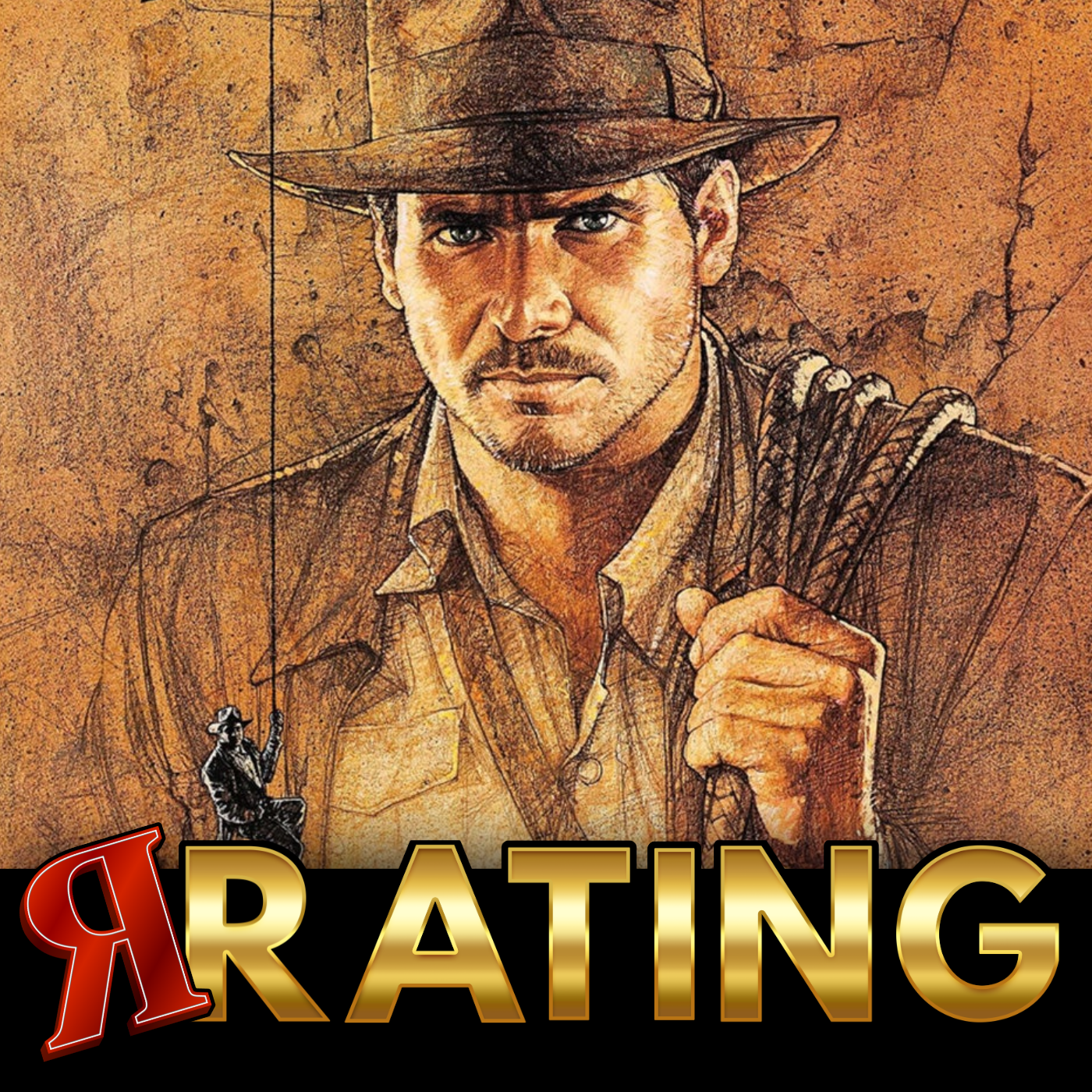
[00:00:01] Speaker A: Writers of The Lost Ark. 1981. Indiana Jones, a professor of archaeology, is hired by the US army intelligence to find the legendary Ark of the Covenant. But time is of the essence as the evil Nazi regime is also honing in on the relic for its rumored world changing powers.
[00:00:32] Speaker B: Completely overrated.
[00:00:33] Speaker C: Hello everybody and welcome back to our rating the show where I get together with two of my friends, we take a movie franchise, break it down by movie, give an overall score, and then throw it back up on the board to see where it lands compared to the other movie franchises. This week we're talking about Raiders of the Lost Ark, which is the first Indiana Jones movie dating all the way back to 1981. And I'm joined as always by Brian and Will. Brian, how are you doing this week?
[00:00:53] Speaker B: I'm good, Dan. How you doing?
[00:00:55] Speaker C: I'm doing okay this week. Happy to be here. What about you, Will?
[00:00:58] Speaker A: I'm doing okay. We're all doing okay.
[00:01:01] Speaker C: Excellent.
Now this movie is a classic. It's older than all of us. So I have to ask, do either of you remember your first time watching this? I can't imagine either of you or this is your first time viewing today, right? Like you've seen this before.
[00:01:16] Speaker A: Seen it before.
[00:01:17] Speaker C: Okay. Do you remember your first time watching it?
[00:01:20] Speaker B: I'm pretty sure it was like sitting in the living room with the family kind of thing. And I don't really remember specifically, but I remember enjoying it for sure as a kid. You know, the adventure of it all.
[00:01:29] Speaker A: Y. Yeah, 100%. This movie's like rated like what, PG 13 or something?
[00:01:34] Speaker B: PG 13?
[00:01:35] Speaker C: PG 13 didn't exist.
[00:01:37] Speaker A: Oh yeah, it didn't exist back then.
[00:01:38] Speaker B: So yeah, I, I remember my mom freaking out when like people's f faces were melting off and stuff. She's like, you shouldn't be watching this
[00:01:46] Speaker A: blood throughout the movie. Like it's pretty, it's pretty gruesome as far as like 80s PG rating, I would say.
But I definitely watch this before I was 10 years old. 100.
[00:01:57] Speaker C: Oh yeah, I. I would agree with that. I don't remember my first playthrough. This is one of those movies that is just baked into my DNA. I don't remember the first time I saw this. I don't remember the first time I saw Star Wars. I remember playing Star wars and playing as Indiana Jones as a kid, but I don't remember the first time I saw bits and pieces of it or all of it together, whatnot. I just, I can picture myself running around the backyard, like just having a Blast with it. But no, I don't remember this movie per se. I was just curious if either of you did or if you all say kind of the same thing. Like we all grew up roughly around the same time, so we all had kind of that same. Like just this just existed in our world.
[00:02:34] Speaker A: Yeah. As far as I remember, it's always been.
It's always been in my brain.
[00:02:39] Speaker C: Yeah.
[00:02:39] Speaker B: Did. Did you guys notice the hard ties to Star wars when watching this? The sound, some of the themes, the different cinematography.
[00:02:50] Speaker C: Well, you got Harrison Ford, John Williams, Spielberg, George Lucas. Like all of the ingredients are there.
[00:02:57] Speaker B: Yeah.
[00:02:58] Speaker C: Yeah.
[00:02:59] Speaker B: It almost felt a little overwhelming when I. I was like, whoa. I don't remember being this strong of it. I mean, it's almost the same franchise. It feels like it's.
[00:03:09] Speaker A: It's a Lucas piece for sure.
[00:03:10] Speaker B: It's a Lucas.
[00:03:11] Speaker C: Yeah, I would argue that a little bit. It definitely. They have their own directions they go. But I understand to an extent what you're saying for sure.
[00:03:20] Speaker A: I've actually heard rumor. I haven't actually watched that closely, but in some of the caverns and things, you can see like a C3PO and things on the walls that they, like, hide.
[00:03:31] Speaker C: I've seen it in on the Internet. I've never caught it in the movie, but yeah, apparently C3PO and R2D2 are like parts of the hieroglyphics. I don't know if it's in this one or in.
In Last Crusade. I think it's. I think it's this one.
But yeah, they definitely appear. But that's more just like a silly Easter egg that you have to be like eagle eyed to catch that. That is for sure.
[00:03:52] Speaker B: Yeah.
[00:03:52] Speaker C: You know, plot related or anything?
[00:03:54] Speaker A: No, for sure.
[00:03:56] Speaker C: All right, so this movie starts off and you have of course, the iconic raiding the temple, finding the. The fertility goddess, stealing it out and getting chased down by the boulder.
I have to ask, is this the most or one of the most iconic cold openings in cinema? Can you think of one that is more prevalent or more well known than this one or better?
[00:04:21] Speaker A: Off the top of my mind, I don't know if I can call out a better one.
[00:04:25] Speaker C: Yeah.
[00:04:26] Speaker A: But it definitely set the benchmark. If nothing else, it is fantastic.
[00:04:33] Speaker B: I will, I will say this. If it's not this one, Spielberg owns it. Like Jaws is another one that's like iconic. The Jaws eating the ship, kind of trying to get up on the ship and eat them. That sequence, like basically anything that went into one of the amusement parks in that era. You know, was a great cinema scene and, and they, they built that into like Epcot center, one of the, one of the other ones.
So I think this is probably one of the most iconic scenes. Running from the boulder, being chased out of the building.
I, I can't top a better one, but if there are, it's probably on one of Spielberg's list because he has some pretty iconic scenes, for sure.
[00:05:20] Speaker C: Like most of this movie, I was kind of. We're thinking about this while I was at work. Most of this movie is pretty iconic in some way, shape or form. Like parts of this movie, massive parts of the movie have been stolen for like Simpsons, Futurama, south park, like anything. It's been copied. The fist fight all over the place. Yeah. The bowl at the beginning, the fist fight in the airplane, the faces melting at the end, the box getting carried into storage as the credits roll.
[00:05:44] Speaker A: Like swapping of Idol for Sam.
[00:05:47] Speaker C: Yeah, exactly.
[00:05:48] Speaker A: Like everything.
[00:05:48] Speaker C: Like this movie is part of the culture in a way that I'm not sure anything else we've really reviewed off the top of my head, I'm not looking at the list or anything off in a way that I don't think anything else we've reviewed is like not quite to this level. Obviously there's other classics we've touched, but
[00:06:04] Speaker A: yeah, I, I would argue a little bit that like the.
Wow, I just blanked hard there.
The Good, the Bad, the Ugly, the Dollars trilogy kind of reinvented the western genre. I feel like this reinvented action movies to what they are. Kind of a modern day styling of now, I guess.
[00:06:26] Speaker C: Yeah, that's fair. The Dollars trilogy has some pretty iconic things to it, but I don't know if they're as.
This is gonna sound weird. I don't know if they're as well known for where they come from. Like, I think everybody knows that. Like, but like gun to your head, how many people would know what movie that's from?
[00:06:46] Speaker A: Sure. That doesn't mean it hasn't affected.
[00:06:48] Speaker C: No, no, I'm not taking away from that. I am not. I just, I feel like you could show almost any scene of this movie to somebody and they'll be like, oh, Indiana Jones.
[00:06:56] Speaker A: Yeah, yeah, yeah. I think just for the genre comparison as like what it did for the genre, moving it forward. I think that's kind of the parallel that I was kind of talking about.
[00:07:06] Speaker C: Nope, that's totally fair.
[00:07:09] Speaker A: Now you were talking about the opening, cold opening. I think everybody loves that. That was Alfred Molina's first credited appearance on film.
I will always remember him as Doc Ock from Spider Man.
Actor in general. But what'd you guys think? He's just a small little part in this. I thought he crushed it.
[00:07:31] Speaker B: Yeah, I thought he was great.
[00:07:34] Speaker C: Yeah, I. I mean, I. I agree.
I think he did very well for the amount of screen time that he had.
I don't know that there's. There's one. There's one actor in this entire film where I'm like. And everybody else, I think for the most part, they kind of crush their. Their roles in this. Like, who's the one actor? It's. It's like it's a online character when they go to Reese Davies's house and it's his wife, I think, and there's like, a monkey on the table. She's like, oh, a monkey? And they're like, oh, yeah, it's cute. Oh, then it lives with us now. And you're just like, yeah, yeah, yeah. Okay, maybe a second chance.
[00:08:09] Speaker B: Can we take a minute to talk about the monkey and how discombobulated that monkey fit into this plot? Because at first. What's the female actress's name? I forgot to bring up my list of names.
[00:08:23] Speaker C: Karen Allen.
[00:08:24] Speaker B: Okay, so. So at first, Kieran Allen is like, ah, it's gross. It's got rabies. Get it away from me. And then suddenly she's feeding it, she loves it. And then it's trying to, like, oust her to the people finding her.
Then, like, then the monkey dies from poison. I'm not sure if I'm supposed to feel bad for it or not. Like, is this a bad monkey? Is this a good monkey? I don't know where they're going with the monkey. The monkey was just there. It was weird to me.
[00:08:48] Speaker C: It's definitely a bad monkey.
[00:08:50] Speaker A: It. It hiled Hitler, man.
[00:08:51] Speaker C: Yeah, right.
[00:08:55] Speaker B: Why are they In a couple of scenes? They're very friendly with the monkey and enjoying its companionship.
[00:09:01] Speaker C: They don't know it's a bad monkey. Yeah, to them it's just like a pet. Like, it's like. It's. If a cat came across you and was, like, nudging into you, you'd pet it. Right? You're gonna pet the cat, probably, and pick it up.
[00:09:12] Speaker B: I guess it was kind of weird because, like, they don't know it's a bad monkey. And then the monkey dies from the poison, which its own master put on the dates, which is kind of weird. And the monkey dies, and everybody's like, oh, well, like, if you thought it was a cute cuddly, friend of the family. Wouldn't you be a little bit more upset about that? I don't know. I mean, the monkey just didn't feel right. It just, it felt like they maybe edited some different scenes in where they just had some. Some magic happened and they're like, oh, that's a good scene. So we'll just fit it in here. And it didn't fit very well to me.
[00:09:42] Speaker C: So Indiana did just lose Marion. I don't think he's going to cry too hard about the monkey.
But also apparently they did seen. They did film the monkey death scene with an animatronic monkey. And it was too good. And, and Steven Spielberg was like, this is going to make people sad. And we're not. This isn't the vibe we're going for right now. So that was why they killed it like off screen to just be like, and this thing happened and we move on. Okay, so there, you're right. There were extra scenes there that they're just like, ah, this doesn't really fit the tone we're going for right now. This isn't what we're focusing on. We're focusing on finding the ark and seeing what happens.
[00:10:16] Speaker A: I mean, in general, I think using a monkey as a grift is. Is a strange choice, but it was cute and served the purpose it needed for the. For the story to move.
[00:10:28] Speaker B: Yeah, it progressed the plot. There were like, they needed it too. So I guess it's okay. It just, it felt a little weird. There were just some scenes where they really liked the mon. Then they didn't like the monkey. And the monkey was supposed to be bad, but it was sort of good, sorta. I don't know.
[00:10:40] Speaker A: It's.
[00:10:40] Speaker C: It's dramatic irony. They think the monkey is good. They like the monkey the entire time. We know the monkey is bad, so we're not super sad when the monkey dies. And I don't get the fact that impression that Indiana Jones is like gonna cry his heart out for a monkey regardless.
I don't know. I've never been to. Is it Cairo they're in at the time?
[00:10:59] Speaker B: Yeah, Cairo.
[00:11:00] Speaker A: Yeah.
[00:11:02] Speaker C: Monkeys might be super prevalent. Like if I'm in Toronto and I see that's weird, but over there, I have no idea. And maybe this is even kind of weird to say out loud, but like, maybe they're just like stray cats and they're just like, oh yeah, they're everywhere. Of course there's a monkey. Why. Why wouldn't that guy have a monkey? Yeah, yeah, yeah. It could Be so. I. I don't know. It didn't strike me as odd because everything in that scene is so foreign. So it's just like, sure, monkeys, sure. People carrying wicker baskets. Why not? That's what happens over there, right?
[00:11:31] Speaker A: Yeah.
[00:11:32] Speaker C: In the 1930s.
[00:11:35] Speaker A: Quick shout out to Frank Welker, who provided the chitter chatter to the monkey. He also voiced the monkey Abu in Aladdin in 92. So there you go. There's a monkey voice actor out there, everybody.
[00:11:47] Speaker C: That seems legitimately fitting because, like, the monkey was stealing stuff too. And it just. I know. It's kind of like a boo.
[00:11:52] Speaker A: Same character.
[00:11:53] Speaker C: Same character. Yeah, Sorry. Yeah, you all over the place. We were talking about actors though, in this movie and I have to say, like, with that one, like, no named character exception, I think everybody was doing really well. I love Harrison Ford in this movie.
[00:12:13] Speaker B: Yes.
[00:12:14] Speaker C: Maybe the iconic role of his four mine. And like, that's a hard thing to say. He's been in some phenomenal movies, some incredible franchises.
I'd personally take Indiana Jones over Han Solo.
[00:12:26] Speaker A: I agree, but this is more my genre than Star Wars.
[00:12:31] Speaker C: Sure.
[00:12:32] Speaker A: That might have some implication as well.
[00:12:34] Speaker C: Yeah, the genre. I'd probably take Star wars over Indiana Jones. Oh, sorry, sorry, sorry. I would take sci fi over adventure action.
Yeah.
But as far as like the characters go, Indiana Jones feels deep and lived in and Han Solo always felt kind of like one dimension shallow to me.
[00:12:49] Speaker A: Yeah, yeah, I agree with that as well. I think they did a good job of making him a complex character with what they had. You know, he's a nerd, which is great. You know, this is maybe the first time that a nerd was so able to be cool on screen.
[00:13:07] Speaker B: And that's all the school girls swooning for him, writing I love you on their eyelids and stuff.
[00:13:12] Speaker C: He's not only cool, he's like darn near a ladies man. Like, he's, he's suave, you know, like he's actually this good looking dude. Right. Apparently that was a subplot that was supposed to be in like Steven Spielberg wanted to make a 007 movie, a James Bond movie.
Couldn't get the licensing whatnot. Just talked to George Lucas, they decided to come up with this character. But part of this character at one point was supposed to be that he is this like ladies man. And they both kind of like, this just doesn't quite feel right. So the scene where what's his name, Brody, I think it is, comes to his house to be like, hey, we, we got it. We're gonna go. He's in like a bathrobe and whatnot. A cut part of that scene is he's entertaining a young woman in the other room. And he's just like. That's why he's got two wine glasses. He just kind of gives one to Brody, but wasn't for him originally. And like, I don't think this fits the way we want it to. This isn't really, I like, a little
[00:14:04] Speaker B: bit nerdy, but at the same time he kind of like, he's also pretty suave with the ladies. We see that more in later films. Right. He doesn't have a lot of interaction with the females in this other than we know he has this past relationship where he left her.
By the way, I think the chemistry between him and Marion is. Is fantastic. I think her acting is fantastic. I think they make a great duo in this film.
I think she's adorable and she's very attractive. Right. They brought her in for the eye candy. They definitely show her off. But there's way more to her than just that. So. Turned out to be a fantastic character. Later she comes back into the franchise as we'll talk about.
But I do like how he is a little bit more of, you know, he's an archaeologist, not a secret super spy.
So I do like that he is a little bit more nerdy than what they maybe originally wanted. This 007 character that you talk about.
[00:15:02] Speaker C: Yeah, no, I, I completely agree. I'm very happy with where they landed with his character.
Not only in this movie, but in the first. I'm gonna say first three movies. I have not as familiar with four and five, so we'll talk about those when I'm. When I've seen them a bit more recently.
But as far as the first three movies go, I think he's pretty consistent to who he is. And I, I like quite a bit of who he is. Not everything about who he is. There's some, there's some shade there. But that also just helps make him
[00:15:27] Speaker A: a little more real.
[00:15:27] Speaker C: That.
[00:15:27] Speaker B: Yeah.
[00:15:29] Speaker C: Character.
[00:15:29] Speaker A: Exactly. He's. He's valuable as well. And you know, he's funny, he's witty, but he, he also has to act off the cuff. He doesn't know how things are going to go down. He doesn't always have the confidence. He gets beat up. You know, it's great because it, it feels more lived in than a lot of these action hero characters and, and that goes a long way to be a. Being a relatable character.
Not being perfect goes a long way. And I like that. The only maybe negative point on his character is I feel like he doesn't have a lot of character arc throughout this movie. He starts fairly similar as the place where he ends in this movie, or at least that's how I felt.
He doesn't really gain a whole lot out of this. Right. He loves archaeology.
He wants to get things for the museum to keep them safe. He ends in the exact same manner.
Where do you go from there?
[00:16:26] Speaker B: And that brings up a great point. And we did mention this in the Watch Party. Let's talk about how absolutely pointless his character was in the overall plot of the film.
[00:16:37] Speaker C: I know what we're talking about because they talk about it on the Big Bang Theory.
I don't. That doesn't bother me at all. I don't know that I disagree with what you're saying, because you're right. Like if you do remove him from almost everything, really, it just changes the timeline of how things happen.
[00:16:53] Speaker A: Yeah.
[00:16:55] Speaker B: They will hopefully eventually find the sarcophagus. Maybe they don't find the sarcophagus because they were looking in the wrong spot. Had no idea.
So maybe they never find the sarcophagus, the ark, but if they do, they still take the lid off and all the Nazis die.
So there's not a real huge purpose for Indy to be in here other than to make a great character that we get to follow through a wonderful adventure. And I love the movie. I love the adventure and I love follow following him through it.
And I didn't even pick up on that flaw in the plot until you guys in the Watch Party had mentioned about the Big Bang, pointing that out.
I don't care. It's still a super fun movie to watch. And if he didn't exist, then it wouldn't be. You wouldn't have any kind of a movie to build off of. So his character being the point of interest that we follow through this adventure is the movie. And that's fantastic. And it's great. It's just a little bit weird that he didn't actually do anything to solve the problem at the end.
[00:17:59] Speaker C: Except.
[00:18:00] Speaker B: Close your eyes, Marion. Close your eyes
[00:18:04] Speaker C: with what you say in the sense that I. I don't care. It doesn't change my overall opinion of the movie whatsoever. It's a fun thing to just be like, oh, I guess you're right. I still have a great time watching this. Every time I watch it, it doesn't detract from the film for me. The one, I guess somewhat point, I would say Is if Indiana Jones wasn't there at the end, all the Nazis there would die, but the next group of Nazis would just come and pick it up.
[00:18:29] Speaker A: Yeah.
[00:18:30] Speaker C: Whereas him being there, it's like, okay, now I can call the Americans in, and now we can go from there. I don't know why he doesn't call the Americans in sooner. Like, I don't know why we don't see him radioing them at some point and be like, hey, I know where it is. We've got it. Like, send in the cavalry.
[00:18:45] Speaker A: Well, you could even go back further. He's got it in the back of the truck. Why does he go after the Nazis in the car ahead? Why didn't he just drive off somewhere else? Yeah, take it with him.
[00:18:57] Speaker C: He does, doesn't he? Doesn't he, like, rub them off the road? And then he goes and hides in the garage and then the Nazis don't know where he is. Oh, then he gets on the boat and he leaves.
[00:19:06] Speaker B: Yeah, but I mean, he. He didn't have to extend the car chase. He kind of just turned, taking a left and left him in the dust.
[00:19:14] Speaker C: I mean, I guess. But if they're still in active cars, they will just turn around. Like, the car is gonna be faster than the truck, so they'll just catch up to him again. Right. So I get what you're saying, but
[00:19:22] Speaker B: let's face it, there's a lot of things that happen in this movie because we want to see a fun scene happen, right?
[00:19:29] Speaker C: Sure.
[00:19:30] Speaker B: When they shoot the fuel tanker in the airplane scene and the fuel goes on the ground and goes in two specific trails, one toward the fire and one toward the airplane. That's not normal. You know, there's lots of weird stuff that goes on in this. The basket swapping just to make the scene so he thinks that she's dead. Like, that's a little weird and kind of overly complex.
It. But it made for a good time, which is a tight rope to walk across on. On this particular movie, you have some very gory, violent death scenes, some very scary stuff. You also have some ridiculously goofy fight scenes that are comical. The bar fight scene, the music queues up and they're throwing punches and smashing bottles and, hey, could you hand me the bottle of whiskey? Smash it over this guy's head. That sort of thing going on. That's comical.
And yet for some reason, the movie works. They add all these weird parts, both comical and disgusting. Violence. And it's. It still, it comes together to. To be a really good film.
So I. I'm okay with this kind of weird storytelling because somehow they pull it off.
[00:20:43] Speaker C: I agree entirely. And, in fact, this is something we're going to talk about more in the next movie. Next. Not next week, two weeks from now. My apologies.
Is that tightrope they walk between, like, silly, goofy, and fun and funny. Right. And in this movie, they keep me on the side of. It's a little silly, but I have fun with it. There's a scene in the next movie which they cross that rope pretty hard, and it's just. It's almost cringy to watch.
So I think they do a really solid job in this one, as you mentioned, to walk that tightrope. And I. I think they walk the tightrope pretty expertly on this one one.
[00:21:17] Speaker A: Yeah, I'll agree with that. I think it was Lawrence Kazden who was hired to help write the script with this, with Lucas, and he brought a lot of the humor elements to this, and Lucas really enjoyed that, which is why he brought him in for Empire Strikes Back and other pictures that Lucas worked on. So I think he's the one that we can compliment for actually making that line walkable.
And then I think the other writer on the picture was Philip Kaufman, but he brought more of the Indiana character to the table and kind of fleshed him out, his look, his mannerisms, things like that. So all very interesting. I think a pretty good writing crew there to make this script go off well.
[00:22:01] Speaker C: And Harrison Ford himself brings a whole lot to the character as well. Like, this is gonna be the most obnoxious thing because everybody already knows this. But yep, in the scene in the flea market or in the open market where he's chasing all the different bad guys, and all of a sudden there's this massive guy swinging his gigantic sword around and then he just pulls a gun and shoots him.
Is because Harrison Ford was feeling sick that day and didn't want to have to go through the whole big choreographed fight scene they were supposed to have. And he just pulled his gun out and shot him. And Spielberg's like, that's amazing.
And kept it. And it's like one of those brilliant. Like, that is so much who Indiana Jones is, right? Like, that feels like a better character arc than if he did. Like, all right, rolls up his sleeves and goes to town. Like, he's not perfect. And he fumbles the ball constantly, but somehow he always manages to make. Make his way on top like that. That feels like who Indiana Jones is. As opposed to, again, Han Solo, who's always Just like suave and cool and kind of perfect. Too perfect for his own good. I like this.
[00:23:00] Speaker B: That specific scene you're talking about where he pulls the gun out and shoots the swordsman, that makes his character more relatable. Right. Because you and me, we're not going to get our whip out or try and go toe to toe with that guy. We're probably either going to shoot him or run away. Those are more logical, reasonable things to do. And so when Harrison Ford, the actor, decides to make that change to the script and make that part of his character, it felt right, it felt natural, it felt relatable, and it was hilarious. And one of those more iconic moments from the movie that we were talking about earlier. Everybody knows that scene.
[00:23:36] Speaker C: Absolutely.
You mentioned relatable. Absolutely. If I. If a guy's got a gigantic sword, he's menacing, he's bigger than I am, and I know I've got a gun on my hip.
[00:23:47] Speaker A: Of course.
[00:23:48] Speaker C: You know what I mean? Like, of course that's what the play.
But, yeah, it almost makes you feel like, why wasn't it written that way in the first place?
[00:23:56] Speaker A: Exactly. And that. I think that part of that is, you know, a good actor will get into that character and knows that character inside and out. And I think that is just like a. An example of Harrison Ford knows Indiana Jones and what Indiana Jones would do. Indiana Jones has just gone through all these fights. Sure. Harrison Ford is feeling food poisoning. Indiana Jones is feeling exhausted. So does he want this fight to go out? No, he wants it over as fast as possible. Click, boom, Done.
[00:24:25] Speaker C: Absolutely.
All right. We've talked about the actors.
What about the practical effects of the movie? We've talked about how gory it is. But for 1981, there's. I don't think there's any CGI in this movie. This is all practical effects, including the opening scene, which I don't know if they can rebuild that set or if it was like a one and done and you just pray you get it in the first time. But, like, when everything's crumbling down, all the darts are flying everywhere, that giant boulder's rolling down. I love watching movies like this because part of my brain is like, how did they do this? Did they have to do it multiple times? What does it look like to set this all up for a second time? The room was the well of Souls, I think it is, with like, 7, 000 snakes in it.
Those are all real snakes. Like, they actually had to fill that room with snakes and then have the actors in there. And just kind of hope that nobody gets hurt.
[00:25:13] Speaker A: I don't know.
[00:25:16] Speaker B: Fake ones in there.
[00:25:17] Speaker C: There's some fake ones, sure, but there's a lot of real live ones.
[00:25:20] Speaker A: There's a lot. A lot of snakes.
[00:25:21] Speaker C: Yeah, yeah.
[00:25:22] Speaker A: No, it's impressive, I think, even to today's standard because partially we rely on CGI so much to today's standards. I think it holds up because it is. They were such impressive set pieces throughout this movie. And I think that was their goal, was to like, wow you with the intricacies and the, the bigness of this movie. And I think they pulled it off really well. I'm always a big advocate of practical effects, so it's hard to, you know, go wrong with me here. But even at the end of the movie when it gets a little far fetched, shall we say, with the spirits flying around and the power of God laser beaming everyone, it still looks not bad for being practical effects and having to do all of that, you know, film live and then layer it on the film and like, it looks pretty good. But it will always remind me a little bit of Ghostbusters because it's the same. It's the same guy.
[00:26:21] Speaker B: I was gonna say it looked just like Ghostbusters.
[00:26:23] Speaker C: Yeah, it is the 80s, so you gotta have that blue lightning in there.
[00:26:26] Speaker A: Oh, 100.
[00:26:28] Speaker C: I. I will push back the tiniest bit. Ghostbusters looks like this. This came up four years earlier.
[00:26:34] Speaker A: I understand, I understand they look the same because it's the same person creating the effects though, right?
[00:26:39] Speaker C: So sure.
[00:26:39] Speaker A: I think of Ghostbusters. I think because maybe I saw it, I might have actually seen Ghostbusters before I saw this movie.
[00:26:48] Speaker C: That's fair.
[00:26:49] Speaker B: So I, I would say I absolutely love it. Right. I'm a big fan of John Carpenter's the Thing and they use practical effects to the max in the original film. And I loved it.
So when I see somebody's face melting off, even though today it starts to look like claymation and it's a little cheesy, I still appreciate it so much that it is not cgi.
And so that alone, the fact that they took on the challenge of doing such complex sequences like lifting the. The lid of the arc off and letting all that energy out, the faces melting, even, even the bigger set pieces, like Danny said, the rolling ball in the beginning or the airplane scene that's constantly moving, those are tough things to pull off in a practical world. And they did such an amazing job at the time, they. That it still looks good and is entertaining today, even though it obviously doesn't hold up as well as it could.
I don't think that today you could do practical effects and do it much better than what they did. I think that today movie makers would just supplement with CG and kind of, you know, make it look technical. And I don't like that as much. I would love to see somebody try to redo this movie or, or a similar movie with as much effort into a practical. I don't want to redo this movie, but a movie that, that require that with big set pieces like this big interesting stuff and try and do it all with practical effects. I'd love to see them try and do it as well as this was done.
[00:28:23] Speaker C: I think the problem you'd run in there into there is not many people know how to do it anymore. Like it's, it is becoming a lost art.
[00:28:31] Speaker B: You're absolutely right.
[00:28:33] Speaker C: Everybody now is just doing cgi even, even to some extent, I think not puppetry, but like, like the, the model ships, whatever you'd call that. Oh that kind of camera work, miniature work, even that to some extent is just like well why would we do that? And we can just use CGI like we saw recently. I don't know if you watched the new Punisher movie that just came with a Punisher short that just came out like a guy falls off a building like 10ft and they're just like ah, just CGI. Like they didn't even use like a stunt double kind of thing. It just looks like.
[00:29:01] Speaker B: That's enough, Dan.
[00:29:02] Speaker A: That's actually inaccurate.
[00:29:03] Speaker C: Okay. They used a stunt double and then photoshopped his face. But either way it looks awful.
[00:29:08] Speaker A: But it was a practical effect that they.
[00:29:11] Speaker C: They up.
[00:29:13] Speaker A: Yeah. But yeah, they couldn't get right. It didn't look good. But it was practical. It was practical. There was a stuntman involved.
[00:29:20] Speaker C: Sure.
[00:29:22] Speaker A: It does go to your clay that
[00:29:25] Speaker C: the point is it looks worse in 2026 than this movie looks in 1981. This is a 45 year old movie.
[00:29:32] Speaker B: Yeah.
[00:29:32] Speaker C: And like I watch this with my kids now. You know, the gory scenes aside, they're into it like they enjoyed it. They were laughing at the parts they're supposed to laugh at. They're engaged with this movie or something. You guys were watching this in the watch party and I had to turn it on for you because I owned a copy and you couldn't find it. And I was supposed to be with my family. I ended up watching the first like 20 minutes of this movie, 25 minutes of this movie because like it just grabs you right away. And I'm like, no, I gotta walk away. I gotta go do other things. Yeah, I, I don't know. This is not necessarily like, the genre is right up this alley for me, but this movie specifically just hits me so hard every time I watch.
[00:30:07] Speaker B: And this movie creates a starting point for this franchise like none other. I mean, there are very few franchises that have this anchor starting film like this where we're. And we're going to talk about this as we go through the franchise. Other films in this franchise will start to veer away a little or a lot from the recipe and you start to not like those as much, or I'm guessing you guys aren't going to like those as much. But there are some movies in this franchise that come right back to its roots and end up being epic additions to the franchise. And we'll get there. But I just love that this movie, this starting point for the franchise is done so well and that the. The successful additions to the franchise are the ones that look back to this film. So watch this film and see where it all begins and see where it develops as they go through this franchise.
[00:31:08] Speaker C: I absolutely agree. And it, it works so well as the kickoff to the franchise.
But also, and I don't know this, I'm just guessing because they called it Raiders of the Lost Ark and not Indiana Jones and the Raiders the Lost Ark and not Indiana Jones and the Lost Ark.
I don't know that they built this to make a franchise. Like, it doesn't feel like they are purposely not telling you things because they know they're going to get to them in the next movie. It feels like they just went in to make a complete movie and they're like, oh, crap, that did really well. Let's make another one. And it, it doesn't feel like it cheapens this one that there is a sequel. It just feels natural. But also, if this is the only one we ever got, you wouldn't be like, oh man, I really wish we got to find out what happened to like, it feels like a fully contained box that just happens to spawn a really successful franchise.
[00:32:00] Speaker A: Well, and I think that is obviously a sign of a great movie, but this was in fact suggested to Spielberg from Lucas as a trilogy right out the git.
One of the reasons Spielberg was actually hesitant to sign on initially was because he's like, oh, I don't want to write, you know, two additional scripts after this. You know, that's a lot of things. And blah, d, blah, blah. And Lucas kind of lied a little bit and was like, no, no, I've already got all three scripts made
[00:32:32] Speaker C: when
[00:32:32] Speaker A: he, he didn't have one script done at that time.
So he got Spielberg right into it, right out of the gate as a trilogy, even though it wasn't even written yet.
[00:32:44] Speaker C: Feels on par for George Lucas if you know anything about Star wars movies.
Oh yeah, I got nine of these babies written right now. I know exactly what's gonna happen across all nine, don't you worry. Very coherent story, I promise.
[00:33:02] Speaker A: But it does make sense and like you said, it's, it's a great standalone movie. And that I think is a huge key to a great franchise is if each movie can stand alone. And a lot of times in franchises, modern day, it doesn't happen that way because they are a one off movie and they're like, oh, we made a bunch of money, let's make a bunch more by just jamming a sequel down.
And so that's what this movie does great. And I wish more movies did nowadays and they just, they just don't seem to do that anymore.
[00:33:38] Speaker B: Yeah, I think a lot of our best franchises start with a great standalone film that people are just like, I want more of that. And so the better franchises do world building off of these concepts, these ideas and these characters. Like we had with Alien to Aliens, right? We went with a small cast in a spaceship to the planet surface side and where their, the company is going in the future and all that world building that went on there to create a completely different experience in the sequel, which was a lot of fun. And then they had three.
But there's, you know, there's a lot of my favorite franchises and we're going to get into Terminator, which it starts out with these key concepts and you just go, I want more. And you've got questions as an audience and you get into a sequel or the third, fourth, fifth rendition of the film and you just build on that world and expand on it without having to change too much. It makes it great. And so Indiana Jones trilogy is a fantastic expanse of Harrison Ford's character and different experiences.
And in my opinion, kind of the pinnacle is when we get to meet his father and we're bringing in his family, his background, all that for yet another run through the the gauntlet with the whip. So I think it's, you get a great story that can stand on its own and your audience wants more and you can build on that and give them more. And that's what this movie did to start this franchise.
[00:35:13] Speaker C: Very Nice. Now, I have a question for you guys.
And I kind of know where Will. Sorry, where. Brian Sands, I think. I don't know. I know where Will stands.
I was raised in a very religious household, so the fact that Indiana Jones won and four, three have very religious overtones, or he's. He's searching for things from the Bible always made those movies stand out a little bit more to me. And you mentioned a second ago he was kind of goofy. Like the whole lightning of God striking people down.
I never bumped into that. I'm not entirely sure if that's because of my upbringing. Not that I was raised that, you know, the arc is going to kill people or whatnot, but, you know, it.
[00:35:50] Speaker B: It.
[00:35:51] Speaker C: I guess I was raised that it was a real thing and that, you know, God's a real thing and all that stuff.
Assuming you did not come from a religious household or. Let's start there. Did you grow up religious, Will, or.
[00:36:01] Speaker A: I try.
[00:36:02] Speaker C: If I ask you that on the public. Okay.
[00:36:04] Speaker B: No, no.
[00:36:04] Speaker A: Yeah.
[00:36:06] Speaker C: So do one and three. Obviously it's hard because they are, I feel like just straight up better movies than other two. Do they feel like more real because they're set in real world things, as opposed to like four, which deals with aliens, and five I've never even seen before, but.
[00:36:21] Speaker A: Right.
[00:36:21] Speaker C: Time travel.
Does it. Does it ground the franchise more for you and make it a bit more interesting, or is it all just silly mumbo jumbo you don't care about?
[00:36:29] Speaker B: Yeah, yeah.
[00:36:30] Speaker A: For me, I think what grounds it more is like some of the other real live events, like the Nazis and this and that. Like, it is somewhat based in historical accuracies.
But as far as, like, the arc itself and its powers and all of that, Halibaloo, if you will.
I related to Indy in that. Right. He doesn't believe in it, so I don't have to believe in it. And then when it goes off, it's just a fun spectacle of like, okay, wow, deus ex machina much. Absolutely. Literally on the head. But that's okay because it was.
This was before every movie ended in a big CGI explosion.
Maybe I have to blame this movie for that.
[00:37:14] Speaker C: I don't know.
[00:37:15] Speaker A: But when I was watching this, it. It didn't bother me at all having that little bit of whimsy, you know, it just added to the action. Like, how do you one up all these great action scenes? Well, you go even bigger.
[00:37:32] Speaker C: That's fair.
Brian, are you.
[00:37:37] Speaker B: Some of these, like, so getting a little ahead of ourselves. We should probably have the talk after we watch five, but you have religion. Number two is quasi religion. Voodoo, but it's somebody else's religion. Number three, we're back to religion. Then four is aliens and five is time travel.
You could argue that four is the most realistic option of all these.
Or if you're a highly religious person, you could be offended at 1 and 3 and their depiction of these religious icons. So they took some risks.
But honestly, you fall into these movies because of the characters and the sequences and the adventure and everything else is, like Will said, you relate to it in the way that the star of the film relates to it. And that's just how you kind of take that perspective.
And it makes it easy. It's another. It's another way they walked that tightrope with this content and they found a way to make it work, whoever you are.
[00:38:34] Speaker C: Yeah, I guess what. I mean, maybe I. Maybe I didn't explain this quite properly. In the first one, they're looking for the Ark of the Covenant. I've heard of that before. In the second one, I don't remember what they're looking for. Never heard of it before. In the third one, they're looking for the. The rail. I've heard of that before. In the fourth one, they're looking for an alien thing that they made up for the movie. I've not heard of that before. That's, I guess, what it means. So, like, they're not.
Another example. Let's say, was it National Treasure? They're looking for the document, the shoot.
Come on, Run near the American. What's the massive document that, like, your entire.
[00:39:10] Speaker B: The Independence Independent Declaration. Independence.
[00:39:12] Speaker C: Declaration of Independence.
[00:39:14] Speaker B: Yeah.
[00:39:14] Speaker C: It just feels more interesting when you're like, oh, like, I'm instantly intrigued because I know what we're talking about. As opposed to like, oh, we need to explain this and what the MacGuffin does.
[00:39:26] Speaker B: Let me give you the counterpoint to this. There is a Mission Impossible movie. I don't remember. It was. I don't know, maybe it was seven or maybe it was 27. I don't remember. They're all the same. But in the movie, I. I remember they basically say, we gotta get this back because it could destroy the world.
And he doesn't even ask what it is. They don't even bother telling you until later. Like, three movies later, they do tell you what it was. But in this particular Mission Impossible movie, it's just a thing he's gotta get or the world's gonna end.
And you know what I went by this time in the franchise, I don't care what it is. Let's just watch him climb on a plane or a train or a motorcycle and do his thing. And that's all I needed at that point. So whether it's a religious icon that I know of or some fictitious alien artifact, I don't care. I don't care. Just show me the fun stuff. Let me see a pit of snakes. Let me see him swinging over spikes. Let me see car chases and fist fights and gunfights. That's what I'm here for. And so it really just doesn't matter.
[00:40:38] Speaker A: Okay.
[00:40:39] Speaker C: Nope, Fair enough.
[00:40:39] Speaker A: Yeah, I mean, Tamir Brian, I agree. It doesn't really matter.
I, I had heard of those relics prior to the movies, but they. If, even if you hadn't, they describe what it is, what it could do, and why it's needed. So that's enough for you to go on the adventure and know that the stakes are high and the Nazis are after it, by golly. So we gots to get it.
I, I think they do a fine job making it a necessity to get this object, whatever it is. Sure.
[00:41:15] Speaker C: No, I, I'm, I, I agree with that. I guess my.
I think it's relatively clear.
Maybe I'm putting my own bias out there. Like, one in three are the best ones in this franchise, and one in three happen to be the ones that deal with the.
[00:41:29] Speaker B: Getting a little ahead.
[00:41:30] Speaker C: Christian artifacts. I'd be shocked yet. Okay, okay. You go ahead and give Crystal Skull a better score than the Last Crusade. See where we end up.
I don't know if it was my own personal bias. I think that saying that, or if it's like just the movies are better constricted or however it ends up working out. But that was just a question I had for you just to see.
[00:41:49] Speaker A: Yeah, that's fair.
[00:41:50] Speaker C: Where you guys landed on it.
[00:41:52] Speaker A: Maybe one huge point we haven't touched on yet would be the John Williams effect.
John Williams was, like, peaking at this time in his career and just was banger after banger after banger, and I think this movie is no exception. Please correct me if you think otherwise.
I think anytime you get lucky enough to watch a movie with John Williams Scott scoring it, you're gonna at least enjoy the music.
[00:42:24] Speaker C: I could not agree with you more. I heard a stat the other day, and I'm gonna look it up super quickly just to make sure that I've got it right.
But something like, John Williams has like 54 Academy nominations for best soundtrack or something just ridiculous. Like, holy Cow.
[00:42:38] Speaker A: Yeah. And mentioning that I believe this movie had nine Oscar nominations. It won't four or five of them.
Maybe one of the few action adventure movies that was nominated for best picture. It didn't win. But, you know, even being considered is pretty rare for the Academy.
So there, there's a reason this movie has been touted for years as the perfect movie.
And a lot of those reasons we talk about this evening.
[00:43:06] Speaker C: Yeah. 54 Academy Award nominations, winning five of them over his career.
John Lewis is in his 90s at this point. It's going to be a tragedy to lose him, but he's given us so much over the course of his lifetime.
And I, I, I, I don't disagree. I think this is right up there with some of his best work. If not, you know, in conversation for his best work.
[00:43:29] Speaker A: I agree.
[00:43:30] Speaker B: Well, I, I want to, I want to kind of work off of some points. We talked about Mortal Kombat 2 and Mortal Kombat last week and the week before.
And Dan, you had mentioned that. I don't care that things aren't perfect. I came here to watch fatalities. I came here to watch stuff that reminds me of the video game. That's what we're here for, is the action. It's okay that this stuff doesn't make sense or is discombobulated, but here we have a guy chasing down religious artifacts with a whip and this, you know, a weird character kind of out of left field.
This great story, great action adventure, entertaining thing that didn't need to really make sense. We didn't need anything, but it does. It works and everything's great. And it's one of the most fantastic movies, period.
And I think that this showcases that, yes, you can have an action movie or an adventure movie that is really, really good.
You can put your heart and soul into a movie that doesn't need to be amazing to make money, but it could be amazing and still make money. And I, I just think this is what we should strive for, is putting all the right pieces together in a very delicate way. Because, like we talked about, there's, there's concepts and issues and hard violence and gross stuff happening with comedic things and different characters and religion in here. And everybody loves the damn film. So it's a tough one to pull off. And they did it. And this is what I want more movie makers to shoot for, is to, is to make a new Raiders of the Lost Ark, something fresh and different, but put their heart and soul into it. Don't step up to the plate to shoot for the middle, you know.
[00:45:19] Speaker C: Okay. That's a very different conversation we can have after the credits. Because I don't disagree with anything you're saying.
I just don't necessarily hold every single thing I ever watched to that standard. And, you know, Will, I'm sure, will say that I should.
[00:45:33] Speaker B: Yes. I go watch Fast and Furious movies in theaters knowing full well what I'm getting, and I'm okay with that.
I stopped after like seven or something because I did get pretty tired of it. I'm like, okay, they're just driving fast and blowing things up at this point.
I want. I want deep connections. I'd like to see somebody turn a franchise around. Five movies into the franchise. We saw Prey, a much better written film in the Predator franchise, which was all going downhill, and then they turned it around. With great writing and good characters and stuff, we can do that in these films. Raiders shows us that you can have an action adventure film that tops the charts, hits all the buttons, and does a fantastic job.
[00:46:15] Speaker A: Yeah, for sure. And I think there's also. There's also something to be said.
There's some movies you can see the heart and soul of the creators in, and this was one of them.
And I think on top of that, there was Lucas Spielberg really getting into their prime in this freaking. John Williams in his prime. Like, there was so much talent in their prime right now and. And still young enough to be like, trying to break the mold that they put their all into it. And you can see that in this movie, whereas you just don't see or feel that in a lot of other things that I would rate much lower than this movie. I won't name names Fast and Furious, but it is what it is.
And you can't always capture that lightning in a bottle. You just can't. Dan's not wrong about that.
It just. Otherwise there would be no market for movies because they're just right.
Right.
[00:47:17] Speaker B: You got to have some duds to. To. To highlight the successes. I. I get that. I do. I. I just. I just want to see everybody try. I want to see everybody swing for the fences every time.
[00:47:26] Speaker C: And I'm sure not necessarily Mortal Kombat 2, but I'm sure there's a lot of movies that are not great that are the director swinging for the fence. It's just not every director is Steven Spielberg. Not every director has John Williams on speed dial.
[00:47:39] Speaker B: I can appreciate these directors that are taking chances and failing. That's why I like M. Night Shyamalan so much. He has some great successes and Some excellent failures as well. But he's always swinging for the fence with his movies. And so I'm always going to tune in for that. I'm always going to give him the benefit of the doubt and check out his films because I think he chooses some excellent stories and he always tries hard. And that's just what I want to see. When you watch Mortal Kombat franchise, you know that they just have a budgetary goal. We're gonna spend this much and we want to try and make this much. We don't give a about the rest. That bothers me. I don't like that mentality. And we get a lot of that in Hollywood these days.
[00:48:19] Speaker A: Yeah. Again, I think a deeper conversation as well, but I don't think you're completely off the base there.
[00:48:26] Speaker C: Well, I don't think you're wrong at all. It's just like that was last week. Why are we still talking about this?
[00:48:31] Speaker B: Specific to Raiders of the Last Ark, I do want to mention Ronald Lacey. His character tot the guy that burns the medallion into his hand.
What a fantastic character they made with him. I love when he walks in the room and he gets out his coat hanger and you think he's gonna torture somebody, but it's just a coat hanger for his jacket. The way he talks, the way he acts. He's so creepy, so sleazy.
Very small role in the film, but just like all the other small roles in the film, they do a really good job with it. So I just wanted to mention Ron Lacy was. Was really good in this.
[00:49:04] Speaker C: I will piggyback off that. I think he's also phenomenal. The scar in his hand is such a great, such a cool idea that like, oh, they almost found how to get there, but they only had one half of the puzzle piece is brilliant.
But you're right, he's a super for. For how big he is on like the poster and in your memory of this movie. Because he really does stand out. He's such a small character. They don't even say his name. Like, you only know his name because of the credits.
But like, I know who you're talking about.
[00:49:32] Speaker A: I also wished they gave him a little more, you know, because he is such a great character, but he doesn't really torture anybody.
[00:49:39] Speaker B: He doesn't know. He doesn't actually do anything.
[00:49:41] Speaker A: Get to do a whole lot. And I wish he, you know, it would have upped the stakes a little bit more if he.
I sorry, Marion, you're the only target here.
[00:49:50] Speaker C: But
[00:49:52] Speaker A: she comes back with one less arm or something like.
[00:49:54] Speaker B: I don't know.
[00:49:55] Speaker A: Wow.
[00:49:57] Speaker C: Well, Will wants us to get even darker. How can we make this movie PG13?
[00:50:02] Speaker B: I also want a time where it doesn't to be a little bit smaller or. Oh, yeah, that was for Ron Lacy to have a bigger hand because, like, when he shows his hand, he's missing like a third of the medallions. Not there. Like, it didn't. Didn't I. That kind of bothered me. I was like, come on, you don't know what it says. He's got small little baby hands. He couldn't hold the whole thing.
[00:50:20] Speaker A: It was when Marion just pulled it out of her shirt like it was never there in the spirit.
[00:50:24] Speaker B: Yeah.
[00:50:26] Speaker C: Yeah, that was pretty funny.
[00:50:29] Speaker B: Oh, my gosh.
Clock just under his shirt.
[00:50:34] Speaker A: Yeah, that's right.
[00:50:36] Speaker C: If you like what we do and you want to help support us, consider joining our Patreon. There's a link down below.
Thank you to our producers as well as our executive producer, Dino. And a huge shout out to our writers, Elder Jam990, Ms. Hillary, and Real Bubba Hotep.
[00:50:52] Speaker B: What can I say about this movie other than I love it? I think it's a great starting point for this franchise. You're gonna find that I do enjoy a lot of the movies in this franchise for a variety of reasons, and some of the movies actually offend me for a variety of reasons. So this is going to be a great franchise to tune in and, and, and stay with us for this one gets a 92. For me, it's as good as an action movie could probably get. Realistically speaking, it holds up really well because of how much effort and how much just skill went into this. Like, we talk about all the people that are involved and we talk about how they were kind of at the peak of their game all coming together for this film. It's known it's a good film. I agree. It's a good film and I don't have hardly any critiquing for it whatsoever.
I. I just love watching this and, and I'm glad that Harrison Ford brought us this character and helped polish it out so that we get to enjoy this franchise.
Though I'm hoping they don't add any more films to this franchise. So 92 for me.
[00:51:57] Speaker C: I was talking with somebody else behind the scenes before we did this because I was really conflicted. And after talking with you guys for the last hour and thinking about this for last week, I don't think there's anything else I can really do.
This is going to be the second time that I wore a movie. A perfect score.
[00:52:14] Speaker A: I knew it.
[00:52:16] Speaker C: This is such a part of my DNA. As I mentioned, I don't remember the first time I saw this. I. This is something I grew up watching, something I still watch to this day, something I share with my kids. It holds up 45 years later. Some of the effects, you could argue are not great for today's standard. I don't care. In the time when they were made, they were impeccable. The music we mentioned, the John Williams thing just very briefly, but like, it's so good and like there's more of Star wars music. So you could argue that Star wars is better. But I think beat for beat, the Indiana Jones music just is more iconic. It is more my flavor, if you will. The acting in this is so well done. I believe Harrison Ford, so much more as this character. The chemistry between him and Marion is incredible. The Nazis are like evil without being cartoonishly villainy. It walks that tightrope so well between the comedy and the action and the, I guess cheese, if you want to call it that. But it never really gets far enough down that rabbit hole to make me actually feel like it's cheesy. It just everything, like so many scenes in this movie are iconic. So many scenes they could take out of this and put into one of those like Hollywood reels where they're like, remember the movies? And you could take like nine different scenes out of this movie and be like, oh, raiders. Yeah, that's so good. The scene where they're just like digging. All they're doing is digging in the desert and there's that silhouette of Harrison Ford standing there and he changes and he puts his hat on.
Looks so good. The practical effects of the sets, I, I will rave about this movie till the day I die. I absolutely adore it.
Will you predicted it? Apparently. But yes, this movie gets 100 and I think it's incredibly well deserved.
[00:53:56] Speaker A: You are just a Spielberg fanboy.
All right. Yeah, we talked up and down this movie. It's, it's. There's a reason. I mean, Dan gave it a hundo. It's been touted as the perfect movie for 40 plus years.
It's a great practical effect movie. It's streamlined story with just quick action after action setup and execution.
I mean, for me, the highlight probably is the intelligent, charming yet fun, flawed hero that we have. He's not perfect. He's. He makes mistakes. He doesn't know what to do next. And it all, it all makes him all the more relatable which is great. There's a lot of big guns in this movie that are shooting on all cylinders. Very little not to enjoy in this kind of modernization of the serial action movie genre.
That said, I mean, I am huge on the writing and the story, and I did find some flaws here and there and some questionable choices, which is all good.
[00:54:59] Speaker B: Go.
[00:54:59] Speaker A: If you haven't seen this movie, like, what are you doing with your life? Go watch it. 94 out of 100.
As Brian said, it doesn't get much better than this.
[00:55:08] Speaker C: And with that, we see Indiana Jones land at the very top of the list. Now, obviously, this is just the first movie. There's four more that we have to do. But it's interesting that after last week where Mortal Kombat came in almost at the very bottom, we now have one coming out at the very top.
I don't think it's gonna stay up there very long, actually, but I don't think it's gonna drop too far, maybe until we get to the very end. I haven't seen number five, so I don't know. What do you guys think? Do you think it's gonna hold off in the top, let's say 10 even, or do you think it's gonna fall way off a cliff by the time we're done here?
[00:55:41] Speaker A: I think with such a strong outing on the first one, and just from memory of a couple of the others, it's probably gonna safely be within the top 10.
[00:55:53] Speaker B: Yeah, I agree. Safely in the top 10, possibly even top five.
[00:55:57] Speaker A: I think that might be true. Yeah.
[00:56:00] Speaker C: Worth remembering for. Worth mentioning for our audio listeners. It does come in with a 100, a 92, a 94, for a grand total of 95.
Again, just one movie. But second place is coming in at an 86, so it has a pretty commanding lead so far.
[00:56:16] Speaker B: And yeah,
[00:56:18] Speaker C: yeah, you're not wrong. You're not wrong. The mighty can fall. But it is also worth pointing out that this also. Sorry, I'm vamping while I'm talking.
It's also worth pointing out that this makes our top 10 list, and it is dominating that list in first place. Now, I did change these alphabetically so you'll notice Aliens is now on top of Jurassic Park. That hurt me a little bit. But you're welcome, Brian.
[00:56:45] Speaker B: Thank you for that.
[00:56:46] Speaker C: You're welcome. You're welcome. Hey, if I got two of my favorite movies in the top 10, I. The least I can do is at least put them alphabetically and make it. Make it right for you. What do you think of our top 10 list. Is this shaping into something you're pretty happy with or.
Now this is not franchises for the record, people tuning in for the first time.
[00:57:08] Speaker B: The only, the only thing is I don't like that A Star Is Born is in ninth place. Not that it doesn't deserve it, it absolutely does. But A Star Is Born is a type of movie that I don't want to watch.
I can appreciate how good a job they did it, but it's hard material to watch. It's suicide, it's alcoholism, it's kind of depressing tones and I try to avoid those films. So seeing that on the top list, City of God is also definitely deserves to be here. But another hard watch, right?
And I guess I just enjoy movies that are fun. Not necessarily happy ending movies, but just movies that I have more fun watching. And while I can appreciate A Star Is Born and I can appreciate City of God, they're tough watches for me because of their strong emotional content.
[00:58:00] Speaker C: And you're totally fair.
[00:58:01] Speaker A: Closed off, white, straight male.
[00:58:05] Speaker B: That's it.
[00:58:06] Speaker C: Wow.
There are five ties. There's a five way tie for 84. So we could easily swap A Star Is Born for something else. But we were doing it alphabetically and you know, it's hard to beat A. So that's fine.
[00:58:21] Speaker A: I, I don't, I don't hate this list by any means. I mean, personally I would juggle a couple of them in order wise, of course, but I think we all would a little bit.
But there's a lot of good movies in here and I'm, I'm happy that City of God in the Starborn is in there because they're very different from some of these other movies. A lot of the movies here are action kind of esque, sci fi or what have you. So I like the variety.
[00:58:49] Speaker C: Agreed. I, I don't mind.
I don't. I like a movie that is good. But you're only going to watch one, right? Like City of God, I've seen it twice. Maybe I'll watch it again at some point. But it's, it's not a high re watch by any stretch of the imagination. But that doesn't mean that it didn't impact me. It didn't stick with me. It wasn't incredibly well made. Schindler's List, let's say. I'm not watching it for fun, but it's an incredible film. So like putting those up high, I don't have an issue with. I think I do agree with you. A Starborn is a Little higher than I'd like it to be. But, you know, as we get more movies, it's more likely to get pushed down into the list. The other ones in that place, we've got six actually tied at 84. A star is burnt, and they're not alphabetical, so sue me. But I wanted to have Good the Bad there. A Star Is Born, Knives out. Good, the Bad, the Ugly of the Sound of Music, A Few dollars more or 28 days later.
So who knows? We could just swap out Stars Born for almost any one of those, and I'd be pretty. Okay.
[00:59:45] Speaker A: So, yeah, yeah, they're all. Those are all quality movies.
[00:59:50] Speaker B: And no shame to any of these, right? I mean, we rated these. This is. These are our numbers here. I'm. I'm kind of looking at kill bill volume one with the 96 that I gave it, and I like Raiders of the Lost Ark more than I like Kill Bill. I wonder how I gave Kill Bill 6 and Raiders a 92. That's weird to me, but I.
[01:00:08] Speaker C: There's a certain amount of. Like you said, we're getting more and more harsh as we go on. I think that's sometimes true and sometimes less true.
There are some. Like, I. I don't know that I would have given Raiders A100 if it was the second episode, because I might have been like, oh, crap, will they think I'm a real.
Will they. Will they take away my credentials or whatever?
[01:00:27] Speaker A: Right?
[01:00:27] Speaker B: No, anything's for real.
[01:00:29] Speaker C: Yeah, there we go.
Whereas, like, a year and a half in, I'm kind of like, effort. I love it. I don't care.
Say what you will about me behind my back. This is one of my favorite movies of all time, and I own that pretty proudly.
[01:00:40] Speaker A: That's a good. A good movie to have up there.
[01:00:43] Speaker C: Yeah.
[01:00:43] Speaker A: No, no shame there.
[01:00:45] Speaker C: All right, so that's our rating of Raiders of the Lost Ark, but what's yours? Leave a comment down below. I'd love to hear what you have to say. We record this live every Thursday night at Twitch TV themongulishow at 9pm Eastern Standard Time. So you can head over there and hit the follow button if you want to hang out with us live while we're recording it, or if you made it this far in the video, you can always hit like and subscribe so that we see you in the next one.
[01:01:07] Speaker A: Sam.