Episode Transcript
[00:00:00] Speaker A: American Beauty 1999. Every Middle Aged human is having the biggest midlife crisis of all time. All at the same time.
[00:00:16] Speaker B: Completely overrated.
[00:00:18] Speaker C: Hello everybody, and welcome back to our Rating the show where I get together with two of my friends, we talk about a movie franchise, break it down by movie, give them an overall score and then throw them back on the board so see where it lands compared to the other movie franchises. However, this is our Patreon pick. It's that at the end of the month, every Thursday at the end of the month where we let the audience decide. And this month they chose American Beauty for us to go over. Brian and Will, how are you doing this week?
[00:00:41] Speaker B: I'm good, Dan, how are you?
[00:00:43] Speaker C: I'm doing okay. I'm doing okay. How about you, Will?
[00:00:45] Speaker A: I'm doing all right. My first time watching American Beauty, so I'm ready to jump into this bad boy.
[00:00:51] Speaker C: Fair enough. You jumped my question a little bit there, but okay.
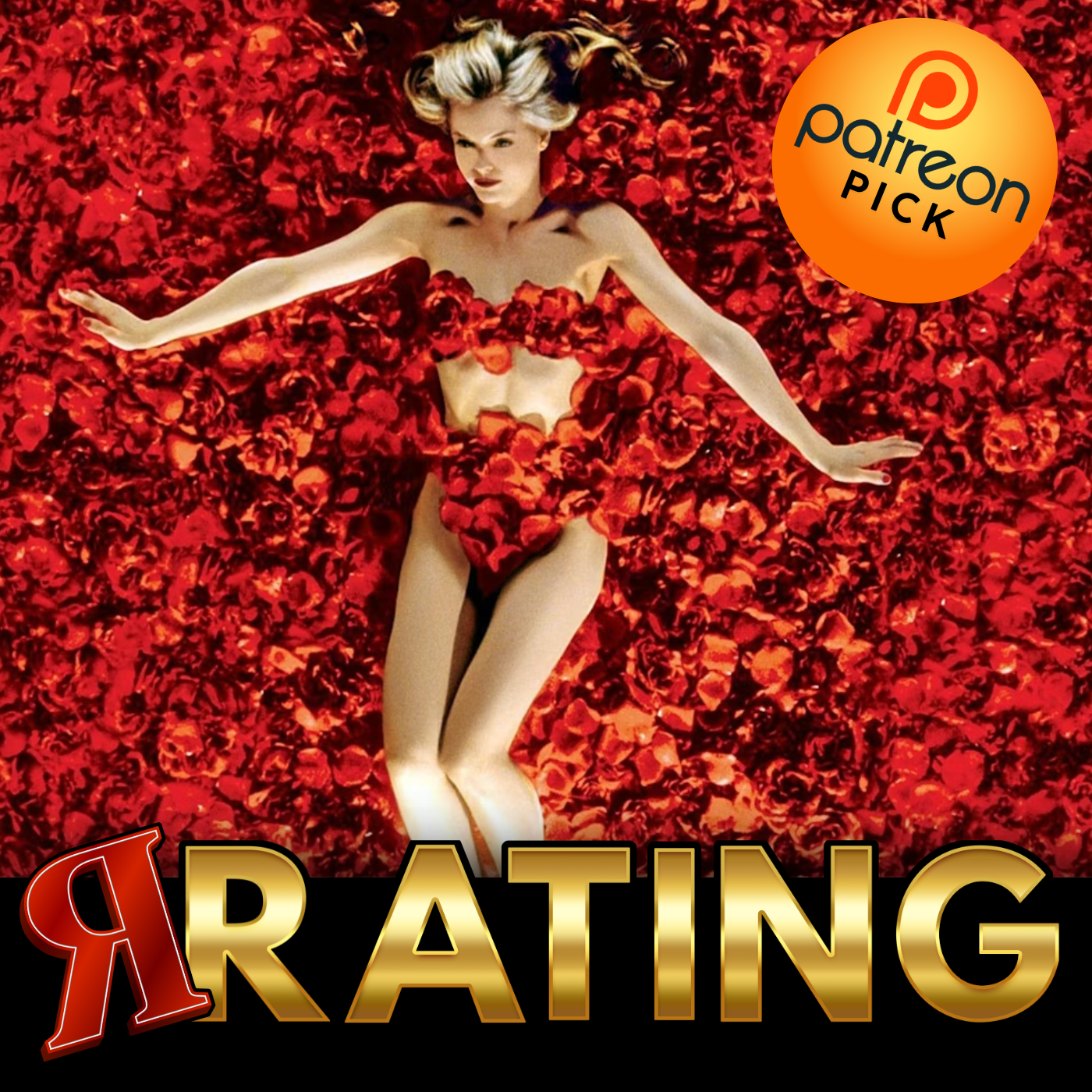
[00:00:53] Speaker B: So this really, this is your first time. I thought for sure you'd seen this one. With five Academy Awards and Best Picture as shown there on the poster. I wouldn't have known that.
[00:01:04] Speaker A: Even as a wannabe cinephile like myself, you know, you just, sometimes you just miss one along the way. And this one just, it just wasn't, wasn't, wasn't meant to be until now.
[00:01:15] Speaker B: Well, I'm very curious about your perspective then because I saw this movie once or twice when it first came out and then never again until just the other day.
And I had, I was, I was a little shocked at the difference in what I remembered and what I saw. Dan, how many times have you seen this movie?
[00:01:32] Speaker C: This is my second time watching this. We did this for the Watch Party. So I saw it when it first came out. Not in theaters, just at home at some point in 99, 2000, somewhere around that range.
And then I, I didn't see it again until now. I didn't really have a desire to go back to it. Not that I remember disliking it. I just, it just, it just didn't resonate with me a whole lot.
Which is kind of funny because rewatching this, I kind of realized there's a lot of scenes in this where I'm like, oh, that's interesting how that hit me as a teenager versus how that hits me now.
[00:02:00] Speaker B: Right?
[00:02:00] Speaker C: Yeah, I am kind of glad that I did go back to this one, but I'm kind of okay that I didn't go back to it for such a long gap. Like having seen it When I was the teenager's age in this, and now that I'm seeing it as Kevin Space Agent, is a really interesting way to view this film.
[00:02:14] Speaker B: And for those of you watching this on YouTube, be sure to stay tuned to the end because Dan pulls up a big list of numbers. And we pitch this movie against other movies. We do this for both our franchises, as whole franchises and for our Patreon picks and the March Madness movies that we put in here so you can see where they compare to other movies based on our opinions. And of course, we'd love to hear your opinions in the comments down below.
[00:02:37] Speaker C: I don't know how to get into this one without kind of just jumping straight into this one.
This is a really hard watch for me, at least. Maybe not for everybody, but there's a lot of really dark themes, dark tones, and just a whole lot of, for lack of a better word to say it, just ick factor in this one, where I won't say it's not art, but I will say it's not entertainment, at least for me. Where does that resonate with you guys?
[00:03:04] Speaker A: I don't disagree with a lot of what you said. The movie, I think, kind of shows a lot of the negative in everybody. There's not a lot of redeeming characters in this movie whatsoever, and I don't think they're supposed to be. I think that's kind of the point.
But it does make for, like, a movie that I don't know if I'll ever need to watch again.
[00:03:27] Speaker C: Yeah.
[00:03:28] Speaker A: So it definitely does a great job at what it's trying to do, I think, though. Yes, it does put it. There's a lot of great elements to this movie. But again, it's just like, yeah, okay, I'm watching a lot of darkness and a lot of.
[00:03:40] Speaker B: What is it trying to do, though?
[00:03:44] Speaker A: I think it's trying to highlight, just like that the picture Perfect American Dream isn't always what it seems to be.
It highlights people with identity crisis or midlife crisis, and unfortunately or fortunately, I guess for the entertainment or the appeal of this movie is everybody is going through, like, the most extreme identity crisis, you know, so there's never a dull moment.
Whether you like that or it wears on you, I guess is.
[00:04:18] Speaker B: No, I, I, I think that's interesting. I think Ricky is going around filming people, and he kind of highlights that the interesting and beautiful things are the flaws in each of us. He's always looking at the weirdest kind of most interesting stuff. Everything from dead bodies to people exercising in the buff and just people who are natural and, and, and not trying to be something that they're not, not fake. You know, he, he's, he's filming that and highlighting that and that's his idea of what's beautiful. I'm not sure if that's exactly what the overall picture is looking at but, but that's one person's perspective and I think that's something to it because everybody in this movie is flawed and I think that they are kind of showcasing. The most interesting thing is that people are dealing with these flaws whether they're dealing with them correctly or not.
[00:05:12] Speaker C: I, I don't know many of them, people actually are dealing with their flaws, which is just kind of going through
[00:05:16] Speaker B: it, but interacting with their flaws.
[00:05:18] Speaker C: Yeah. One of the things I found out when I was watching or looking up this movie, doing the tiniest bit of research, American Beauty is actually in reference to a type of rose which is very beautiful but also extremely acceptable to root rot.
So even the title of the film is kind of saying like, yes, it's all very pretty on the outside, but it's what's going on under the surface that you never really know about that's actually what's awful. And when we look at this movie, you see, I don't know their last names, the Burnhams, I guess. Kevin Spacey, his wife Annette Benning, and their daughter Thora Birch. On the outside they've got this nice marriage, really nice house, but everything that's going on inside, like none of them seem to get along very much. Their marriage is a sham at best.
They've got no real relationship with their daughter for their own personal reasons. Like it, it just is this perfect looking, rotted out core. So like I, I, I liked that better because I didn't really understand the title of this all that well, but that makes a lot of sense to me once it's explained to me well.
[00:06:19] Speaker A: And the poster of the movie, not this poster, I don't know why, but in most of the posters it also says after the title look closer, which again is looking inward actually what's going on because you know, people every day are wearing masks and putting on a facade of some sort to some level, to some degree.
This one again, just taking the mask off and going to the extreme of how people are dealing with their unhappiness or discontent with their own lives, whatever, so be it. Right?
[00:06:49] Speaker C: I love that the only seemingly happy, boring, normal people are the two gyms who live next door. Yeah, everybody else has this like rotted Core and like these two gyms are just like happy, go lucky doing their doing, living their best lives. It's like. That's interesting for 1999 especially. That's really interesting.
[00:07:06] Speaker A: Yeah.
[00:07:06] Speaker B: Yeah.
[00:07:07] Speaker A: I love, I love the push that at some point in this world the happy gay couple is the most normal couple. Because throughout history that is not been what people assume or think that within. Within that community. And it's so easily could be the case. And I love how they kind of put a point on that in this movie.
[00:07:30] Speaker C: Yeah.
[00:07:31] Speaker B: So I have a question a little more for Will, since this is his first time through this movie.
[00:07:36] Speaker C: Sure.
[00:07:37] Speaker B: Okay. So Dan, I think is probably on a similar page with me. The first time I saw this movie, I really liked it. I liked everything about it. I was very young and didn't get much of an ick factor as I watched it the second time through or this, this latest time through. I was blown away at how creepy this movie felt and how gross I even felt at some scenes watching it going like, this is inappropriate for me to be watching this almost.
How did you feel about this? Your first time, present day? Is this art? Was it creepy? Was it appropriate? Inappropriate? Did it ick you or gross you out in any way?
[00:08:18] Speaker A: I mean, I. I can assume mostly you're talking about Lester and his lust for a underaged minor.
[00:08:26] Speaker B: Sure.
Underaged boobies being shown.
[00:08:29] Speaker A: Sure. I mean that's. Sure. I think in film, I think it. It's all about if it puts the story forward and plays towards the story and the character's arc. And I think it does. Lester goes through this like, recession in his life of like, I'm not happy where I am. The last time I remember being happy was when I was a teenager living my best life, working at a Burger shack for the summer, you know, doing whatever I wanted. And so he reverts back into that in hopes that that will rekindle his happiness. And so what triggers that in his mind is when they're at the cheer squad, whatever, performance, pep rally, the pep rally, and he. He sees this young beauty and. And it. It just clicks in his mind. And so he becomes kind of obsessed about it. So is it creepy and icky? Absolutely. Is it meant to be? Absolutely. Does he go the right way about reclaiming his life or his identity? Absolutely not. And I think that's part of the story and this character's flaws throughout. Right.
So that's how I saw it. Does it hit harder? The creepy factor nowadays, because of the Weinstein's and the Epstein of the world. Absolutely it does.
So maybe a little bit.
I don't know if that. Maybe it doesn't hold up as well as. As in 99, when that wasn't as prevalent in media.
But I think it's still directed, but by the character's choices and the character's flaws. So I don't feel like it's misplaced, if that makes sense.
[00:10:09] Speaker B: And. And Dan, how do you feel about the content of this film and the topics that they go over? Did you get grossed out the second time around the way I did? Not grossed out so much. It just felt uncomfortable watching it.
[00:10:22] Speaker C: Yeah, it felt very uncomfortable watching this movie at all as an adult, but especially in a watch party setting where we're usually like, joking and making fun of things and then it's like this very serious topic and subject matter. And like, I know most people in the room are like, adult, but I don't actually know who's behind the keyboard in some of these situations. You know what I mean? Like, I know you guys and I know the names of other people, but, like, so it was. It was a little bit weird in that regard.
It just.
There's a certain point where my brain is like, but why? Like, what is the point of this? And like, there probably is an interesting story about, like, how nobody is who they say they are. And like, everybody kind of goes through that, like, identity crisis, midlife crisis, whatever you want to call it.
But, like, is this, at the end of the day, a story that needs to be told, or is this just kind of, for lack of a better term, venting?
Yeah, you know what I mean? Like, all the films we can go over and talk about. Is this one important?
[00:11:30] Speaker A: I think it is important to a degree to self reflect and if you are unhappy in your life, find a way to positively change your life. Which I think in the movie Jane is probably the best case scenario of her finding through her boyfriend Ricky that, you know, imperfection isn't necessarily bad.
[00:11:55] Speaker B: Yeah.
[00:11:55] Speaker A: But you can find the perfection in yourself and, you know, comfort in yourself and others and other things in the world. And I think Brian kind of touched on this. Like, Ricky kind of has the best outlook in life. He. He sees the little things and takes video so you can look. He can look back and find the beauty in those things that he's filmed. And by the end of the movie, Lester kind of finds that as well, where he's talking about. It's those little things in his life that brought him the most happiness, like remembering his grandma's Fingers buttoning up her sweater or whatever, and all these little details, and those are, like, things that obviously he didn't think about at all when he was kind of crashing.
And so I. I think the final message is somewhat important.
Did it have to be as dark and twisted as this movie is? Maybe not. But, I mean, I think that makes an impact, right?
So a lot of movies will go for that impact to make sure that they hit that message home.
[00:13:04] Speaker B: I certainly had an easier time watching this when I was younger, and. And I was attracted to the teenage girls because they were my age.
And so I didn't have as hard a time with it as I did being older, being a father and thinking about it from that perspective. When those girls bared their chest, I was in the watch party going like, okay, they're probably not 16, 17 years old, but they're portrayed as 16, 17 years old.
And it's. It makes me feel uncomfortable watching this movie, especially with other people. Like, I definitely felt the most uncomfortable at that moment for myself and what was being displayed on screen and stuff. However, Lester's arc, as I'll say it, starts with him being attracted to this young girl, and that's his motivation for changing his life. Now, does he necessarily make the most positive changes? Absolutely not. But he's seeking out change, and he's taking action. He's taking control of his life, and I really did appreciate that. And at the very end, he. He has this saving grace where she says that it's her first time, and he's thinking that she is an experienced young woman and she's not. And he. Suddenly, it dawns on her, this is a little girl that needs to be taken care of. And suddenly his fatherly instincts kick in. He's wrapping her up in a blanket, and he's like, hey, you haven't done anything wrong. And he kind of like, saves himself in that moment. And then, you know, a little bit later, he's looking at the photograph of his family, and he's recalling all those little details, like you said.
And so it. It ends on a good note. He gets there in the end, but the journey was a very uncomfortable journey. And I think it was easier for me to watch as a younger man and as an older adult. And in this era, you know, when we have p. Diddies doing things, this was.
This was a little bit more challenging for me, for sure.
That being said, the content, we've kind of chewed that up.
I thought that the acting by Kevin Spacey and Annette Bennett was phenomenal in this movie. And was such a pleasure to watch and enjoyed watching them go through these challenging scenes that were kind of had an ick factor. Very much enjoyed watching them.
[00:15:23] Speaker C: Yeah, I'll agree with that. All, all day. I think a lot of the technical aspects, whether it be the acting, the sound, cinematography, or all of that in this movie, is incredibly well done. I, I do understand why this won the Oscars. That it won 100%.
Do I like the characters? No. But that says something when you can take actors who like Kevin Spacey, who I liked at the time, Annette Benning, who's great, Allison Janie, the. The mother, what's his name? Ricky's mother, who I love from the West Wing. And I didn't even recognize for the first little bit because she's so, I don't know, on Valium or whatever. She's on that. Like I didn't even recognize her as this. Just like nothing of a person. Like, just this like husk of a person. Yeah, yeah.
So I, I really did like the portrayals of everybody. I just didn't like the actual people. And going back to Lester for a second because he is, I think, probably the most interesting character in the film for me, at least not necessarily the best. Just, I like that he goes through an arc. I like that he goes from like this wimpy little just going to work, doing the thing, loser to like taking a bit more control, getting himself in shape, going for the runs with the neighbors, doing all these things. And you just have to keep reminding yourself, yeah, but he's not doing that for himself. He's not doing that for his wife. He's not doing that for the life of his kid. He's doing that because he wants to bang a 17 year old. He's like, oh, right, this is a creep. And I hate him. No, never mind.
It's. It's. Yeah, I don't know. I don't know. It's a really hard movie to watch. And going back for the briefest of seconds for a birch is not overage in this movie. She is underage.
[00:17:02] Speaker A: I think she was 17.
[00:17:03] Speaker C: 17.
That scene doesn't feel necessary. And it feels kind of like, why'd you even put this in? Because you could easily have done the exact same scene and the camera just doesn't pan down. And you still know exactly what she's doing. You still get that he's watching her and you just don't have to have that. And so the fact that they did put that in just kind of points back, like, no, they want you to feel uncomfortable in this moment. Like, it is not a sexy scene. It is not.
Again, I mean, are you not a necessary scene? It is just there to make the audience feel as uncomfortable with it as possible. And it worked. Congratulations. I was very uncomfortable watching multiple scenes in this film.
[00:17:41] Speaker B: And aside from her showing off her chest, I had a hard time watching her in this movie because there were some scenes where I felt were terrible delivery of lines. It took me out, really felt like she was reading lines and I thought it was a terrible job of acting. However, she had a look. Those quiet scenes where the camera was just on her and she had facial expressions. The expressions that she would give were stellar and. And I really. Those quiet moments with her in this just nailed it. But whenever she was speaking, for some reason, I just. I just was like, no, this is horrible. Maybe it was you. You were comparing it to Annette Benning, who was blowing the walls off with her performance. I thought she was the number one in this.
Maybe that's just the comparison and she was up against some steep competition. But, yeah, when the daughter was delivering her lines, I didn't enjoy it too much.
[00:18:40] Speaker C: I don't want to take away what you said, because you're right. Like the scene where he's videotaping the two of them in the room and Mia Savari is, like, dancing and whatnot. He just like zooms in on the mirror in the background where you just see, like, her and she's. She looks almost sad, but kind of like she's smiling. Like she's.
It's hard to describe what's going on in her face because it is so conflicted, but it's so well done.
[00:19:02] Speaker B: Yes.
[00:19:03] Speaker C: But I do have to point out, like, you were on board with the acting until I told you she was under 18. And all of a sudden, like, oh, she's terrible. Like, just like, oh, it's another child actor we have to go after.
[00:19:12] Speaker B: I knew when you said she was 17, I'm like, man, they're going to categorize this as a child actor again. That isn't it.
[00:19:18] Speaker C: The timing was just fantastic.
[00:19:19] Speaker B: I honestly thought she was 18 for the film. I was hoping she was 18 for the film, but no. Yeah, just her delivery lines wasn't great for me.
It didn't ruin it.
[00:19:30] Speaker C: Yeah.
[00:19:30] Speaker B: But especially compared to what she was working with, who she was working with, it really showed. And so I loved the quiet moments with her, but I would have liked to have better line delivery, especially that scene where she's talking to Ricky about having him murder her dad. That just seems so jarringly off. And they used it twice, so it's even worse. Like, I watched the second time, like, nope, not any better the second time through.
[00:19:54] Speaker A: Yeah.
[00:19:55] Speaker B: So didn't like that.
[00:19:56] Speaker C: I wish. Like, obviously you don't want to have this movie spanning decades, so you can't really do, like, why are Lester and Carolyn, Annette Benning and giving. Why are they together? But I could have done with at least a scene or two where it felt like Mina Civari and Thora Birch were friends. Like, at no point did I understand the chemistry between them or what they had in common.
[00:20:15] Speaker B: Yeah.
[00:20:15] Speaker C: Other than just they went to the same school. But, like, Jane, Thor Birch's character just felt over her the entire time. Like, anytime me and Survari was talking, Fora was just, like, rolling her eyes. It felt like. And I'm just like, why are you.
[00:20:28] Speaker A: Yeah, they were kind of polar opposites, right? Like, one was playing I am all that and a bag of chips, and the other was playing I am the ugliest duckling in the room.
And what the film did, cleverly was kind of switch their positions in the movie, which was kind of clever. But it did make for a hard relationship to be seen on. On. On film because the characters were so contrast to each other.
[00:20:57] Speaker C: And then, of course, as soon as you start talking, I realize exactly what is going on. Because you've got Mina Tuvari's character who wants to stand out, so she picks the character who's okay being a wallflower, so she can always be in the limelight. And. And then you have the character who's always in the corner, who likes to have somebody around them so they don't have to be the center of attention. I can always let them be the center of attention. I hate myself that I just got that as you were talking.
[00:21:18] Speaker B: No, but, I mean, that works. But you're right, their dynamic seemed a little weird. The only time I ever really felt chemistry between the two girls as genuine friends was when they were making jokes about her having sex with her dad.
[00:21:33] Speaker C: With.
[00:21:33] Speaker B: With Jane's dad. And that was even really awkward because, you know, Lester's listening through the door with his dad, Boner. And it was just. It was very awkward.
And that was the only time that the two girls really seemed to really enjoy their company, which was awkward in itself.
[00:21:51] Speaker C: And she wasn't joking about it. Like, it was just bugging Thor Birch's character. Like, oh, your dad's pretty cute. Like, she's actually attracted to him. And, yeah. Willing to do stuff, and you're just like, oh, like, if they've been joking. And then like, he had him like he's been getting buffed the entire movie, and it's like, hey, you like these muscles? She's like, ew. Like, that would have been not the same film for many, many reasons, but, like, that would have been so much more funny. It would have been like, okay, exactly. Yes.
Yeah. No, it's. It's. There's a lot going on in this film.
Oh, yeah.
[00:22:23] Speaker A: I had the biggest trouble with Thora Birch because all I can picture is Hocus Pocus.
Enough said.
[00:22:30] Speaker C: Yeah.
[00:22:32] Speaker A: She's just this little girl trick or treating as far as I'll ever remember her.
[00:22:37] Speaker C: Yeah.
[00:22:39] Speaker B: I. I didn't understand the arc of Annette Bening's character, Lester's wife. I forget her name.
She was a very interesting character. And I almost felt bad because they were giving her such a hard time because she simply wanted to. To project success.
Right.
And maybe that's fake, but at the same time, it was what she wanted to do with her life, and everybody was kind of ridiculing her about it, and it was kind of like, so what? She's working hard for this, and that's what she wants to do.
[00:23:15] Speaker A: Right, but at what cost, though, right?
[00:23:17] Speaker B: Yeah, the. The cost was the understanding. I just kind of felt like they. Everybody seemed pretty harsh on her. There was no mother daughter dynamic to be seen.
They never got anywhere with their marriage. They tried a couple of times, but it never really went anywhere. And instead, you know, she just ends up out of nowhere kind of cheating on him, and then she's the bad person from there on out. And I'm not a big fan of adultery, so I was okay with that angle. But at the same time, I just. I kind of wish that maybe she could have found a little bit more closure, because the best thing that we had was after he was dead, she went in and she hugged and smelled his clothes and realized she was sad he was gone. And that was something, and I appreciate it. It was a very powerful moment. Great job acting. She's one of the few actresses that can take this up like, a full two points, and she did a stellar job. But I just. I wanted a little bit more out of that character arc for. For a little bit more closure.
[00:24:14] Speaker C: I definitely wouldn't say that the cheating angle was out of nowhere.
[00:24:20] Speaker D: It.
[00:24:20] Speaker C: They kind of played up a little bit that they're obviously a fairly estranged couple pretty much there together for the kid quickly.
Sure. Okay. Yeah, The. The relationship with the. The Match King or whatever his name was.
[00:24:36] Speaker B: Well, he was. He was mid movie.
[00:24:43] Speaker C: That might have come out of nowhere. Like, that wasn't a relationship that was budding at the beginning of the film, but I think she was.
She. She was needing what she needed for a good long time before this film started rolling.
What do you want? I think my kids are in the other room. I'm trying to do the best I can.
[00:25:03] Speaker A: I mean, that wasn't the only thing she was looking for. Right. She was also looking at the Realtor King as a mentor because he was successful and she was like three. Thrilled by the idea that they would get a divorce because his wife didn't want her. Him to focus on his job and career so much.
[00:25:23] Speaker B: And he legitimized her.
[00:25:24] Speaker A: Her direction exactly. She. She paralleled that, that thought process and that she found somebody that understood it so well, whereas her husband doesn't understand it at all. And so I think. And you have to also remember, this movie is spanned over a year of life almost. Right.
[00:25:43] Speaker B: Yeah.
[00:25:44] Speaker A: So because Lester is kind of the main protagonist, we get the most in depth of his.
[00:25:50] Speaker B: Yeah. So. So we probably missed a few scenes with them working.
[00:25:53] Speaker A: Yeah. They have to quicken her steps to get her kind of to the same end.
[00:25:58] Speaker B: Also to. To showcase her being more fake.
They. They did have him dump her when he found out she was going to go through a divorce because he can't be dating somebody who's going through a divorce. Right. That's not success. And so he d.
That was a real kick in the teeth and a shocking moment for her. And I just feel that they didn't give that enough time because then I would have felt that's her character arc. That's her finding out that this direction is fake. And she has been hiding her true reality the whole time. And they didn't. They didn't showcase that enough. And instead I just kind of felt like, oh, that sucks.
Not really. Like, hey, you learned why you should be more real with yourself and not be so obsessed with fake success.
And instead it just seemed like, oh, that's a bummer.
So I. I guess I just wanted a little bit more out of that character. In every.
[00:26:49] Speaker A: Every way, the.
[00:26:50] Speaker C: The breakup leads to her in the side of the road, in the rain, to her potentially going to kill her husband.
[00:26:59] Speaker B: Is that not wanting to be a victim? She wanted to take that. Yeah.
[00:27:04] Speaker C: Well, and.
[00:27:05] Speaker A: And I think that was it. It's like she never got her full.
Her full arc like Lester did. Again, because she's not the main protagonist. But the, the breakup was just another wind up of. I, I'm blaming my husband for this because he was the one that, you know, called it out in, in the drive through and all that. So she immediately pegged the blame on him, which wound her up even more. And that's why she wanted to kill him. Being like this was the last straw. Like, how dare you. Right?
This, this guy was my, my end goal. Success as a realtor and, and everything else. Right. Yeah. If you had so power hungry with the gun and everything too. Right.
[00:27:42] Speaker C: If you hadn't called me out in the drive through, he wouldn't have broken up with me. And then who knows where my life would be right now.
[00:27:48] Speaker A: Yeah. Nobody taking full responsibility for their own actions. Right?
[00:27:51] Speaker C: Yeah.
[00:27:52] Speaker D: Yeah.
[00:27:53] Speaker C: There are a couple of times where Kevin Spacey, Internet betting, are having an argument and like he says, like, oh, well, you treat her, the daughter, like your own personal assistant or something like that. Or like your own, like, employee. Like an employee.
We don't really ever see that. Like, we don't really get a ton of interaction between the mom and Jane because the mom is acting fake towards her and she's just like, I don't really want to have. I think she's a Hallmark moment right now or Kodak moment or something like that.
[00:28:28] Speaker A: I don't know.
[00:28:28] Speaker B: It's just.
It's like I. I both want and don't want another 15 minutes into this movie so that we can have some of that stuff fleshed out a little bit better. But at the same time, like, most of the stuff that I'm seeing is hard to watch in the first place. And so I don't want any more than what we got. We got enough to get the point.
But there were some other things that I would have liked to feather them out just a bit more, but I'm okay with it. The acting's phenomenal. The content, though, it is edgy and tough to watch.
It sure caught my attention.
So, you know, I can see why this was such an acclaimed film for sure.
There are just issues that I have with it.
[00:29:12] Speaker A: So you were saying, Brian, that you would love to maybe love to see another 15, 20 minutes, which is kind of funny because they cut out about 20 minutes out of this movie originally. In the script.
The movie continues and you see Jane and Ricky in court being accused of the murder of Lester and I believe all the way to the point of them being jailed. So they, the director, when actually went to edit the film, cut all of that out because he didn't think it was the right direction for the film to go.
[00:29:47] Speaker B: And I would agree, actually, I would absolutely agree.
[00:29:50] Speaker C: You're gonna take the only two semi hopeful storylines in the entire film and ruin them for something they didn't do.
F that ending.
[00:30:00] Speaker B: That gets real dark.
[00:30:01] Speaker A: Gets real dark.
[00:30:01] Speaker C: It gets real dark for sure.
[00:30:03] Speaker A: But I thought it was an interesting thing that, you know, when you're making a movie, you have this vision of it from the script and then when it.
[00:30:10] Speaker C: You.
[00:30:10] Speaker A: They film the whole thing, all of that was filmed. And then when he went to edit it, he found a different movie, which is very interesting to me.
And that was. What's the director's name? Sam Mendez.
[00:30:22] Speaker C: Sam Mendes.
[00:30:23] Speaker A: Yeah.
[00:30:23] Speaker B: And it.
[00:30:24] Speaker A: This was actually his first feature length film as well, which is incredible to.
[00:30:27] Speaker B: Wow.
[00:30:28] Speaker A: Yeah.
[00:30:29] Speaker C: Yeah.
[00:30:30] Speaker A: He'd done a couple of like TV episodes and I think a TV movie at one point, but this was his first feature. So pretty. Pretty incredible cast he was able to gather. Pretty amazing script he was able to work on and a pretty amazing accomplishment as a final product, I'd say.
[00:30:46] Speaker B: For sure. For sure. Okay, guys, tell me about Ricky. Is this a believable character with his profession, his outlook on life, his rather overwhelming intellect and ability to perceive people accurately and truthfully?
Do you guys believe that this person exists?
[00:31:08] Speaker C: I've not met him. What about you, Will?
[00:31:09] Speaker A: I don't think any of these characters exist, and I think that's on purpose. You know, I think a little bit of the movie is characterizing all of these or characterizing all of these characters just to, you know, amp it up a little bit to the nth degree to make it more intense, more suspenseful, more. What the F am I watching right now?
The problem I have with Ricky is that I think they purposely made him, like, so awkward and weird so that you don't understand right away that he's kind of the one who's got it all figured out.
But to me, it kind of made him feel like an odd character throughout. And again, like most characters, not super likable.
So even if he is the one that has it all figured out, it just kind of falls a little flat to me in the movie.
From. From the. For those reasons, I don't know.
[00:32:02] Speaker C: Yeah, I did like that Almost everybody in this movie is hypocritical or at very least has a bit of an identity crisis going on. Something that makes them not quite who they seem to be.
And the only real, like, hypocrisy with Ricky is like, He. He goes along with everything his dad says when his dad's in the room, but that's more of like a forced survival instinct.
[00:32:22] Speaker B: Yeah.
[00:32:22] Speaker C: As opposed to who he actually is. Like, he's pretty centered in who he is, but he knows that the only way to survive in his father's home is to be this other person that his father will hopefully potentially approve of.
And of course, he doesn't. One character we've not talked about in this review yet is Chris Cooper's Colonel Fitz. The dad, Ricky's dad, who is a miserable person, but an incredible actor. I thought he did a really good job pulling off who he was, but again, I just. I just hated him the entire time.
[00:32:54] Speaker B: I explain to me why he tries to kiss Lester in the garage.
I. I think I understand this, but I don't understand why he goes in for the kiss.
What's. What is this? What's happening?
[00:33:10] Speaker C: Everybody is not who they say they are. Everybody is hiding something. He's the super macho military rah rah guy. His wife is dead. Dead inside, probably because he hasn't touched her in 20 years.
He won't allow himself know it, won't allow anybody to know it because he's highly embarrassed by. This is the 90s. You got to remember, he grew up in the 60s and 70s. This was not a time when you were allowed.
You know what I'm trying to say? Where it was, where it was. Give me, give me the words. Not allowed.
[00:33:38] Speaker A: Socially acceptable.
[00:33:39] Speaker C: Socially acceptable to be a homosexual, especially not in the military.
[00:33:43] Speaker B: Right.
[00:33:44] Speaker C: So he's been hiding who he is the entire time. He finally finds a neighbor who maybe he finds attractive. Maybe he's open and is okay with who he is. Why he doesn't go to the gyms, I'll never know. But I guess Kevin Spacy does give him the opening, saying, like, I haven't told break up a relationship for the better. Well, and that's just it. Kevin Spacey is saying he's already in a broken relationship and it's just a sham of what it was. It's not real. Maybe he recognizes that because of his fake relationship with his wife and is like, oh, maybe I'm not only allowing myself. Maybe I'm going to free him at
[00:34:13] Speaker B: the same time and, and see that.
I figured it was either that or. And this is what I kind of thought it was, was that he was trying to understand why his son was gay because he thought his son was gay. And so he was just trying to, like, throw himself into a homosexual relationship. To see what this is about, to try and make a connection with his son. Because his son told him. He's. He's like, you're a pathetic old man or whatever. And so that was what I thought it was. It was one of the two. Is that he's trying to figure out his son or he's trying to figure out himself. I wasn't really sure. It wasn't super clear to me, because that kiss kind of came out of nowhere for me.
[00:34:55] Speaker C: I don't think Colonel Fitz gives a crap about what anybody else is thinking or feeling.
[00:34:59] Speaker B: I think. I think. I think you may be.
[00:35:00] Speaker C: I think he's trying to figure out what's going on in his own head.
[00:35:02] Speaker A: Well, to a point, because then he kills Lester for rejecting him.
[00:35:05] Speaker B: Right.
[00:35:06] Speaker A: So he doesn't want his secret out. I think that's the reason he killed.
[00:35:09] Speaker C: Sure, sure, sure, sure. I. I mean, Brian's second hypothesis was like, oh, well, maybe I can understand what my son is going through. Yeah, yeah, he cares what his son is going through.
[00:35:19] Speaker B: Yeah.
[00:35:19] Speaker C: But you're right. That is my understanding of why he kills him as well. Just like a. Either a hurt from rejection or more likely, I don't want this getting out. I can't have anybody know who I really am.
[00:35:28] Speaker A: Brian, you would have appreciated another scene. They cut a brief scene.
The actual reason why he beats his son for going into that locked cabinet is that after that scene, he goes to the cabinet and pulls out a picture, an old army picture of a younger him and Private looking quite comfortable with each other, next to each other in the. In the photo. So I think allude to his, you know, sexual preference.
[00:35:55] Speaker B: I really would have liked that illusion. I would have really appreciated that. That would have helped that continuity. When the kiss came in, there would have been the foreshadowing to it, and I would have completely understood what was going on. As is.
I wasn't certain of what was trying to be told to me in that scene.
[00:36:11] Speaker A: Right.
[00:36:12] Speaker B: And it was no fault of Chris Cooper. Phenomenal job in this. Right. Yeah.
[00:36:17] Speaker C: Yeah.
[00:36:17] Speaker A: He's always good.
[00:36:19] Speaker C: So, two questions, because maybe I just missed something here. There might be just, like, a little detail. How does the dad know that he went in the cabinet?
[00:36:26] Speaker A: I think because it was unlocked.
[00:36:29] Speaker C: So he left it unlocked when he was done?
[00:36:31] Speaker A: Well, because he doesn't have a key. He just picked it open. So I think it was just unlocked. He found it unlocked, so he knew.
[00:36:37] Speaker C: So he would have known that his dad was going to know that it was tampered with.
[00:36:40] Speaker A: I Well, I think so, yeah. But I think he thought it was worth it to show this girl and, you know. You know, wow.
[00:36:46] Speaker C: Do you think that that wowed her? Like, that was another one of those weird. Like, that's one of the things I remember from 1999 is like, wow, he has a plate with a Nazi someone. And then in the watching, I'm like, that didn't have anything to do with anything. Like, his dad's not a Nazi. I don't. I don't think. I didn't think that was the secret his dad was hiding. Like, what?
[00:37:02] Speaker B: Okay, so Ricky had a key for that locked cabinet. He got it from a locksmith who made him a key for it, but he told his dad that he picked the lock because he didn't want his dad to find out that he had a key.
So I'm not sure how his dad knew. I. I do believe it was left
[00:37:18] Speaker A: unlocked fingerprints on that plate.
[00:37:20] Speaker C: So he was just distracted.
[00:37:21] Speaker B: I don't. I don't know. You know, maybe. Maybe something was moved in there or something. Or, you know, dad could be anal enough that he noticed that the plate was shifted 3 millimeters to the left or something. I don't know.
[00:37:31] Speaker A: He does seem to be pretty anal.
[00:37:37] Speaker B: But it was.
His dad's denial over Ricky's truth was quite expansive. And I'm glad that Ricky even acknowledges that and says, never underestimate the power of denial.
And so I. I thought it was. That whole family was great. Ricky, his mom, his dad. It was very interesting stuff going on there. So. Like that.
[00:38:03] Speaker A: Which. Well, so it's fun because at the end, Lester underestimated the power of denial to Ricky's dad, and look where it got him.
[00:38:12] Speaker B: Yeah.
[00:38:15] Speaker A: Yeah. It's a very interesting story.
Movie in general.
[00:38:20] Speaker C: Well, we have a special guest waiting in the wings, Ms. Hillary. I figured with this movie and the topic subject matter, it probably make some sense to get a.
A female perspective on everything. You guys ready to bring her in and see what she's got to say about life in the movie?
[00:38:33] Speaker B: And let's see.
[00:38:35] Speaker C: Room Full of Dudes.
[00:38:36] Speaker A: I absolutely love always having some sort of female perspective. This movie definitely makes sense to have it.
[00:38:44] Speaker C: Excellent. Ms. Hillary, how are you doing?
[00:38:46] Speaker D: I'm good. I'm good. How's everyone? Can you guys hear me okay?
[00:38:49] Speaker C: I can hear you just fine. Welcome back to our rating. This is your second or third appearance, I think.
Second for sure.
[00:38:56] Speaker D: Yeah.
[00:38:57] Speaker C: Yeah. Because we had you on for Sound of Music for the full episode.
[00:38:59] Speaker A: You're always around, so it's Hard to tell.
[00:39:02] Speaker C: Yeah.
[00:39:02] Speaker B: So, Hillary, you're one of the dictators that forces us to watch films like this.
Was this one all you, or did other people have a hand in it?
[00:39:13] Speaker D: So I also, like, Will had never seen the movie before, so it was a brand new experience for me.
It was Elder's pick because it was Elder's birthday, and he had asked if we could watch American Beauty for his birthday. And I was like, of course. I'm totally fine with that.
And that's why we watched American Beauty, because I'd never seen it. So I was like, I'm down to watch a movie I've never seen before.
[00:39:47] Speaker A: That sounds fun.
[00:39:49] Speaker B: And, yeah, and there were some usual people who join us for these watch parties who specifically said, I will not be joining you for this because I do not want to see this movie again. This movie can definitely strike some emotion in people. So very interesting. And. And those people told me, well done movie. Don't want to watch it, you know,
[00:40:12] Speaker C: and so I completely agree. Like, I'm glad I watched it this time, but if somebody wanted to watch it in, like, a year from now, I'd probably be passing. I'd probably be like, you know what I'm gonna enjoy, but I'm good.
[00:40:22] Speaker B: I was very surprised at the turnaround difference.
[00:40:25] Speaker A: Okay, Mrs. Hillary, what about you? Your first time watching, Give us some insight to your experience. Experience with.
[00:40:33] Speaker D: It was very creepy. Very, very creepy. I had a really hard time getting past Lester and.
Oh, it slipped my mind. But Mina Savari's character, like, I just.
The dynamic there was extremely uncomfortable.
I was. I'm pretty sure it was the only female in the watch party, which did not exactly make it the most comfortable experience either in some of those scenes, especially when there's, like, full frontal nudie nudity. And I'm like, okay, this is kind of weird to be watching with a bunch of people online, but it's like
[00:41:15] Speaker A: watching a movie with your parents.
[00:41:17] Speaker D: Yeah, yeah, definitely.
And so it was a different adventure in that way.
I have no interest watching the movie again, but, like, unfortunately, there are parts I'd like to watch again just to understand it better. But so much of the movie gave me the ick that I don't want to watch it again.
[00:41:46] Speaker C: I completely understand that.
Now, obviously, we're all coming at this from slightly different perspectives. I think if I'm not correct, if I'm not mistaken, I'm the only one in the room that has daughters. Right? You all have sons?
[00:41:58] Speaker A: Yes. Yep.
[00:42:00] Speaker C: Yeah, my daughters are not as old as these characters, but they're not far off, right. And it was that much more disturbing watching everything that's going on. Right. Because like not necessarily from a me perspective, but from what are like they're going to other friends, what are they being subjected to?
[00:42:21] Speaker A: Exactly.
[00:42:23] Speaker C: And that's, that's one of the things that I don't have an intelligent thing to speak on because obviously male growing up in a male world, I never had to deal with this, right. Like, this is not something that's crossed my door until now where I'm having to do it for not do it, having to dealers people that I love potentially going through the situation.
[00:42:46] Speaker D: It's, I think, unfortunately, I think the experience maybe not to the full extreme of the movie, but that creepy older man feeling is, I would say majority of young women have experienced that or have had some sort of experience with a father type figure in their life. Like not necessarily theirs or their friend's parents, but that experience of that older male subjecting and hypersexualizing that teenager like that is far more common than I think a lot of people realize. And that doesn't even, you know, that's not even including people that are willing to talk about it or, or have recognized it being a, like a moment in their life.
Some, some people choose to not acknowledge that.
And so it happens a lot more than you think.
As unfortunate as that is to say. And all we can do, we have to watch these movies, to have these conversations, to have to make sure that this doesn't happen.
Right.
[00:44:06] Speaker A: That's what I was going to ask you, Mrs. Hillary, is do you think this movie goes too far with it? Do you think that this movie is, is trying to portray that message of this is not how you should be living your life? Because I think a lot of people, and I've seen online that, you know, a lot of people throughout the years are like, oh, Lester's, you know, a good guy. After all, he redeemed himself. And I didn't get that at all in this movie.
But do you, do you think that I, the message is going in the right direction with this movie?
[00:44:38] Speaker D: No, I think, I don't, I don't agree with that whole team Lester at the end, a creep is a creep is a creep. He still was, you know, fantasizing to the point like that fantasy was so impactful for him that he made a complete 360 on his life.
Like, you know, and maybe part of this is coming from like the educational background of the social work and working in the communities where we try to invoke change in people.
The. The power of that fantasy for him is a motivator, and a very successful motivator. You never lose that ick factor after that. Like the fact that he's like, oh, you're a virgin. Oh, now I'm gonna stop.
It's like, so what then? We're just waiting for the next.
[00:45:40] Speaker A: The next girl who isn't a virgin,
[00:45:43] Speaker D: a virgin to come into the picture.
[00:45:46] Speaker A: Or if she wasn't by chance a virgin, he would have just went for it. Right. So it's like.
[00:45:51] Speaker C: Or even if she was, but just didn't say it. Like, if she just allowed it to happen, he wasn't stopping of his own volition.
[00:45:57] Speaker A: No.
[00:45:58] Speaker C: Until she said something.
[00:46:00] Speaker A: And that's why I think he's not a redeemable character.
[00:46:03] Speaker C: Yeah.
[00:46:04] Speaker A: But the. His. His arc is that he does, in the end, find out what happiness is to him. Is it way too late? And is it after a catastrophe of a year of his life? Absolutely.
And maybe if this movie was made today, the catalyst for his obsession could be different to make it less creepy as hell.
Maybe that would be a good idea in light of all these things that are now, you know, very, very public. But would it have the same impact? I don't know.
[00:46:38] Speaker B: I think you guys hit on something here, because the first time through, I felt like he was taking control of his life for the wrong reasons, but, you know, improving his own outlook on things. And at the end, he very much redeems himself and was fine. And this. This recent time through, I was like, yeah, he figures it out in the end, we still could creep. Like, I'm not okay with this.
[00:47:06] Speaker C: Do you think there's a world like if this movie was real life? I guess.
Is there a long enough timeline where Lester can redeem himself?
[00:47:16] Speaker D: No.
[00:47:18] Speaker C: No.
[00:47:19] Speaker B: How about this, Dan? If you were Angela Hayes, Mina Savari's character, if you were Angela Hayes's father, and you found out about this, how long would it take before you didn't kick his ass
[00:47:30] Speaker D: or wind up where you.
[00:47:32] Speaker C: Well, that's a fair point.
What was that? I missed it.
[00:47:36] Speaker D: Wind up where you work?
[00:47:38] Speaker C: Yeah. Fair enough.
[00:47:42] Speaker D: Yeah.
[00:47:44] Speaker C: It's tough because it's not even a matter of. For Lester's character. It's not like the first time he meets her, things go really far. Like this. You said this takes place over the course of a year. Like, he is trying to better himself with the explicit purpose of being with her. He is working towards this. He is thinking about this, he is meeting her multiple occasions. Like, this is not like a.
Sorry.
[00:48:07] Speaker B: He's masturbating to her. Like, oh, yeah.
[00:48:10] Speaker C: It's not like, oh, I had one bad judgment. Like, no, you were on this train for a while.
I, I don't think you're coming back from this one.
[00:48:18] Speaker A: I want to push back a little bit. I don't think it's his only goal in this movie is to just get into bed with this young girl.
I think he realized, like, it's the catalyst. Yes. It awakens him being like, wow, my life is not where I want it to be, not where I thought it would be, not what I thought would make me happy.
My life is.
My happiness is where this young person is in their life.
That's, that's his. That's why he reverts back to smoking, drugs, drinking, getting his the T bird he always wanted. Like, he's reverting back to high school.
That's his goal.
Not just to bed an underage girl. I think that was just, like, the catalyst. The unfortunate part is it comes up multiple times, so he's consistently still aiming for that. I just don't think it's the main goal. The main goal is to find happiness. Right. That's all their main goals, no matter how did their, their pathway to get there is. So I, I, I don't think it's quite that one.
[00:49:24] Speaker B: Yeah. He, he gets the car and he's excited. He's like, it's my dream car. I finally got it. Yes. And then he tries to bet his own wife.
And because he's, he's finding the things that are making him happy. And like you said, Mila Savari was the catalyst. And he notices, hey, I'm happier now that I did this. Let's continue on this path.
[00:49:47] Speaker A: Yeah.
[00:49:50] Speaker C: I mean, you're not wrong. But the movie from, from a movie telling perspective, the plot kicks off when they go to that dance. And he sees her. Yeah. And it ends very shortly after he gets with her or he has the opportunity to be with her. And then that's the end of the film. Like, it is.
[00:50:08] Speaker A: I know. It's a strong.
[00:50:09] Speaker C: It is the catalyst for why it's gone. You're right. He's chasing who his former self and who he used to be. But.
[00:50:15] Speaker A: Yeah. And that, that's why I think his perspective changes when he realizes this isn't what he wants. Does he stumble upon it because she admits she's a virgin and it could have gone horribly wrong the whole way through. Yes.
Like all the reasons he made it to his, you know, epiphany of, oh, that things that make me happy are these small memories and. And being a good father and my daughter. Those are the things that made me happy, and I just lost that along the way. Those are all the things.
It's just a horrible way that he found out about it because he had to see his daughter in this girl that he was chasing.
Right. Like, that's.
[00:50:59] Speaker B: Yeah.
[00:51:00] Speaker A: So it's. And. And like, movies, do they, you know, wrap it up from beginning to end. They come full circle.
[00:51:06] Speaker C: Sure.
[00:51:07] Speaker A: So it's. It's hard to be like, yeah, it's. He's a one noted character. And again, I said that, like, they're all kind of caricatures of themselves, but he is the most fleshed out of them.
So I. I don't know, maybe that's why I was like, if you think that's the only thing that's wrong with him and his happiness, and then he realizes it. That maybe makes it feel like, oh, he redeemed himself because he didn't go through with it. But it's not just that one thing. In my mind, it just. It can't be just that one thing.
[00:51:37] Speaker B: If we could have got another year out of him, we might have seen a much better human being who just had to go through a year of crawling through this mental dumpster to figure himself out, and we could have probably appreciated him a lot more. But to come so close as to take the girl's shirt off, in my mind, it's. He's already crossed a line. What's strange is, 20 years ago, that wasn't a line crossed, but today, at my age, having kids driving through the school parking lot to pick my kids up and seeing the young ladies there, this is. Yeah. It's.
[00:52:16] Speaker C: At the risk of sounding incredibly Creepy, when you're 17, 18, you think you're an adult, so it feels like two adults when you're 40. You know, she's a child.
[00:52:27] Speaker B: Yes.
[00:52:29] Speaker A: Yeah, exactly.
[00:52:31] Speaker B: Yeah.
[00:52:32] Speaker C: No bueno. No effing Bueno.
[00:52:34] Speaker B: Yeah.
[00:52:34] Speaker A: 100. 100 and yes.
[00:52:35] Speaker C: All right, Hillary, before we. We let you go, do you have a rating for this movie? And I know I'm putting you on the spot. I didn't ask you to do that ahead of time. So you can tell me no if you want. We can just edit this all out in post or A final thought. Let's go. Maybe final thought is easier.
[00:52:50] Speaker D: Okay, we'll go with the final thought. It was, am I glad that I've seen it to say that I've seen it. Yes.
Because it has won quite a few Oscars.
Some very important Oscars.
Will I ever watch it again?
Not willingly.
Now.
Yeah. I can only think of one situation where I would be forced to watch that, and that was if my son had to watch it for a movie.
[00:53:23] Speaker C: Oh, don't. Don't watch it with your son.
[00:53:25] Speaker D: Exactly. Exactly. So, like, that's the only time it'll ever play in this house ever again.
[00:53:31] Speaker A: Film studies.
[00:53:33] Speaker D: Yes, exactly.
It's.
I was of a. I was just a little bit younger when that movie came out, so, like, it was
[00:53:51] Speaker A: very
[00:53:54] Speaker D: real for me watching it because I. I know enough people who have experienced situations like that or similar situations like that that it was definitely crazy to. To see that it was put into film and won so many awards for being put into film.
And it's not something that would fly today. I don't think so. It's interesting to see how things have changed in 20 plus years.
[00:54:25] Speaker C: Yeah, for sure.
Okay. And I do have one last question for both you and Will, because this is your first time watching this movie.
It doesn't show you who shoots Kevin Bake. Kevin Spacey, until a couple minutes later. Kind of shows you where all the characters were at the time.
[00:54:41] Speaker A: Yeah.
[00:54:41] Speaker C: Did you have any guesses on who shot him until it showed you, Will?
[00:54:46] Speaker A: I think they did a good job setting up that. It could have been anybody, which I kind of like.
And then as it went, obviously it narrowed down to the wife or. Which was the most easy to see because she was literally coming home with a gun to do it with gun training earlier in the movie.
So I thought it was a nice surprise that it was.
Was the Rick's dad that. That took him out. So I didn't. I didn't know it was going to be him, which was a nice surprise for the movie.
Yeah, I. I like the. I like the take on it.
[00:55:23] Speaker C: What about you, Hillary?
[00:55:27] Speaker D: I think it definitely.
Yeah, I wasn't expecting it to be Ricky's dad either. If anything, I was expecting it to be Annette Benning's character.
[00:55:41] Speaker C: Yeah, they definitely build it up as if it's going to be her, but I. Unfortunately, that's one of the things I did remember, so there was no.
[00:55:46] Speaker A: Makes sense.
[00:55:47] Speaker B: Yeah.
[00:55:47] Speaker C: Yeah.
[00:55:48] Speaker B: I thought for sure it's gonna be the gyms because he kept interrupting their morning run.
[00:55:56] Speaker C: With us. This is our time.
[00:55:58] Speaker D: Yeah.
[00:55:59] Speaker C: All right. Thank you very much, Hillary. I appreciate you coming on and giving us a different perspective on the show.
[00:56:04] Speaker D: Thank you.
[00:56:06] Speaker C: If you like what we do and you want to help support us. Consider joining our Patreon. There's a link down below.
Thank you to our producers as well as our executive producer Dino and our head writers who chose the film this month, Elder JM990, Ms. Hillary and Real Bubba Hotep. Thank you all very much.
[00:56:24] Speaker B: We talked about this one being very different from when it first came out to when it came out now. The differences that our society has made aware, the sicknesses that we experience with sexuality within our culture has. It's changed a lot. And so from then until now, this movie has depreciated in value to some degree because I don't think that maybe it covers that topic in the perfectly appropriate direction.
Still a fantastically well built movie. My score fluctuated greatly. I started out at a 67 for this film, but after discussing it with the guys and with Hillary. Thank you for visiting us, Hillary.
This score came out at a 79, which is the wildest fluctuation I've ever had during a discussion. Normally I only move the needle two or three points at most, but there were just some things that we talked about and I was made aware of that showcased how well this movie was constructed. The acting, the dialogue and the direction of this film, which was quite incredible and for its day, a masterpiece and.
But as of today, it has come down quite a bit for me. But 79 is my final score for this. I do think it's a very interesting film.
I'm not sure if this is something you would want to watch with your teenage daughter, if only to maybe raise conversation topics about dating as a teenager in high school and child predators basically.
[00:58:05] Speaker C: All right, I had a fairly hard time rating this one because I usually do it by like actor, cinematography, sound, plot and enjoyment. And in most of those categories this rate's really, really high for me. But this just is not a movie that I can give an incredibly high score to because I just don't.
I. It just. It was horrible to sit through, to be honest. It was really, really hard. I didn't really enjoy it. But this evening talking with people about it was actually really interesting and I actually enjoyed that more. Kind of like how I said with primer, if you're just looking for something to watch on a Friday, this is not really it. But if you've got people that this can spark discussion with, that does raise it up pretty significantly.
My enjoyment level of this movie is still quite low. But like, the acting I thought was really good. The sound is not something we talked
[00:58:51] Speaker A: About a whole lot.
[00:58:51] Speaker C: But during the watch party, we were mentioning, like, a lot of the music and the tension in these scenes is done very deliberately and very, very well, where you can have a totally different soundtrack and it would change the scene and what you're looking at drastically. But they're expertly made and they know exactly what they're doing and it really does come across well. The cinematography, there's a lot of white circles with red imagery, whether it be the roses, the door, the blood at the end, all done very, very well. I'm not entirely sure exactly what it's trying to specify, what it's trying to say, but it looks really well done.
The plot, everybody's awful, everybody's hypocrite, everybody's not who they say they are.
It's probably accurate, but it's not one of the things. I enjoyed this movie. Got a 72 for me. It's really well made. It's probably worth watching once. It's not a fun film, it's not something you should watch for enjoyment, but if it sparks conversation, I think it's worth it.
[00:59:46] Speaker A: I agree with Dan.
How do I even say this? How do I. Why did I say that? Wow. Yuck. No, I think the importance of this movie is the discussion that comes from it. I think, you know, they go to a really extreme degree to show what, you know, in 1999, everybody's living the American dream. Having the picture perfect house with the picture perfect marriage and the picture perfect kids and how that doesn't necessarily add up to happiness and isn't always what it seems. We didn't really talk about how social media has come so far from 1999 till now, where, you know, on Facebook and Instagram, everybody is always throwing up their mask of perfect, happy pictures. And, you know, you know, beyond the Facebooks and the Instagrams and the Twitters, that life isn't like that.
So I think this movie has trouble aging somewhat, but also is still very relevant because of those things that it's so much easier to hide your issues with within yourself or your. Your marriage or your happiness in life in general behind all of these facades of perfect filtered pictures and things like that.
But it's also so much more important to have that self reflection to keep your mental sanity in check and just looking within yourself once in a while and checking in on yourself and more importantly, maybe checking in with others beyond that. Yes, this movie is beautifully shot.
There's so much detail we didn't even get into, just the. The distance of Lester And Angela throughout the movie. They're never really close to each other unless they're putting on the facade of going to the pep rally to support their daughter to make sure everybody thinks they are a happy, loving, it's family. I. I really thought that those specifics and those details were really well done in this movie.
Is the story hard to watch? Absolutely. Is any of the characters all that redeeming or likable? Not really. Will I watch this movie again?
Probably not, but it's. It's a really, really well made movie with some really important messages.
Maybe a little over the top, a little one note in the characters, but the acting just supersedes it and makes it work from these wonderful actors.
So overall, my lowest score on this, to sum it all up, my lowest score on this for me, is if the movie holds up. I just don't think it holds up the same in the world we live in today. But I still think it's a very important movie, and I think it hits hard on a lot of other aspects of great movie making.
82 out of 100 for American Beauty.
[01:02:50] Speaker C: And with that, we see American Beauty coming with a score of 72. 79. 82, and a grand score of 78, making it our fifth best movie on the Patreon pick list.
Coming in as a tie with Shutter Island. But because it does have a higher score, I put it ahead of it.
What do you guys think about this placement? I know we just discussed this is not a fun watch that any of us are going to watch again, but are you happy? It deserves this high up on the list.
[01:03:16] Speaker A: I think it should be one higher.
[01:03:20] Speaker C: You.
[01:03:25] Speaker B: I definitely had more fun watching Sing street, though. It was my first time.
Sing street had a. A much more pleasant, happy vibe than American Beauty.
But I.
I think this is great. I think this is a good spot for it to land. I'm okay with it.
[01:03:44] Speaker D: Yeah.
[01:03:45] Speaker C: I. I will say it was a bit of a shock going from Sing street the week before into this one. It was just like, oh, this is all different.
[01:03:52] Speaker A: Yeah.
[01:03:54] Speaker C: And it did. We didn't touch on it, but it did that one thing that we talked about, like, that Sing street avoided so beautifully was that, like, super awkward secondhand embarrassment. You're just like, oh, what are you doing? Why are you doing that? Go away. This. We did it a couple of times. It was just funny that we brought up how the one last week just avoided that so expertly. And this was like, no, we're gonna lean into it.
[01:04:11] Speaker A: Yeah, this one definitely leans into it. Yeah, full in. No, it's good. Overall, I don't mind the. The placement. I don't.
I love taking a jab at Dan's movies, of course. But yeah, overall, I like the placement of the movie. I think it is a still a very valid movie to be watched and for multiple reasons. Whether you like the movie itself and a lot of the content in it totally makes sense.
[01:04:36] Speaker B: I.
I could see this movie being a a piece taught in a in a film class to showcase not just the cinematography and sound, but the way that acting. There's a ton of different things that this movie does really well and could be used as a showpiece for that.
Also, just to showcase that you can dive into some really disgustingly hardcore material and still come out winner of five Academy Awards, including Best Picture.
[01:05:08] Speaker C: All right, well, that's our rating of American Beauty, but what's yours? Leave a comment down below. I'd love to hear from you. We record this live over Twitch TV, the Mongolie show every Thursday night at 9pm Eastern. So head over there and the follow. But if you want to hang with us live or if you made it this far in the video, you probably enjoyed it. Hit like and subscribe so that we see you in the next one.
[01:05:26] Speaker A: Hope to see you. Hope to see you in the next one.
[01:05:32] Speaker C: I love that you do things like that and my brain just goes like, that's a clip.