Episode Transcript
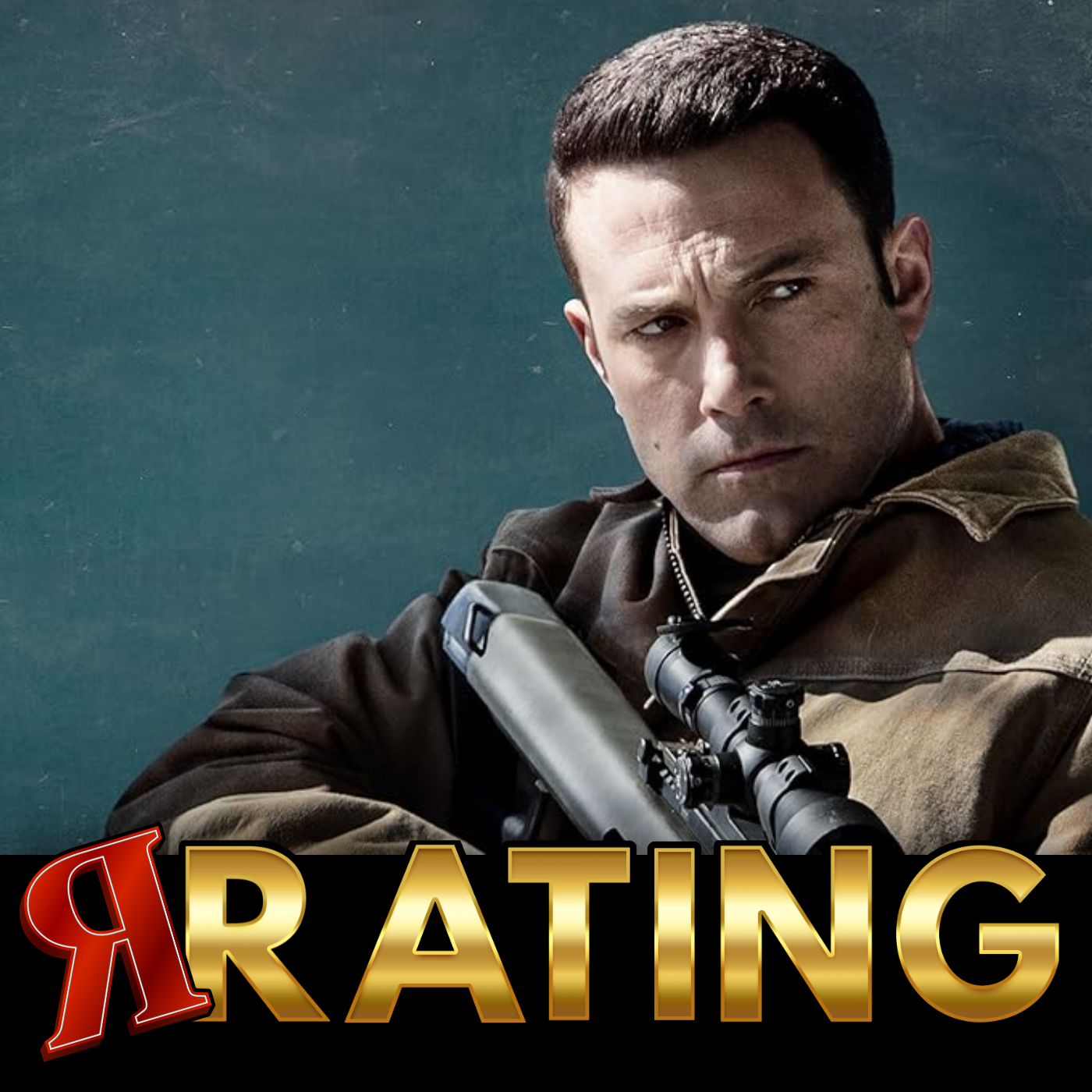
[00:00:00] Speaker A: Whether you're a struggling farmer or a big criminal organization, Christian Wolf is the go to accountant to keep the taxman at bay. But there is more to this genius number cruncher than meets the eye. He is a man without fear. And if you don't let Christian balance the books, the taxman will be the least of your worries.
[00:00:27] Speaker B: Passion for films Never closer Classic.
Movies.
[00:00:39] Speaker A: Let's start the show.
[00:00:55] Speaker C: Hello everybody and welcome back to R rating the show where I get to a couple my friends. We discuss a movie franchise, break it down by movie, give it an overall score and throw it up on the board. Today I'm joined as always by my friends Brian and Will. Brian, how are you doing today?
[00:01:08] Speaker B: Doing great, Dan, how are you?
[00:01:09] Speaker C: I'm doing very well. How about you Will?
[00:01:12] Speaker A: Yeah, Dan, how are you? You are always asking how we're doing. How are you buddy?
[00:01:16] Speaker C: That's the job of the host. I get to just pass the questions off. I don't have to answer them myself.
No, I'm doing really, really well. This has been a solid week for me. Silk Song just came out. I'm super stoked about that one. I get to talk, get to get together with my friends and talk about movies.
I got the weekend off, a three day weekend so I got nothing to complain about. So I am legitimately doing well. How about you Will?
[00:01:36] Speaker B: I know.
[00:01:36] Speaker C: Okay. Yeah, yeah. Good, good.
Yeah.
2016's the Accountant. This is my second time watching this one. I saw it in theaters with my wife. I remember enjoying it but could not have told you a thing about the plot.
So it was a good one to re watch. I'm happy that I did for the show. I know the account 2 just came out. I haven't seen that one yet. What about you Will? How do you come to this franchise?
[00:02:02] Speaker A: I don't care for Ben Affleck so this is the first time viewing for me.
I don't know. I think Ben is a better director than actor and after this movie I still stand by that point.
[00:02:15] Speaker C: That's fair. I, I can't really argue with that but I actually do like Ben Affleck quite a bit. So that's also another bonus in, in this category for me. What about you Brian?
[00:02:24] Speaker B: Well, you should have worn a blue shirt so it could be red versus blue over here. I'm with Will on this.
Ben's a better act director, actor and this is my second time seeing the film. I really didn't want to watch it a second time. I was very frustrated with it the first time.
Long story. Short. I have people of special needs in my family, and I do not like the portrayal of children with autism and how they're raised to be Ben Affleck in this film.
I think it was really atrocious and horrible. Their. Their anger, their angle on it.
I'm trying to set that aside and look at this film from a cinematograph.
I'm trying to look at it as a movie. Right. And put my feelings about the subject matter on the side. But it is definitely going to dampen my score because I was very frustrated watching this film. Even the second time trying, you know, thinking like this, I still couldn't get past it.
To put it short, you can't beat the Asperger's out of a kid with special needs, so please don't try.
I. I really didn't like what they did in this film, so it's going to be troublesome for me. I'm gonna try and get over it and just focus on this as a film.
But no, Second Time around wasn't any better than the first for me.
[00:03:34] Speaker C: Fair enough. Can't wait to watch the second one with you guys, because I've heard pretty much all the problems you're gonna have are gonna get worse in the next one.
[00:03:41] Speaker A: So.
[00:03:42] Speaker B: Yeah, there's positives in this film. There are definitely positives in this film.
To start us off with some of the positives, I thought Anna Kendrick did an amazing job. I thought, let's.
[00:03:53] Speaker A: Let's just give it up for all the actors in this movie for the most part. Like, it's got a pretty stellar cast, and I would say the acting and the character work was better than most of the movie itself. Yeah.
[00:04:07] Speaker B: John Lithgow, J.K. simmons had some great but smaller roles in this. I mean, J.K. simmons is one of my favorite actors in general.
I did have a little trouble grasping his character. At first I thought he was gonna be a bad guy, and then he turned out to have, like, a whole backstory to him, and it completely changed his character. Midway through the transition, there was a little awkward for me, but he still nailed all his lines and everything.
[00:04:33] Speaker A: Yeah, he was a great actor and the character was fine, but it was kind of superfluous. It was unnecessary, I felt.
[00:04:41] Speaker B: Right.
[00:04:41] Speaker A: Like, his whole arc was kind of unnecessary. The end 10 minute monologue was a lot for no reason. And we already were kind of. Everybody's on the same page at that point anyway, I think. So it just seemed, like, out of place, a little out of joint there, but.
[00:04:55] Speaker B: And him going after Agent Medina in the beginning. And he's like, well, you're gonna find out who this accountant is, or I'm gonna put you in jail for all this stuff you did in your past. And it was like, why are you such a jerk? And then later, he turns out to be, like, a pretty darn good guy, you know, trying his best, I guess.
[00:05:13] Speaker A: Well, the other problem is, is he.
[00:05:14] Speaker C: He.
[00:05:15] Speaker A: He goes through this guy. He's working with the accountant. Really? The accountant's, like, feeding him bad guys to put away. Like, it doesn't make any real logical sense why he was like, this is how I'm gonna find my replacement, because I'm retiring soon.
[00:05:30] Speaker B: It just occurred to me. And, Dan, tell me if you agree with this.
[00:05:34] Speaker C: I think the point is he's not good at his job. Like, he straight up failing at his job the entire time. So the fact that he wasn't good at talking to her kind of worked in the sense of, like, I don't know what I'm doing, but I need somebody else to be taking over this, because I do feel like I'm doing good or good is happening because of me, almost despite me, and I just need to find somebody else to replace me, and I don't really have that much time to do it in. I. I also thought that it was kind of, like, evil for the sake of evil at the beginning, and then turns out he's not evil, just kind of incompetent. I don't know. I. I didn't love his character, and there was, like, a split second where I wondered if he was going to be Ben Affleck's dad for a minute, and I was like.
But when he's like, I want to find him so badly, I'm like, did he lose touch with his son? And this is what's going on. Like, I.
[00:06:16] Speaker A: Right.
[00:06:17] Speaker C: I love J.K. simmons a lot. I love this cast a lot. Like, every, like, minutes that guy's in this, Jeffrey Tambor's in this.
Like, there's so many good actors. And, yeah, you put Ben Affleck in that list. Suck it. I love it.
[00:06:30] Speaker A: I mean, I. I kind of wondered
[00:06:32] Speaker B: if maybe J.K. simmons was.
The whole purpose of him making her go after the accountant was so that she could start to understand who this guy was, because he was basically going to pass the torch to her and let her take over, but she. He wanted her to, like, become acquainted with the subject material on her own. Maybe that. That just occurred to me right now. I don't know why he had her Hunting him down just so that they could be in the room when he. You know, his feet are up on the furniture and the phone rings and they're like, you know, give her a call. And. And. And she kind of takes over at that point. And that. That was kind of it. It didn't really make much sense there.
[00:07:13] Speaker C: Yeah, that was probably the weakest scene in the movie, is when, like, he sits down. He's just like, you know what? I'm gonna tell you my entire life story through flashbacks. And it just kept going. Like the first one, I was like, oh, okay. He's the guy at the beginning of the movie. Cool. Didn't know what was going on there.
[00:07:27] Speaker B: Didn't.
[00:07:27] Speaker C: Explains how he met Ben Affleck. Cool. And then this happens. And then this happens. And then you're like, oh, they're just info dumping everything. They couldn't figure out how to put into the actual movie logically. Like, when he starts talking with the funeral, I'm like, how do you know that he went to the funeral with his dad? Like, okay, like, it seemed like a stretch and it seemed unnecessary, but, like, it was the only time in the movie I was like, this is kind of dragging for me, at least.
[00:07:53] Speaker B: Fair. I didn't like a lot of the pacing of the film, to tell you the truth. I. I thought the pacing on this was. Was way off.
Bursts of intense action that maybe didn't even make sense. A lot of the times, you know, you had people switching sides, especially toward the end when his brother figures out who's in the room and. And they're just immediately switching sides and shooting the other people and kind of. It was a little sloppy. It was a little sloppy.
[00:08:19] Speaker A: Yeah.
[00:08:19] Speaker C: I wouldn't shoot my brother. There's no amount of money you could give me to shoot my brother.
[00:08:23] Speaker B: Right. But how they transition to, hey, get away from my brother, and just shoots the guy that he's been, you know, hired to go kill his brother. Like, I don't know. It just seems.
[00:08:33] Speaker C: Are they friends, though, or is he just some random guy with a shotgun guy?
[00:08:37] Speaker B: It was just showcase that he was switching teams. I don't. I just felt that the transitions were kind of sloppy. His brother clearly had a. Like, his brother was curious that it was. It was him. Like, the whole time. Like, you could just tell they were, like, hinting at that, like, I'm on to you, but I don't have proof yet. And then finally at the end, he sees his brother in the camera and he's got the proof he needs. And he gets up and then just immediately switches teams. And I just felt it was just kind of sloppy storytelling in that aspect. Also
[00:09:06] Speaker C: fair.
I completely forgot John Barenthal was even in this movie. Like, I remember him on the posters of the second one, so I was expecting him there.
But I, I, here's the thing with this movie. I saw it in the theaters and I remember enjoying it and then I forgot everything about it almost instantly. And I watched this on Sunday and I remember enjoying it and I'm already starting to forget parts of this movie. Like, you know what I mean? Like, it's one of those, like, it's fun while you watch it, but there's nothing about this that like, sticks with you or like, oh my God, I'm gonna remember that forever. Like, I can watch this movie for the first time in three years. You know what I mean?
[00:09:41] Speaker A: Right, right, right.
[00:09:42] Speaker C: But that's not saying I didn't have a good time while I was watching it.
[00:09:45] Speaker A: Yeah, it does come across to me.
[00:09:47] Speaker B: It's weird.
[00:09:47] Speaker A: It's a weird mix. It's like the story itself is like Rain man meets Dexter meets Daredevil.
It's really a weird, almost comic book superhero movie in its core because it's so unbelievable, but tries to be very serious and grounded in its execution. But I, I found the, it was maybe the writing that kind of failed it the most.
It was almost trying to be too clever.
And it, it couldn't, the writing couldn't hold up to that cleverness the way they were going back and forth. Non linear storytelling. And three like, oh, this is this person and this is that person at the end. Like, it just couldn't execute.
And I, I felt that it was mostly a writing issue because, like, and, and all the actors kind of brought it up a mark where the writing kind of dropped it down.
[00:10:52] Speaker B: Yeah. I don't know.
[00:10:53] Speaker A: I just felt like the storytelling just wasn't, wasn't solid throughout.
And that gave some of the pacing issues maybe, and some weird long monologues at the end, trying to catch the audience up for, for some unknown reason. It just felt awkward.
[00:11:09] Speaker C: It feels a little bit like, and we haven't talked about this before, so I don't know what your stance is on this movie. It feels kind of like if you took John Wick and like removed key aspects of it, you know what I mean? Like, it just didn't quite have the emotional weight that John Wick had or the coolness that John Wick had, but it still had, like, he's still professional. He's still double tapping, he's still incredible with guns and hand to hand combat. Like, he's almost everything that John Wick is. But, like, just doesn't have the same impact level something.
[00:11:41] Speaker B: Yeah, like John Wick. The choreography wasn't as amazing, nor were the scenes as cool or, you know, the lights and all that stuff. It wasn't, it wasn't John Wick for sure. It was maybe 30 of John Wick, but when he's, when he's in combat, that was kind of who he was. That cool, calm, pulling off the perfect shot and everything. But he also had the other superpower of math and being able to go through all those numbers and do the work of five men and 15 men and do all this stuff in one night and. And the crazy, you know, autistic superpowers that they gave him.
And you had that. Which was completely unlike a lot of stuff. Unless you go back to like Rain man or something. That was, that was a good call. I kind of said this was. This was Rain man meets John Wick. And then minus, you know, minus the, the talent in writing.
But. But yeah, it was.
There's everything in this movie has been done better by somebody else in some other film, unfortunately.
Altogether it was entertaining, but I've just. I've seen better in every aspect. And then the overall, the biggest problem I had from this was the transition from the kids to the adults seeing Ben Affleck and the severity of his. They allude to him having Asperger's. They say the word Asperger's. They don't actually say he has Asperger's. They allude to it.
[00:13:07] Speaker C: Yeah.
[00:13:08] Speaker B: Basically saying he, he. They later say he has high functioning autism, which is not. Have high functioning autism. He was severely autistic. And then to transition into who he was as an adult, he might as well have been playing the Terminator. He was just a person without emotion. And it wasn't, it wasn't very good acting at all, in my, in. In my opinion, as, as the character that he portrayed as an adult. So the transition from him as the kid to him as an adult was just completely disconnected.
[00:13:36] Speaker C: Now, again, I watched this four days ago, so I'm already starting to lose pieces of it because that's how this movie is.
What part of him as a child makes you think that he was high or, sorry, low functioning, as opposed to high functioning? Because, like, all we really see of him is trying to work on the puzzle and he gets really upset because he can't finish his, his task like he, he likes to finish things.
[00:13:56] Speaker B: He started the breakout when his, when his mother's leaving. He's clearly having an emotional reaction to that but doesn't know how to express himself and he's just absolutely losing it. Kids with autism don't know how to express their emotions and feelings. They don't understand them and they don't know how to express them. He was completely coming unglued as much as a person could.
And, and almost every sequence when you see him as a kid, except for the sequences when his father is paying somebody to beat him up, every other time he's coming apart, he's showcasing how severe his, his situation is. And then you have the one scene when he's learned, he's, you know, he's fighting taekwondo or jiu jitsu, I'm not really sure which what that was. But he's getting the crap beat out of him and he's totally calm and collected all of a sudden. And that doesn't make any sense. It does not work like that. You don't put a kid with, with, with, with those kinds of problems into a room with flashing lights and loud music and, you know, let them beat themselves with sticks. They're not going to end up right. It does not function like that. That was a real ugly showcasing of what they were supposed to do.
And I think they could have gone a different way if they had a father who wanted to basically abuse his, his kid.
They could have gone a different way with the story, but they wouldn't have ended up in the same place. They wanted to have a superhero and they just took this unfortunate situation that happens to a lot of people in this world and they formed it the way that they wanted to, to get the result that they wanted to. And it's just completely.
It upset me because this is a film that could have showcased children with autism and had him more of a high functioning autistic child and developed him into the accountant through legitimate means and ways, maybe, I don't know. And then they could have actually had some real emotional connection to some of the younger characters in the earlier parts of the story and really tugged on some heartstrings. They didn't. They just wanted to beat the crap out of a kid with.
[00:16:05] Speaker A: They just wanted. Yeah.
[00:16:06] Speaker B: When they wanted to get an action film, that's it.
[00:16:10] Speaker A: So, so I, I did some research because I was curious. I, I am not super familiar with on the Spectrum, aside from watching Love is on the Spectrum, which I love that show. It's so good.
But I. I was trying to look up reviews and people's thoughts who were on the spectrum and what they thought of the character work in this movie. The treatment of autism in. In this picture, and it's kind of split. It feels almost 50, 50. Some people are like, any representation of autism is good representation. So they're stoked that it's on there and, you know, showing some of the qualities that autistic people have.
Then there's other people who are fully against it, saying, hey, if you want to represent autistic people, it should have been an autistic person in the role, not Ben Affleck, you know, and that's. Those are like the harsh sides of each of the coin there. But all in all, a lot of what I read was autism affects everybody differently.
There is no one person you can model autism on. And that's why it's so difficult to represent autism on the screen, because everybody functions differently, everybody reacts differently. There are some common things that they have trouble with, but everybody is affected differently with autism. That's why there's high, medium, low levels, there's Asperger's and what have you. And so it's a very difficult subject to tackle. And I also read that the. The director and Ben and the whole film crew, you know, they. They did research. The writer researched a lot about autism. They. They met with many autistic people and groups, experts, things like that, to work on the film to get things to use so Ben could mimic traits, things like that, the blowing on the fingers, that kind of stuff.
So it's a very interesting.
I don't know. I don't even know what to say. It's a very interesting thing that I don't feel like I have a real place on. Like, oh, they did great, or they didn't do great in representing autistic people.
But to Run's point, they only showed, hey, you can put them in an institution, which leads to super voice that knows everything in the movie, or you can get your child beat out of and. And hone their skills and utilize their savantness with their. With their autism to make a superhero.
[00:19:03] Speaker B: And.
[00:19:03] Speaker A: And having only those two options in the film feels bad. It feels wrong to me.
And so that's kind of where I felt in it. Not that I didn't like the representation of autism or how it, you know, how they showed this person's autism on screen, like Ben's character, but more that just the way they handled making the autistic people into super beings really it just felt weird to me, and they could have handled that better.
[00:19:36] Speaker B: I agree with that sentiment. Exactly. And, will, in five minutes, you did a better job of explaining the situation with people on the spectrum than this movie did in two hours.
[00:19:45] Speaker A: Yeah, it's hard. The other problem, though, is, like, this movie, yes, it highlights autism, and it utilizes it for the betterment of this character's performance in various tasks, but it's not about autism, really.
[00:20:03] Speaker B: Not about autism?
[00:20:04] Speaker A: No.
[00:20:04] Speaker B: This is an action movie.
[00:20:05] Speaker A: It's just an action popcorn flick. And. Yeah, so if you're going in for an action popcorn flick, I think most people are going to come out thinking, yeah, it was okay. It was pretty fun.
But I think it does hit hard for other people who experience autism on a daily or, you know, have that in their lives. And. And it, you know, they. They live in a world that's different than this fantasy world, obviously.
[00:20:30] Speaker B: Right. And. And honestly, if Ben Affleck would have been done a better job, I. I thought he did a terrible job portraying somebody with autism because he had, like, three things that he. He blew on his fingers, he wouldn't make eye contact, and of course, he was obsessed with. With completing things. That was really kind of it. Otherwise, he just a math savant, right?
Yeah,
[00:20:53] Speaker A: sure. Yeah. Yeah. There. There was some elements, though, that I did. I did like. Like, you know, when he's like, they're. They're doing the classic romcom kind of setup with Anna Kendrick, and he pulls back, say, you know, thinking, no, I'm a freak. She's gonna think I'm a freak. And so he, like, closes that door on her. Like, I feel like that is kind of true to life. Like, I think many autistic people feel like they wouldn't be able to, well, contribute to a relationship like that, or we're afraid to go that.
[00:21:28] Speaker B: I mean, that's just standard imposter syndrome for anybody, really.
[00:21:31] Speaker C: You see that?
[00:21:32] Speaker B: You do see that in autistic people, though. They don't think that they're going to succeed, so they don't even try. And that's something that's unfortunate.
[00:21:39] Speaker A: So I feel like there was elements like that.
Exactly, exactly. That beat it right into them.
[00:21:46] Speaker B: I mean, I guess this. This could showcase to autistic people that you can do anything.
Right. It's just. I just don't like how they connect the youth. The youth version of the character of Christian Wolf to the adult character, Christian Wolf. I don't like Ben Affleck's portrayal, and I don't like this.
I Don't like how. How they do all the stuff when the kids are. Are younger and they're talking to the therapist. And therapist is like, hey, you know, here's an idea. And I'm like, yeah, he's. He's onto a great start. And then the dad's like, nope, we're not doing that.
Like, oh, God.
[00:22:21] Speaker C: Okay. You got to remember, though, this movie took place in 2016, so already we're a decade removed. So we already know more about Asperger's and autism than we did when this movie was made.
But also, they're portraying something that happened in, what, the 70s, 80s.
[00:22:35] Speaker A: 80s, yeah.
[00:22:35] Speaker C: Like, how little did we know about autism in the 70s? And a military dad probably straight out of Vietnam. Like, it makes perfect sense to me that he would be like, f you're hippie, we're not doing this. I don't know how he married that woman. Like, that seems like a weird mix, but, you know, stranger things have happened
[00:22:54] Speaker B: if.
[00:22:54] Speaker C: If I'm Ken for a second. The scenes we see of him as a child, we see him freaking out because he doesn't get to finish the task because he is upset with losing the puzzle piece.
We see him be able to calm himself once the. Once he is able to do the. The task, we see him finish it. That gets brought back a little bit in one scene as an adult, but not really. I thought there'd be, like, he was hired for a job, and he can't stop himself from finishing the job because that is completing the task. But that never really got brought up. That kind of got left behind. But the scene where his mother's leaving and he can't control his emotions. Take autism out of that spectrum. I know.
I was gonna say, nope.
I know kids who don't have autism who wouldn't be able to control their emotions in a situation like that. So, like, there's.
[00:23:41] Speaker B: Well, you even had his brother flipping his mom off out the window. You know, that's not. That's not grounded. You know, that's not well balanced either.
[00:23:48] Speaker C: Because his character has asked, has autism.
Doesn't mean everything this character does is because of autism.
[00:23:54] Speaker A: Right.
[00:23:55] Speaker C: You see, at the end, he is a badass killing machine. And people are like, oh, well, you can't just do that because of autism. His brother is also a badass killing machine. Yes, he does not have autism.
[00:24:04] Speaker A: Not as badass, though. Not as badass. Not as badass.
[00:24:07] Speaker C: We don't really know. We don't get to see him all that much. Right. Like, the scenes we do see him in. He's pretty badass.
[00:24:11] Speaker A: Oh, I agree. I agree. I. I actually quite liked John's portrayal in that. What's his last name? Birth and all. I mean, it's Punisher esque, obviously, or Shane esque from Walking Dead, but, you know, he's good at what he does. He's good at what he does. And his quick talk and smart talking is really fun. Like, there's a lot of elements on his character that I really like.
But at. At no point did I ever feel like Christian or Ben Affleck's character was ever in trouble once because he was a pro sniper, he was a pro martial artist, he was a pro everything.
And so zero time that I feel any stakes in any of the action scenes because of that. And I felt that was a missed opportunity.
[00:24:57] Speaker B: Even when he got shot, it didn't seem to slow him down much. He was always so calm in every scene, and that was to the detriment of the scene. So it wasn't as. It wasn't as scary or exciting, you know, he ended up throwing his brother on the ground and pointing the gun in his face, clearly able to overcome his brother even with a gunshot wound, you know.
However, it was still fun. Like, if you can set aside the problems I have with it, it was still a fun, entertaining action sequences that were there. Like I said earlier, it was just unfortunate that I've seen these things done better in other movies. So it didn't add too much. It was just something to pass the time.
[00:25:35] Speaker A: Yeah, right.
[00:25:36] Speaker C: I think I would agree with you as much as I love this cast and I thought the movie was competently done, if not well done.
You're not wrong. Like, if you're looking for an action movie, there are better action movies. If I'm looking for a weird romance, there's better romance movies. Like, it does nothing wrong. It just doesn't do anything well enough.
Shoulders above the crowd. Like, it's just kind of. It's just kind of good.
[00:26:02] Speaker A: I got a question then for you guys, because that's a lot of things I questioned and a lot of things. Like people, again, like, watching these other reviews of. Just trying to get more info of, like, stuff I don't know about. But I would also often hear of, like, the twists in the movie. Did you guys see the twists coming in this movie?
[00:26:25] Speaker B: What twist?
[00:26:27] Speaker A: Well, the twist that it's. It's his brother. It's his brother that is the other.
[00:26:32] Speaker B: From the beginning. I was waiting for them to figure it out.
[00:26:35] Speaker A: Like, that's what I felt like a lot of this movie. And the voice on the phone I knew was the little girl that gave him the puzzle piece. I knew that, like, as soon as the voice happened.
But they have it as reveals at the end of the movie. And I'm just like, what's going on here?
[00:26:52] Speaker B: The extra special dialogue at the very end of the movie when the father of the new attending kid at the school is walking with the headmaster. Who's the brother or the brother of the. Of the girl who's on the phone? Or is he the father of the girl who's on the phone? I couldn't remember.
[00:27:10] Speaker C: I think father.
[00:27:12] Speaker B: Anyway, they walk out and the guy's like. He's like, oh, like, that must have been a special donation because you could backdoor the Pentagon with the rig like that. And then the guy replies, oh, that's right. I forgot you were in software programming. And I'm like, this is such unnecessary dialogue. This is so dumb. Come on.
It was just way too much.
[00:27:31] Speaker C: Yeah.
[00:27:31] Speaker A: As to why she has this stellar computer, which is like, yeah, so dated nowadays.
[00:27:37] Speaker B: He already said we have some special beneficiaries, you know, like that.
[00:27:41] Speaker A: You know it.
[00:27:41] Speaker B: Come on. We're not that dumb.
[00:27:43] Speaker A: Super funny, though. Super funny.
[00:27:44] Speaker C: Which is incredible when you got to think, like, Ben Affleck probably met her once. Right? Like, it's not like her dad took him back to that place ever again. So, like, yeah, he made enough of an emotional connection with that puzzle piece that it stuck with him for life.
[00:27:56] Speaker A: But it's just like, find someone you can trust. Was that his dad's advice?
[00:28:00] Speaker B: One person you can trust? Just one, though. Yeah, that was her.
[00:28:04] Speaker A: Yeah, I thought so. Those were, like, the twists in the movie. And everybody, like, was like, all these twists. And I was just like, I. I didn't feel like they were like.
They were like Sixth Sense twists.
Yeah.
[00:28:20] Speaker C: The. The first time I watched it, I didn't see the little girl from the beginning making another cameo. That one was kind of like, oh, okay.
I couldn't tell you the first viewing, if I remember. I didn't remember John Barrel that was even in the movie, or Bernthal.
But this time around, I saw him and I was like, I forgot he was in this entirely. So I was more taken aback by the fact that he was in it. And then when I was thinking about him, like, it's got to be his brother. Like, there's no way he's the bad guy in this Doesn't Die and comes to the sequel without him. Being someone important.
[00:28:46] Speaker A: Yeah.
[00:28:47] Speaker C: Right. There's no chance.
[00:28:49] Speaker A: Right? Exactly.
[00:28:49] Speaker C: He's on the poster. Like he's as big as Ben Affleck is on the poster in the next one. So like. Yeah, so I guess definitely sticking around.
[00:28:56] Speaker A: It's reasons like that that I just found like they overwrit this or maybe the writing didn't stand up to what they were trying to execute.
It just seems like there was some odd choices in there to try and get all of these things jammed into this story.
[00:29:11] Speaker B: Yeah, they did cram a lot in.
[00:29:12] Speaker A: You had.
[00:29:13] Speaker B: You had a lot of showcasing weapons but not really going into it. Showcasing these paintings but never really going anywhere with that either. Right. It was just another form of payment for him.
There were just tons and tons of little features that they could have elaborated on or they just didn't need to put them in in the first place. And. And neither. Neither happened, unfortunately.
[00:29:35] Speaker A: Yeah.
[00:29:35] Speaker C: I don't know if I 100 agree with that because I. I don't want them to go like, I don't want it turned into a 20 minute art section part of the movie. Like the fact that they both appreciate art is kind of enough for me. And then like the gesture of him giving her this like, I don't know, ten million dollar painting, but that seemed like it doesn't.
[00:29:51] Speaker B: Written in for was so that he could give her this painting at the end showcased in the dog.
[00:29:57] Speaker C: Do you want 10 minutes of them going to a museum and talking about art? Like.
[00:30:02] Speaker B: No, but they could. Sometimes you just need together.
[00:30:07] Speaker C: He went back to his. You would have preferred if he went back to his mobile home and there was literally nothing in it. It's just a complete empty space.
[00:30:14] Speaker B: No money and guns. We just leave the art out.
So he's not allowed to have hobbies?
[00:30:20] Speaker C: No hobbies for this guy.
[00:30:23] Speaker B: I thought his hobby was sighting in his gun at the. At the. At the farm. Yeah.
[00:30:28] Speaker C: I don't know. People are allowed multiple hobbies. I've got four or five myself.
Didn't bother me.
[00:30:32] Speaker B: I'm just saying there was a lot of things that didn't get enough explanation. Like the connections with autism and stuff which was just a feature of this film, but not anything that they've honed in on. There were several little aspects of that that were just features of the film and they didn't give us anything. I think that they could have left some of those out and honed in more on others and made a little bit better film is all I'm saying there. All of the things that they did were kind of cool, but they just didn't pull any of it off well enough for me, which is fair.
[00:31:04] Speaker A: May I ask a question that I'm
[00:31:06] Speaker B: confused about in this movie, but just.
[00:31:08] Speaker A: All right, perfect.
Why did John Lithgow, his character, hire the accountant knowing he was like a genius accountant?
When John Lithgow, his character, was the one that was cooking the books for
[00:31:22] Speaker B: his company, they had a dialogue to explain that.
[00:31:25] Speaker C: Yeah, they did mention that in the movie where if he's about to go public, there's going to be a lot of people going over the numbers. And he wanted to see if it could get found or sought out. So the fact that they could figure it out means that it wasn't done well enough. So it was a. It was a setback for his company.
[00:31:40] Speaker A: So he was always planning on killing this guy if he figured it out.
[00:31:45] Speaker C: I think he was hoping that he couldn't figure it out.
[00:31:48] Speaker B: Yeah. And then when he did His Best Friend.
[00:31:51] Speaker C: Yeah.
[00:31:51] Speaker B: And then blames Ben Affleck for making that, for forcing his hand. Right. When the reality was he wanted to be taking money out quietly putting it back in publicly to inflate the price. Right.
[00:32:03] Speaker A: I understood why he was inflating the price. I just didn't understand why he would hire the best person to do the job and then be hired about it when he got it right.
[00:32:12] Speaker C: If you hire a shitty person and they can't find it and then they go public and like, everybody with a brain looks at it, goes, hey, wait a.
I don't know how many people. When the company goes public. I don't know how many people actually go over 15 years of books. I have no idea. But that's the reason they gave us. And I was like, all right.
[00:32:28] Speaker A: It seemed like. It seemed. It just seemed like a very easy way for this whole thing to implode on him, which could have been resolved any other way. He could have hired somebody to cook the books.
[00:32:40] Speaker B: Do you think that maybe there was a better story and they trimmed this down to fit it into two hours? Like maybe there was an original script that explained. Explained more, had better connections, had more in depth, but it made for a three hour movie. And they're like, well, we gotta put some stuff on the floor.
[00:32:55] Speaker C: Am I crazy or is this based off a book? I thought this was based off a book.
[00:32:58] Speaker B: That's what I was thinking. It kind of feels like it was based off a book because it feels like there's the potential for a lot of cool things to happen in this and they could not make it. They just didn't have the execution on it.
[00:33:08] Speaker C: It is not based off a book. Interesting.
[00:33:10] Speaker B: Oh, okay.
[00:33:11] Speaker A: Yeah, I don't know.
[00:33:12] Speaker B: Definitely not.
[00:33:19] Speaker A: I, I don't know if I was
[00:33:21] Speaker C: John to go back to John Lithgow.
[00:33:23] Speaker A: Yeah, go ahead.
[00:33:24] Speaker C: The other thing is, obviously John Lithgow would never think that this guy is a trained assassin. So he's hiring somebody who's irrelevant.
[00:33:32] Speaker A: Irrelevant?
[00:33:33] Speaker C: Well, I mean if.
[00:33:34] Speaker A: If you bring in the best accountant into your property, in your terms, and he sorts it out, he never leaves that building, you have somebody ready to take him out because you're obviously ready to kill for it. Obviously.
[00:33:45] Speaker C: Well, I don't think you want to kill on company property during the daytime, but yeah, I get what you're saying. He thinks he's got like, he, he does have like a world class assassin and a team of assassins on his side he's willing to kill. Was it his sister? Did I miss that? His sister and his best friend or
[00:33:59] Speaker A: is just like, yeah, yeah, yeah, yeah.
[00:34:01] Speaker B: They were just co workers. I didn't grab sister, but it could be.
[00:34:04] Speaker C: I didn't think it was, but then at one point I thought they mentioned it was. I was like, holy. He killed his. Okay.
[00:34:08] Speaker B: I think one was his sister.
[00:34:09] Speaker A: I think one was his sister.
[00:34:11] Speaker C: Either way, he's clearly willing to kill. He's got Blackburn World's world class assassins on his side.
I'm sure he didn't think anything of it. It was just a matter of like, yeah, get the best person in here, see if they can crack it. If they can't, fantastic. We're golden if they can. We need to cook the books a little harder or whatever you do with money like that.
[00:34:29] Speaker A: It.
[00:34:30] Speaker C: That didn't super bother me. It was a little weird, but it was like, okay, yeah.
[00:34:33] Speaker B: And Sifu Shannon Chat makes a good point.
This whole thing started because they were supposed to pivot away from dangerous mafia books and go to something solid and safe. And then he ends up with a team of terrorists led by his brother who's going to try to assassinate him because he found a money laundering scheme within.
So it's kind of ironic. I have another question.
[00:34:57] Speaker A: I have another question.
[00:34:58] Speaker C: Sure.
[00:34:58] Speaker A: I know I was only supposed to have one. Brian, you'll have. I will allow this. Dan. Dan can answer it.
[00:35:04] Speaker B: What is,
[00:35:06] Speaker A: what is Ben Affleck's moral code in this? Because it is wishy washy as far as I'm concerned.
[00:35:12] Speaker B: I'd like an answer to this too, Dan.
[00:35:15] Speaker A: Why is he killing some people? Not other people.
He's laundering money himself.
[00:35:21] Speaker B: He's.
[00:35:21] Speaker A: He's all over the board on this for me, and I'm not sure why or where or how any of it makes sense. Any sense.
[00:35:29] Speaker C: I think his moral code makes a bit more sense to me than John Barenthal's. His seemed a little bit more out there because the first time he's in the car with the guy, isn't he like, oh, you're laundering money. You need to stop doing that? And then he starts directly working for somebody who is laundering money. And it was just like, what? Like, where. Where are you coming from on that one?
I mean, Ben Affleck.
I. I'm. Again, I'm sorry. This movie comes and goes out, like, in one ear, out the other.
Was he not working for the cartels so that he could find out how they worked their business and then take them out from the inside, give them away?
[00:36:10] Speaker A: Yeah, for sure.
[00:36:10] Speaker C: Isn't that what was happening in the. In the. The One scene where J.K. simmons comes in the room is basically like, he worked for the mob, found out how they worked, took him out.
[00:36:19] Speaker A: Yeah, I. I think so. But then he's also laundering money himself, and his brother is a. A hired killer.
[00:36:27] Speaker C: Like, why is a lot of money
[00:36:28] Speaker B: away and the only time.
[00:36:30] Speaker A: Why is his brother gonna pass? You know, just because it's his brother? Like, that's.
[00:36:34] Speaker B: Well. Well, here's one thing. We never actually see him utilizing his military skill set any other time, except when he goes after the people who killed his cellmate. Right. He goes to get revenge on them, but otherwise we never see him going after any of the mafia thugs or killing anybody else. We're. We're just led to believe that sort of thing happened, but given any evidence of it whatsoever, then later, of course, he puts his skills to use against the enemy that John Lithgow pits against him, which turns out to be his brother.
So it's a little bit convoluted. There were. There was never a portrayal of the rules, as Dan and I like rules to movies, and we like when people stick to those rules. Right, Dan?
[00:37:18] Speaker C: For sure, absolutely.
[00:37:19] Speaker B: And. And we were never given a specific set of rules for his moral code in this. We were just kind of left.
Left at up to ourselves to figure it out. And I think that he was working, you know, cooking the books for all these really bad groups, and the nastiest of them that committed whatever form of thing that caused him to say that you crossed the line, he'd give those up. But not all of them because he only gave up a few to Ray King. J.K. simmons.
[00:37:51] Speaker C: Yeah.
There's also an argument to be had that he's just straight up not a good person and he just liked Anna Kendricks. Like somebody tried to connect with him.
[00:38:00] Speaker A: That's the problem I have with this, is that he, to me, he doesn't come across as that good of a person.
[00:38:06] Speaker B: Yeah.
[00:38:06] Speaker A: And that. That's always problematic in the protagonist role. Unless you're doing like, you know, an anti hero.
He doesn't really come across as that either. It. It just seems too ambiguous and too loosely put together for me to like, to like, grab onto a side and then at least be like, oh, I love this guy, or, oh, I love to hate this guy or something. To me, he just was there doing these things because that's what the script told him to do.
[00:38:39] Speaker C: Yeah. Things were happening to him and he was reacting to them as opposed to.
[00:38:44] Speaker A: Yeah, he was never really in control or making choices even. He wasn't even making choices. The voice was making the choices for him. He was really just a tool used throughout from his young child self. His father using him as a tool to the very end.
[00:39:05] Speaker B: His father gave him a set of rules. And the second rule was loyalty. Loyalty to your family and loyalty, those that you care about. And so, you know, Chat mentions in here, once he likes someone, he has to protect them. So the moral code is to protect at all costs. That kind of makes sense. That falls in line with that second rule that, you know, you're loyal to those who you care about.
I forget the first code. Just like Dan, there was some very forgettable stuff. I don't remember what it was. I just remember that it was weird that it was like, be loyal to your family as number two. I think the number one was like anybody or something.
[00:39:37] Speaker C: If you like what we do and you want to help support us, consider joining our Patreon. There's a link down below.
Thank you so much for our executive producers, Real Bubba, Hotep and Dino. And a huge shout out to our head writer, Elder JM990. You guys are helping keep this show on the road and we greatly appreciate you.
[00:39:54] Speaker B: Again, this is just a movie that failed to execute at every turn. Had a lot of good opportunities, had a lot of good ideas, had some very, very bad ideas, but overall, it just failed to execute for me at every turn. This movie just kind of let me down.
Best case scenario, it was a watered down version of something else that I liked from some other movie. There was always another movie that did. Whatever aspect of this film that I liked, they did it better. And so this was just kind of, you know, humbug for me. It was, it was. It was nothing much. Pretty meh.
And then on top of that, the disconnect between the youth version of Christian Wolf and the adult version of Christian Wolf and in my opinion, terrible acting by Ben Affleck for somebody who is supposed to have done so much research on that. He really just kind of had like a couple of gimmicky things that he did to showcase that he was autistic and otherwise. He didn't really come off like a person with any form of autism in my opinion. I could be wrong. Like Will said, there is a spectrum for a reason. There is no way to put anybody in any one place. But they sure didn't connect the youthful version to the adult version for me. And I found a lot of the things and ideas that they did in this quite offensive.
Brought my fun factor just to an all time low as I watched this. And so for me, I think this is a movie that most people should just go ahead and skip. I don't think it's worth your time. I don't know where this franchise is going to go.
I don't have high hopes for number two, but I think that this is a less than appealing film. I'm giving this a 42 out of 100 and I just think that it's. It's just not worth your time.
[00:41:35] Speaker C: Overall, I don't have the same strong opinions of words, autism that Brian does. I know some people tangentially, but I don't have a direct connection with them. So I didn't have the issue that they do with Ben Affleck's portrayal of someone with autism or someone coping with.
I actually like Ben Affleck. I actually like this cast quite a bit. I think Anna Kendrick did a good job. J.K. simmons is electrifying in literally every role I've ever seen him in. John Lithgow is a favorite of mine. So John Bernthal, again, great, great actor or at least fun actor to watch.
I think this movie did have some redeeming factors to it. The writing could have been a little stronger and the fact that this came out after John Wick makes makes some of the action a little bit less exciting. But nonetheless, I did enjoy huge chunks of this movie. There's really only the one scene at the end where they're just like giving all the plot away in one. One exposition dump that it was kind of like, okay, this could have been significantly better. But other than that, I really didn't have an issue with that movie other than it's just so forgettable. Like, there's just nothing about this movie that stands out. It's fun to watch. I enjoyed the two hours while I was watching it, and I'm gonna forget it. And, like, next week, I'm gonna watch it again for the very first time. It's gonna be one of those movies for me where it just doesn't stick with me. But I remember liking this in 2016, and I remember liking this from a week ago. I don't think it's a bad movie. I can understand your perspective if his performance bothers you. Absolutely. It didn't bother me. In fact, I actually. I actually liked it.
But I have to give this one a bit of a ding in the sense that it just doesn't stand out, doesn't do anything incredible. It just does everything decently. So I get a 70 for this movie. I thought it was fun. I enjoyed it. I would probably watch it again at some point, but I'm not running out to the theaters to watch the sequels. And I have no idea where Will's gonna come in on this one. So that's.
[00:43:28] Speaker A: Hey, always, always, always a wild card.
[00:43:32] Speaker B: Hey, always.
[00:43:35] Speaker A: So while the others were giving their breakdowns and their scoring, I looked up what the rules of accounting were in this, and here's what came back. Debit all expenses and losses. Credit all incomes and gains to debit the receiver, credit the giver, and three, debit what comes in and credit what goes out. Those are the three golden rules of accounting.
All right. There. There. You know what?
That wasn't funny.
[00:44:04] Speaker B: But you know what?
[00:44:04] Speaker A: There was some funny moments in this movie.
I. And I think it mostly came from the good acting that the good actors that Dan mentioned. I think the. The cast played well off of each other throughout this movie, and that's what kept it interesting for me.
That's what kept my attention the most. The action was okay.
The story was convoluted, but like a pretty simple story made overly convoluted just to switch it up, I guess, to make it original. I don't know. I think that's where this fell apart the most for me.
And then again, on the autism notes, I don't deal with it every day. I don't have it in my life. I am a supporter of it.
And I feel like autism needs to be represented more in film. So I would love to see more autism on the big screen. But by autistic people. Things like the. The love on the spectrum I followed. It is incredible. I find the people in that are hilarious and genuine and caring and fun.
So I'll watch that every day of the week. This I probably won't watch again.
But that being said, it. It comes across as a fun popcorn movie, but at least it tried something new, so I give it a partial credit for that. It's not just like a Fast and the Furious 7.
It. It least tried to turn the action genre a little bit into something unique, so I give it some partial credit. Overall, I'd give this a 61 out of 100.
As far as franchises go, it's not a recommend watch, but it is watchable.
[00:45:46] Speaker C: All right. With that, we have our score for accountants. Just the first one coming in at 58. This is honestly lower than I thought it would be. I knew Brian wasn't a big fan, but I'm shocked it's as low as it is, and I'm sure it's only going to get lower. None of us have seen the Accountant too, but nothing I was reading online says that it's going to bring this score up. So. Yeah, I don't know.
[00:46:06] Speaker B: I. I saw some things.
[00:46:07] Speaker A: People saying it was better, actually.
[00:46:09] Speaker C: Really? I mean, I was the highest on this one, so I'd love to come in and enjoy it as well, but.
[00:46:16] Speaker A: Right, right, right.
[00:46:18] Speaker B: Obviously, I enjoy Jurassic World more than the Accountant. I definitely enjoy Gremlins more than the Accountant. So I. I still think it's a tiny bit high for me. We'll see how number two goes.
Knowing the subject matter, and I have already broken the seal on my angst for their portrayal and. And mostly their transition from the youthful version to the adult version of Christian Wolf.
I think I can probably put that on the shelf going into number two and hopefully enjoy it a little bit more for what it is and just kind of let it go.
[00:46:52] Speaker A: Being a sequel, it might be that way because they don't need to touch on that growing up as much. Maybe like the abuse side of it. There might be a lot because it feels like it's gonna be him and his brother kind of taking on the world now.
That's what the sequel kind of looks like to me.
Without knowing anything about it, they're going
[00:47:09] Speaker C: against each other, so I don't know.
[00:47:11] Speaker A: Okay.
[00:47:12] Speaker C: But, yeah, either.
[00:47:13] Speaker A: Either way, I think it's gonna be. If. If there's more John in this, I'm okay with that. He's. He's fun to watch. He's he's quick and witty in the first one, so I would assume there'd be more of that. And so if they, if they lean away from the childhood trauma and lean into the fun action comedy, it could be.
[00:47:32] Speaker B: Yeah, I hope they turn it into a bit more of a brotherly kind of love situation, a buddy cop kind of situation where, where, where Bernthal can kind of mock Ben Affleck a little bit. Exactly.
[00:47:44] Speaker A: He'll be the straight man.
[00:47:45] Speaker B: It could be a lot more fun and entertaining and, and I, I could, I could. And then maybe we can explore Ben Affleck's ability to try and portray someone on the spectrum a little bit better. Hopefully he can do a little bit job, just work a few more features into it, a few more aspects of things. Because really you had like, you know, you had like three pieces of silver were perfectly aligned in the drawer when he opens it up. Like there were a few little things, but just not really enough for me to get a feel for his right. For his character situation.
[00:48:12] Speaker C: So that's our rating of the account. But what's yours? Let me know in the comments down below. I'd love to hear from you. You we record this at Twitch tv, the Mongolie show, every Thursday night. So come on over there. Hit the follow button if you want to hang with us live. Or if you made it this far in the video, you probably enjoyed it. Hit like and subscribe on this video. So I see you in the next one.