Episode Transcript
[00:00:00] Speaker A: All aboard.
[00:00:01] Speaker B: Crazy but that's how it goes Millions of people living as foes maybe it's not too late to learn how to love and forget how to hate Mental wounds not healing life's a bitter shame I'm going off the rails on this crazy train I'm going off the rails on this crazy train.
[00:00:28] Speaker C: Completely overrated.
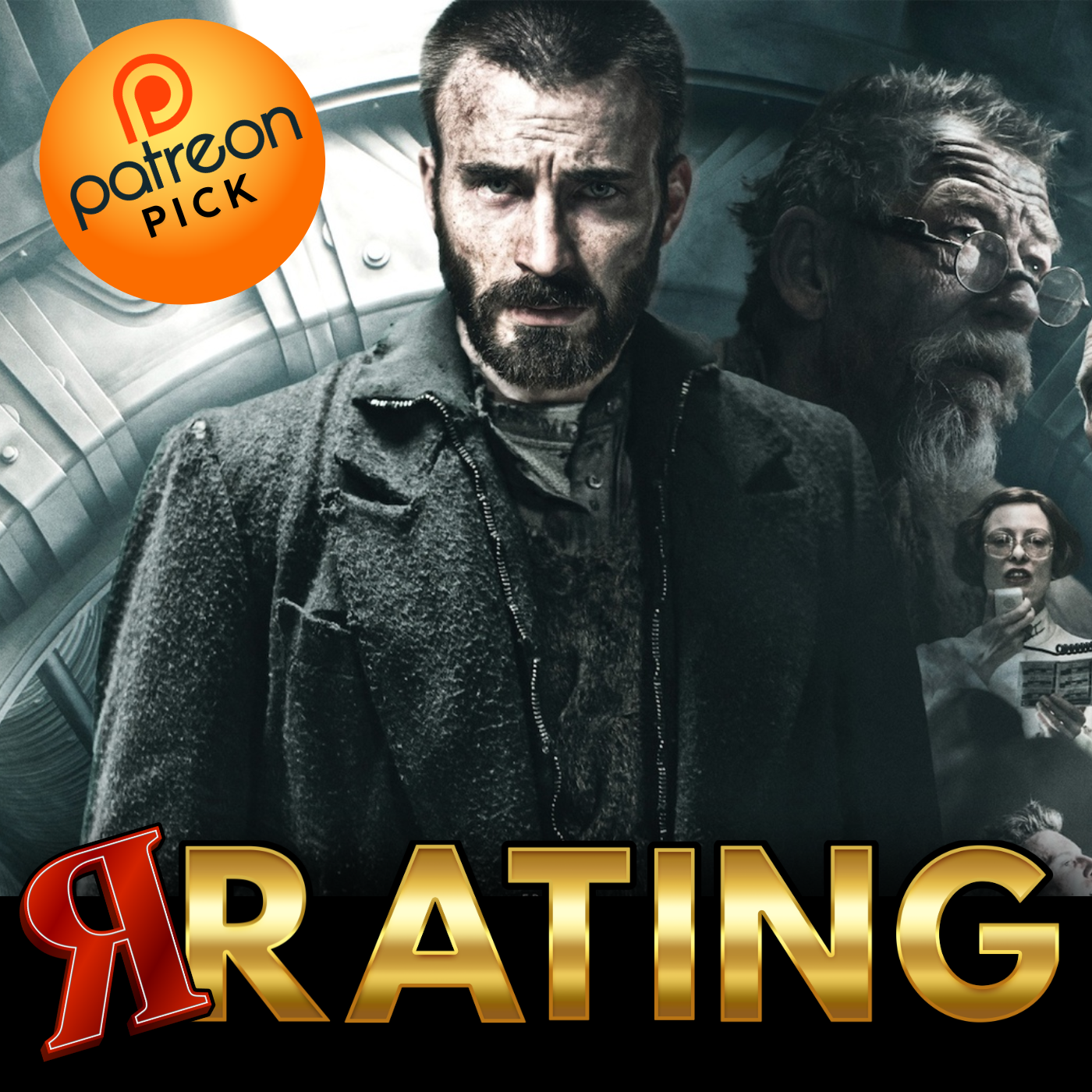
[00:00:29] Speaker A: Hello, everybody, and welcome back to our rating the show where I get together with two of my buddies, we take a movie franchise, break it down by movie, give it an overall score, and then throw it back on the board to see what lands compared to the other movie franchises. This week, however, we are doing our Patreon pick, which is where you guys get to decide the movie we're going to watch. So this week we're talking about 2013's Snowpiercer. How are you doing this week?
[00:00:50] Speaker B: I'm doing great, Dan. I'm excited that school starts next week so I can get my little rebellious child out of my face.
[00:01:00] Speaker A: Is this your kid's first year in school?
[00:01:03] Speaker B: Grade one, but grade one, okay. He was full time in primary and pre primary, like full days, five days a week. So it's old hat by this point.
[00:01:13] Speaker A: Brian, how are you doing? Your kids have probably been in school for a couple weeks at this point.
[00:01:16] Speaker C: Yeah. Yeah. About a month. They're finishing their last five day week. They go to four days a week from here on through the rest of the year.
I. I'm having a frustrating week. I accidentally trimmed my beard wrong, so I'll probably be fondling my face even more than usual because that irritates me and I've been dealing with depression. So I'm happy to be here because this night always cheers me up and I'm glad I made it.
[00:01:41] Speaker A: I was gonna make a joke. Then you run into depression. Not feeling.
[00:01:44] Speaker B: I know, but we are.
[00:01:45] Speaker C: It's the dose of realism. It's hard for me to, you know, get sarcastic and be humorous and everything when I'm just trying to pull up from the dumps here.
[00:01:53] Speaker B: We'd rather you be. Be your true self. And we're happy you're here. Dan. What about you, sir? How was your week?
[00:02:00] Speaker A: My week's been okay. As you know, we've talked about a lot, about me trying to sell my house, trying to get the house we want.
The new house that we wanted did officially sell, unfortunately. And we cannot find anything else in the area in our price range that is better than the house we currently have.
So we're still technically on the market, but we've Completely lost our appetite. And we're just kind of like, unbox the DVDs so. Right. Exact. Exactly. We've got a showing on Saturday and we're kind of just dreading it. We're kind of just like, if we didn't have a showing Saturday, we could just start unpacking and living again in our house. So it's like. And then we're gonna do one last show just on the off chance. But, like, realistically, even if it sells, we have nothing to buy. So it's like, yeah. Feels kind of like we're just wasting everybody's time.
That being said, it's been a pretty good week otherwise. It's my youngest daughter's birthday this week, so we got some fun Simon with her. We did a birthday party at a bowling alley last weekend, an arcade. Got to see all that kind of stuff. And then tomorrow is our actually, like, family birthday gathering for her. So we got some fun little gifts under. I was gonna say under the tree. Got some fun little gifts to give to her. And I'm pretty excited to see her reaction to that. So that'll be amazing.
But other than that, we're here to talk about Snowpiercer. This is a Patreon pick. We did it in the Watch party with a bunch of the Patreons, or patrons, however you want to pronounce that.
Always a good time to watch this movie in the Patreon with other people.
But the general mood in there was a little bit sour, which I was kind of surprised at. Now, I don't necessarily want to get your overall feelings of the movie right off the bat, but did that surprise you? The general reaction to this movie surprised
[00:03:29] Speaker C: me a little bit.
[00:03:30] Speaker B: Yeah.
[00:03:30] Speaker A: I guess I should say I've seen this movie before.
[00:03:32] Speaker C: Yeah.
[00:03:33] Speaker A: Have you guys seen it before?
[00:03:35] Speaker C: I've seen it before and I. I was surprised at the reactions in the Watch party a little bit.
[00:03:41] Speaker B: I have not seen this movie before. This is. Was the first time I watched it, so I was excited to see it.
I've heard a lot of things about the movie. And they have a TV show now out as well, as far as I know.
Yeah. So I was happy to be able to watch that. It was good.
[00:03:58] Speaker A: I have no idea if the show is still going or not. I didn't. I heard a lot about it before it came out, and then it kind of came out. I've never heard anything about it since.
[00:04:05] Speaker C: I believe it is no longer running. I don't remember how many seasons it was. I watched the first I watched a few episodes of the first season and I just really didn't get into it. Didn't seem that bad. Had. But it was like I'd already seen the movie and wasn't super excited over the premise, so just dropped off.
[00:04:23] Speaker A: It did feel kind of like.
[00:04:25] Speaker B: I feel like that was.
[00:04:25] Speaker A: The general consensus is, like, people who saw the first season or half season or whatever were kind of like, I've seen this. It's just longer.
[00:04:31] Speaker C: Yeah.
[00:04:32] Speaker A: It's not really adding a ton. It's just longer. So not. Not terribly upset that I skipped that. But.
[00:04:38] Speaker C: And honestly, the. The show didn't resolve one of my biggest issues with this movie, which. Which is the physicality of the train, the physics of it all. The whole point of the train constantly moving, going on the tracks. I have a huge problem with the size of the train. If you're going to have the remainder of humanity, which we'll get to. The whole extinct business. I know Will had issues with that. I'll probably take that one. But the whole of humanity is now on board this train, or what is left of it, and they're supposed to be surviving for generations.
The damn thing's just too small. And I understand that was a directorial choice.
Bong Jong Hu. I cannot remember or pronounce his name. I'm sorry. The director made some choices that he was going to say, hey, the lowest class in society will be at the tail. The wealthiest will be at the front. We're going to transition. We're going to show lots of differences in those transitions.
But he left out everything about the mechanics, the upkeep, the maintenance, living quarters, who's cooking, where the food's coming from. All that stuff is just left out.
And I guess it's supposed to be understood that those cars exist. We just didn't get to see them. But the size of this train just looks so small to me. I just. It really bothered me and I hated that part.
[00:06:03] Speaker A: So the train is supposed to be over a thousand carts long. So, yeah, we don't come close to seeing everything.
We do see multiple scenes where they're making food, whether it's out of crickets or out of fish.
But also, like, the train doesn't.
The train making sense physically is not the point of the movie.
[00:06:24] Speaker C: And that was. That was the choice. Exactly. It's an allegory for. For the class warfare that's going on and the society structure and the big pictures, the big ideas that this movie's trying to tackle.
[00:06:36] Speaker A: Yeah. And I. I kind of let it go because of that. Like it's not trying to be super realistic.
[00:06:43] Speaker C: Right, right.
[00:06:43] Speaker A: Like it is a hyper stylized version of what they're trying to tell. And I'm, I bounce back and forth between whether or not this movie is the allegory that's going for is. Is way too on the nose or if it kind of misses the point like that that's kind of what I was hitting on because I thought it was really on the nose. But then in the watch party people were making fun of things, no offense, like the train. And I'm just like, that's not the point. Like why, why is that the point? Like, yeah, so I'm, I'm curious to hear your opinions on your takes on it. I guess.
[00:07:13] Speaker B: I think that's a, it's, it's a sci fi action movie. Right.
So when you see that on the poster, sci fi action, you're kind of maybe going in looking for that. And this is kind of that.
But I think it's more heavily weighted towards this class war and the fall of man and how what have you.
And I, I haven't seen, I haven't seen this movie. I hadn't seen the TV show. When I was watching this though, I was like, I think this would make a better TV show because it does feel fast, which is also a struggle bus in my mind or train, so to speak.
Because I, I felt like I was kind of bored watching this movie because I knew kind of how it was gonna go. You know, they're gonna make it to the engine, they're gonna make it through the train and it's going to end by either the train stopping or the train continuing. Like there's no real big reveals here. And so I was like kind of bored. But I was also like, oh, there's so many cool cars that you get to see like a sneak peek of. Whereas in like a TV show, maybe you could expand on like all of these crazy train cars and how this actually is set up and working and functioning as this thousand train car train barreling around the world. And you know, there's just so much of that interest that you don't get in this movie. And again, that's not what the movie's focus is. And that's fine, but maybe that could take away for some people's viewing.
[00:08:49] Speaker A: Now you mentioned there's no big reveals in this one.
There are arguably back together, like back to back. So they're both right near the very end.
We do, we're gonna spoil this by the way, if you haven't seen the movie before. It's 12 years old, 13 years old.
We do get the reveal that like Chris, Chris Evans, mentor, whose name I don't have directly in front of me for some reason was working with the Gilliam was working with.
[00:09:16] Speaker C: Yes.
[00:09:16] Speaker A: Wilford the entire time. And like the entire rebellion was kind of built into, like it was baked into the, the, the cake. That is the stone.
[00:09:29] Speaker C: They, they went from let's, let's start a rebellion and take over the train to this rebellion is part of how the train functions and it's part of how their society works. It's a, it's just another mechanism of the train. You to keep everything in balance. Every so often they have to have a rebellion because they need to have a big kill off of people so that they can get back to equilibrium. And he realizes that whether he's at the front or Wilford's at the front, the train's going to continue, the system is going to continue, the cycle continues. And then it becomes a question of if we stop the train, we could be ending life as we know it. Is that the right thing to do?
Right. That, that becomes a big question. So it, it flips a lot of things on its head, on its side. And his Chris Evans character's whole idea was that he needs to get to the front of the train when really he was missing the whole point that there's a different society, a different social structure that we could be looking at all together. And that's the other guy who wants to blow the door off and get out of the train. That's his idea. And we don't realize that until the very end.
[00:10:36] Speaker B: Yeah, the engineer or whatever.
[00:10:38] Speaker C: Yes.
[00:10:39] Speaker A: Yeah. You have the entire movie believing that Chris Evans is the revolutionary. And it turns out he's just another cog in the machine. And it's actually the, the drunkard, the, the drug addict who's the revolutionary. But he's so passive the entire movie.
You just, you don't see that. Maybe you don't see that coming until the very end when it actually is starting to happen. He's just.
[00:11:00] Speaker B: Sure.
[00:11:01] Speaker A: The guy who gets you through the door. You don't realize that he's, you know, he's got his own machinations the entire time beyond just getting high.
[00:11:07] Speaker B: Those small plot points aside, it still ends one of two ways. Right? Like that's, that's the end of the movie. Still the end of the movie. And that's why I'm like, oh, you know where it's going.
Unless they're like taking it to space or something that you're not gonna understand or see coming.
[00:11:26] Speaker A: But doesn't that feel like every action movie ever though? Like either Bruce Willis is going to kill Hans or Hans is going to kill Bruce Willis. It's only going to end one of two ways.
[00:11:35] Speaker B: Sure. I, I guess maybe it's just the claustrophobic nature of this movie, the, the pure linear progression through the train in this movie that it just seemed so
[00:11:49] Speaker C: blah to me, you know, like it had one trajectory. Basically. They were going to get to the front, we're going to find out what happens, and that's kind of it. We did get something that was quite interesting and I really enjoyed, although I don't think the script adopted this idea well enough, is that Chris Evans comes to the front and he's this like. I mean, he's literally Captain America. He's the best of the best, the good guy and he's leading everybody and he seems like such a wonderful person that everybody cares for. And at the very end you find out he was a horrible person, even a coward. He was eating people, eating babies. He says that he knows what babies taste like. He actually says babies taste the best. I know what people taste like. And it's a horrifying revelation that his character is actually a horrible person trying to find goodness, trying to do right after such a horrible start. And that was really cool. The problem was is that I don't believe it.
I just don't believe his character ever came from that place. There was zero foreshadowing of that at all other than the scar on his arm, which was just part of the story.
The way his character acted and everything. I saw nothing that would lead me to believe that he was a person who came from something bad. And that kind of sucked. The reveal was so shocking, it was unbelievable. And so it was. It was a cool idea, but they didn't pull it off quite well enough.
[00:13:20] Speaker A: Do you think that is because it was Chris Evans? I'm not ragging on him as an actor, but like, because he is the Captain America type, he is the boy scout. He is.
He doesn't have a dark side to him.
[00:13:31] Speaker C: I think it was the script, the way it was written. Everybody in the back cars loved him and he ate babies in front of them. They wouldn't be that accepting of him.
[00:13:42] Speaker A: But in fairness, most of the people who survived survived by eating people.
So it's not like he's any worse than the rest of them. Maybe the 17 year old who doesn't know that about him because probably he's not going to tell the kid, oh, by the way, I ate your mother.
[00:13:55] Speaker C: Yeah.
[00:13:56] Speaker A: But like, for everybody else, like, that's how they survived. Like, even when Gilliam cuts his arm off and feeds it to people, they're still eating human. Just because he's a willing participant doesn't make it better.
[00:14:07] Speaker B: And that's what it turned into is like that was the turning point of he offered a little sacrifice and then other people, you see multiple people in the train car that are limbless and yeah, they set it up like, oh, that's a punishment that they've put on these people. But in reality, mostly it's people sacrificing their limbs for the betterment and survival
[00:14:30] Speaker A: of l. Self imposed.
[00:14:32] Speaker B: Yeah, I, I just,
[00:14:35] Speaker A: I kind of liked the reveal that he couldn't do it. He wanted to, and he couldn't bring himself to do it.
[00:14:40] Speaker C: Right.
[00:14:40] Speaker A: Because you mentioned, like, he is kind of a coward and like, this is kind of his redemption arc I love. So at the end, I kind of get the impression that Wilford does his job. I feel like Wilford does convince him, like, no, keeping the train going, keeping this broken system going is the way to keep it moving forward. I don't, I don't get the impression if the bomb didn't go off, he was going to derail the train.
[00:15:02] Speaker B: No, he gave him the matches to set the bomb off.
[00:15:05] Speaker C: Yeah, sure.
[00:15:06] Speaker A: But if there wasn't a ball, like if, like the other guy sets the explosive. Sure. Okay, you're right. He does do that.
[00:15:11] Speaker B: Yeah. The turning point is the children.
He sees the children running the machine and he's like, that.
[00:15:18] Speaker C: That's too far. Yeah.
[00:15:20] Speaker B: This isn't a sustainable thing. I'm not sacrificing any more babies. And so that was the turning point.
[00:15:26] Speaker C: So he did the match and so he gave his arm to pull that kid out of there. So he only truly saved the baby. And so he. Redemption there and then gave them the matches to blow it off the rails because he realized that it. It doesn't matter who's in front, it's always going to be a nightmare. This society just has to collapse and we have to start over.
Which leads us to another. Go ahead. Do you want to go ahead?
[00:15:50] Speaker A: Sorry. While we're talking about him losing his arm, there is something I'm curious about. I, I don't necessarily want to watch this for a third time, but I am very curious because I'm pretty sure he loses the same arm that Gilliam lost. Right like they're both their left arms.
[00:16:03] Speaker C: Yes.
[00:16:04] Speaker B: So.
[00:16:04] Speaker C: Yes, it was his left arm.
[00:16:06] Speaker A: We see Wilfred as well as Mason, the Tilda Swinton character, are constantly doing this motion with their hands that mimics the children in the machine. And it's almost like a religious thing for them.
[00:16:17] Speaker B: Yeah.
[00:16:17] Speaker A: Are they doing that with their left arm?
So that's why he says only good leader. You can't be a good leader with two working arms because they both lose the arm. That is that like forcing children motion.
[00:16:30] Speaker C: I saw them doing the right arm and the kid was doing it with his right arm. I don't think the left arm has anything to do with that.
[00:16:36] Speaker A: I think that's what I was just curious about. Just wouldn't.
[00:16:39] Speaker C: It didn't matter. It just. Yeah. They just gave an arm.
[00:16:41] Speaker B: I believe the whole you can't be a good leader with two arms is more.
That is like the greatest. You're literally sacrificing a piece of you to better and. And. And let people live.
[00:16:54] Speaker A: You're giving up a piece of yourself to help others.
[00:16:56] Speaker B: Exactly. That's leadership. And so he had to lose his arm to be able to actually prove. Redeem himself, I guess.
[00:17:03] Speaker C: Right? Yeah. Yeah.
I have somewhere I was gonna go and I completely forgot it.
[00:17:10] Speaker B: Yeah.
[00:17:10] Speaker C: Yeah.
[00:17:10] Speaker B: Fair.
[00:17:11] Speaker A: My apologies.
[00:17:11] Speaker C: I don't know. It's all right.
[00:17:13] Speaker B: It's all good. It's all good. Yeah. Okay. On a positive for me, the movie is beautifully shot. It is not your typical Hollywood action movie, which is a okay by me.
Definitely. More the Korean vibe film, which was kind of refreshing to see with all these, you know, big name actors and all that.
You know what. What they did with like the profile shots and long shots to like maximize them feeling this claustrophobic way in the train cars was really cool.
The lighting and the colorful set pieces I thought was really cool in this movie.
That's really what stood out to me was like the filmmaking. It was more an art piece in that way.
The story was like. It felt like Hunger Games to me. It just felt like there's been so many of these like class war stories that it just, it's. It's not fulfilling me anymore. You know, I've seen. And to the point where like even like the high class people are these like weird zany characters just like in Hunger Games. And I just thought you can go in a different direction in that kind
[00:18:28] Speaker A: of just like in real life too.
[00:18:30] Speaker B: Sure. But I mean it's even so much more like over the top in these movies. It's almost so stylized like watch a Met gala.
I mean, they're dressed. The dress, I understand, but, like, the way they talk and act is like, really out there as well.
[00:18:49] Speaker A: And they are very, very much in a culture, right? Like, this is literally a religious experience for most of them. Like, they're worshiping the train. They're worshiping Wilfred. We see Allison Pill does an amazing job as the teacher for the one scene that she gets.
[00:19:04] Speaker B: I agree with that. I agree with that. I just feel like children who.
[00:19:08] Speaker A: The.
[00:19:08] Speaker B: The train babies. That makes sense. They're growing up fully in developed by the cult, being taught from day one. But all these older characters, they know what life was like prior to this. They're just like, playing the part and it. It just, like, it just feels weird.
[00:19:28] Speaker A: Look, I don't want to go super deep, but, like, how many grown adults do you see in massive religions who are, you know, I mean, like, it, It. It kind of checks for me.
[00:19:38] Speaker C: It felt like a play. It felt like a play and it was. And that's kind of how I watch this movie, is that it is a play that's showcasing the class warfare and. And I can enjoy it for what it is. But like, Will, I'm getting sick of the Hunger Games kind of movies. Isn't Tilda Swinton in Hunger Games?
[00:19:59] Speaker A: I don't know. Great question. Let's find out together.
[00:20:01] Speaker B: Definitely possible.
[00:20:02] Speaker C: The woman who gives those amazing speeches, I loved her character, but I feel like they just snatched her character out of a Hunger Games movie and put her on this train, like train to Sector seven or something. You know, it's just. Yeah, yeah, yeah.
[00:20:17] Speaker A: So doesn't look like it.
[00:20:18] Speaker C: Honestly. Honestly. And she. She kind of upstaged a lot of this movie because her performance was so amazing. Her character was so amazing. And I. I just really enjoyed her little monologues that she would give from time to time. So.
Love that.
I wasn't a huge fan of Chris Evans in this film. He did a good job in the role, but it was like the characters he was up against.
His character felt a little flat and one dimensional, and then to be flipped hard at the very end didn't jive with me so well.
It was mostly just in comparison with these other characters. John Hurt as Gilliam did a fantastic job as that elderly wisdom character. I thought it was really good. I love that he had like an umbrella hook for an arm. Great touches.
And then to get back to what Will said about the look of this movie was so artistic.
Who is it? It's Bong Jooho. I'M trying to get his name right.
He wanted us to. To witness the change as they progress through these cars. And he did a great job in showcasing that. As they move forward, the cars become more colorful, more exotic, more elaborate. And it was a really cool touch. Again, I wish the train was twice as wide.
And I wish that when they ran into things, you didn't see it almost fall off the track. Yeah, it's just saying. So, Stu, like. Like they had an aquarium. There was several cars in front of them that they had gone through those ice things and rocked the train nearly off the tracks. And I'm like, that would have shattered that aquarium train. Like, I'm glad we didn't see that aquarium train beforehand because we would have known those fish would have been dead. Lots of things didn't make sense. But that's the train issue.
[00:22:11] Speaker A: Yeah. I just don't think that's the point. I mean, if that bothers you, it bothers you.
It's not.
[00:22:17] Speaker C: It's not the little note, though.
[00:22:19] Speaker A: You're missing the forest for the trees on that one.
[00:22:21] Speaker C: In filming this, they built all these train cars on actual gimbals. So when they're fighting and the trains rocking, they look real good moving around, which is another positive to the filming of this movie. They put in the work to make it look real good.
One of my favorite sequences is when they come into that train and she says, don't open the door. And they open the door and there's all those dudes in black masks and leather and they bring out that big fish and they gut it for the poison. The poison guts on their blades and they pass it back to really scare them. Like, that was a very surreal moment. And Weinstein wanted to cut that shit from the movie.
And Juho told him, he said, well, my father was a fisherman and this means very.
What, what's his name?
Bong Jun Ho. Okay, so Bong Bong Ho says, my father was a fisherman. And this scene means a lot to me because he was a fisherman. And Weinstein Stein says, okay, well, family's important, so we'll keep it in.
His father's not a fisherman. He said that to keep the piece in the movie. And I'm glad he did. Weinstein wanted to cut 20 minutes out of this film. And although I do believe there was some parts that could have been cut out. Weinstein wanted to cut out all of the, like, dialogue about Chris Evans eating babies. He wanted to cut out all the class warfare stuff. He wanted it to be a straight up action Flick. He wanted to make this into Bullet Train, basically. And I just, I'm glad that didn't happen.
[00:23:57] Speaker A: As much as you say the conversation with Chris Evans doesn't work for his character, I think the movie would be demonstrably worse without that. If he was just an incredibly noble, good looking.
[00:24:09] Speaker C: If he was Captain America.
[00:24:10] Speaker A: Yeah, right. I just don't think that would serve the movie. You're not wrong that it could have.
He could have had a bit more of an edge to him. But I think you're. He's not supposed to. Like, you're not.
[00:24:22] Speaker C: I, I wanted. You're supposed to root for me.
[00:24:26] Speaker A: I think you're not. I think you're supposed to be rooting for him the entire time without
[00:24:31] Speaker C: knowing what a horrible person he came from
[00:24:34] Speaker A: without any hint of that. And then it flips. Like being like, careful who you, who do you. Who you idolize? Because just like everybody else is idolizing Wilfred, the whole back train is idolizing this guy. And it's like, does he deserve it?
[00:24:46] Speaker C: Now here's, here's something to know.
Wilfred. No. Gilliam. Gilliam says, as soon as you see Wilfred, cut out his throat. Don't let him speak to you. Tongue, whatever. Tongue. Don't let him speak to you. Was the message because he didn't want Curtis to know that it was an entire setup. Now, does that mean that Gilliam changed his mind and actually wanted Curtis to take over the train and try and change this society?
Or was he worried that Curtis would find out and not have the guts to take over the train? And he wanted the cycle to continue and he knew that. That Wilford would screw it all up by running his stupid monologue. I don't know.
[00:25:31] Speaker A: There's a lot of things in this movie that are. You could take one way or the other. I think definitely that's one of them. Is it a matter of he doesn't want Wilford to out him or is it a matter of he knows that Wilford has a silver tongue and will turn Chris Evans. Which I think he. I, I honestly kind of think that he does to some extent, at least to a degree.
I honestly, I don't think Gilliam thought that they would ever get that far. Right. Like if you watch it again, knowing what's happening most of the time, Gilliam's like, are you still planning on pushing forward? We should wait. We should wait for another red letter. We should hold off. This isn't the right time. Like, Gilliam is fairly actively trying to convince him not to have the Rebellion or have the rebellion not successful as it is.
So I think at that point he's like, oh, crap. Like, cut his tongue out. Because either, as you mentioned, he's gonna out me or he's gonna turn you. Either situation's bad for Gillian. That doesn't work out well for Gilliam anyway, so it doesn't really matter for him. But I. I personally think it's the silver tongue option. I think it is that he's. He's going to talk his way out of the situation.
So we have to make sure that he doesn't have the opportunity to do that.
[00:26:36] Speaker C: But none of it really matters because the whole freaking world is extinct. They keep using that term over and over. And, Will, you had a lot of issue with that.
[00:26:47] Speaker B: I just don't know if they exactly understood the meaning of extinction. But it's fine. You know, cigarettes can be extinct. I guess they're not a living object or anything. But whatever it was just. I found it humorous the amount of times they were like, we have to use extinct so that everybody knows how important this train is and how futile life is outside of this train. I'm just like, okay, we get it, we get it. And I felt kind of like that with the dialogue overall.
Now, this was like.
I think it's based on, like, a French graphic novel.
[00:27:24] Speaker A: Yeah. From 82.
[00:27:26] Speaker B: And the director or writer isn't English, I'm guessing, is not his first language either. This is, I think, the first English movie he directed and written. Wrote.
So there could be some reasons why some of the dialogue wasn't 100 there for me.
But, you know, he gets the message across, obviously, for what he's trying to do.
[00:27:50] Speaker A: I think there's two things that play with the extinction.
One is just dialect changes over time. Right. Like, certain words come in and out of. Of whatever.
But also, I think.
[00:28:02] Speaker C: Popularity.
[00:28:03] Speaker A: Popularity. Thank you.
I think, Wilford. I think a lot of what we know about this movie comes from Wilfred's propaganda. And I think, you know, humanity's extinct and all that is part of that. And in fact, at the very end, we see that because there's a polar bear when they get off the train, we are taught that everything is dead, everything is extinct, that he's not on this train. Polar bears are predators.
He's eating something. He had to eat something for seven.
[00:28:31] Speaker C: There's a healthy predator. If there's a healthy polar bear, there's healthy seals or penguins or something around.
[00:28:36] Speaker A: Right? So clearly what they know about the train is incorrect. And because they are our narrator. We have a unreliable narrator. What we know of the world is incorrect. So like right off the bat, like, the, the dialogue at the beginning says humanity is extinct. And then it contradicts itself by being like, except for the people on the train. So right off the bat we know, okay, extinct doesn't mean what we think it does. It's just their word for scarce or long gone or from a world that no longer exists because. But I think there's definitely a chance that humanity is alive off of the plane. I think so too.
[00:29:09] Speaker B: I think so as well. I, I, I, as soon as the movie kicks off and you're going, and they're starting to look outside and then what's his name? The engineer is like, I was talking to this Inuit woman and she knows all about ice and snow. You know, once humans are removed from the equation, the world is going to be okay.
Like, I mean, that's just the way the world works.
[00:29:37] Speaker A: Humanity is incredibly adaptable. I'm sure there are people living in those buildings deep underground or something. And I don't know. I, I, I think that the world
[00:29:46] Speaker B: has continued, but I don't think the world as you, as society has continued. I think they revert to survivalist, animalistic ways and have survived like nature intended. Not this humans just destroying everything in their wake.
[00:30:04] Speaker A: Sure.
[00:30:05] Speaker B: Which I think the train is still symbolizing.
[00:30:08] Speaker A: Yeah.
[00:30:09] Speaker C: Also, do you guys feel that seeing the polar bear at the end is a big enough sign of life? Is that enough hope for humanity? Also, we have two basically children that survived the entire thing. A little boy and a little girl.
And they're meandering off behind a polar bear who's probably going to eat them.
I felt that was not enough of an, a literal olive branch. That was not enough sign of life that life is going to continue.
I felt that was too bleak. I think they should have walked off and found a community of people or something. Right. Found something else to let me know that they're gonna survive or else not kill the entire train again.
[00:30:58] Speaker A: There's a lot of things in this movie that can be taken two ways. And I think the polar bear is very purposefully that because you've got an apex predator. So is it hopeful because having an apex predator must have something to eat so life has found a way? Or is it dreary because you have an apex predator staring them down? These two aren't gonna make it. And it's kind of up to you to decide which of those two endings you're actually watching. Same thing with I Mean, there's a lot of different ways you could take the fish. Is it an intimidation tactic? Is it them poisoning their weapons? So, like, even if we die, we're still going to make you sick and you're going to die down the road? Or is it just a look what we have. Like, you guys have been eating bugs. We can waste a fish. That's. That's how much money and opulence we have. And it's just a mind game. Like, there's so many different ways you can take.
[00:31:43] Speaker C: It was supposed to be two of those things. We are going to waste a fish that you probably haven't seen in 17 years, and we're going to poison our weapons with it. That's why Chris Evans looks at his friend and says, be careful. Which maybe it wasn't necessary, maybe that line wasn't necessary. But I think it was necessary because they wanted the audience to know this is a poisonous fish, that they're putting its guts all over their weapons.
I don't know. I.
How.
[00:32:12] Speaker A: I mean, people made fun of that in the watch party. But, like, how many times do you tell somebody when they're going, like, oh, be safe, or like, safe trip or something like that when they go away, like, do you have to tell them that? Are they gonna be safe while they're driving anyways? I don't know. Like, is it unnecessary? It's just something people do.
[00:32:26] Speaker C: I don't know.
[00:32:26] Speaker A: I don't know.
[00:32:27] Speaker C: I don't know. But my, My question is for you guys, like, yes, you can take it either way. But for you guys, was the ending bleak, hopeless, hopeful? What was it, Will? What do you think?
[00:32:38] Speaker B: In my mind, it's a hopeful ending. I mean, yeah, the train derailed. I'm guessing some people survived aside from this, those two. And it did show that the world is becoming or is habitable already.
And so at the end, it's a hopeful, like, hey, we. It's a reset. It's a reset and we have a chance to do it again, maybe better.
But, you know, as history tends to repeat itself, it's bleak because it'll just end up in the same train over and over again.
[00:33:17] Speaker A: I like the ending for a couple different reasons. For one, it's not specifically one thing or the other. I agree with Will. I do take it more hopeful, but it's also very purposeful that I think it's two children who survive, two people who, you know, we've seen the system. It doesn't work. It destroyed itself. And now we've got Two people who don't really know how the system worked and can create a new system. Are they going to create the same system?
[00:33:40] Speaker B: I don't know.
[00:33:41] Speaker A: Maybe, but they're not. Like if Chris Evans and Wilford had survived, for instance. That's a bad example because they're both men. But if you had Tilda Swinton's character and Curtis, then you've got class warfare continuing. This way you can kind of have a fresh new beginning. And you do have a boy and a girl. So like, you could have.
[00:33:59] Speaker C: Well, and we're not going to repopulate the planet with two people, Right? But we're not going to have a surviving ecosphere on a train either. So all of this is representative. So I have to just go, okay, these two kids represent a rebirth of humanity. It's not really going to happen. But that's what we're talking about in the context of this story. That's why I think Snowpiercer is a good movie because it uses a fraction of something to explain a much larger thing and allows the audience to take from it what they may. And it gets people like us talking about the movie afterwards. What did you think this meant? What did you think that meant? And so, you know, it gets you to talking. So for that reason alone, Snowpiercer gets a thumbs up from me. And I think it's a pretty decent overall movie. There are just a ton of little things that keep hanging me up, and most of those are the physics of the situation. Like the. The train tracks, for crying out loud. How are they going to repair the train tracks as they go around? Like, there were so many little things that I was like, you wasted a lot of unnecessary dialogue on. On things when you could have put in a line here that says, oh, the train uses a nanotech hood scoop to gather ice and turn it into water for the rest of the train and repairs itself. Or some, you know, black box dialogue of how some things work to help a guy like me get through it. But that's not what this movie is about. So, unfortunately, this new movie is also not really for me.
[00:35:30] Speaker A: You. There is a line of dialogue about how the train picks up water and converts it to water and whatnot.
[00:35:35] Speaker C: Right, right, right. But how does it repair itself? And no, Wilford. Wilford's tending to the engine. He's over there with his little dish rag, like, wiping a spot off of it. Like, that's your tending to the engine. What is this crap like? Come on. If it was like an AI that needed to have human interaction to, like, keep it from going psychotic. That would have been something. I don't know.
[00:35:57] Speaker A: But the engine is looked at as God, right? Like, they are literally worshiping the engine. So, yeah, he has worship. Is it doing anything? Not really. But that's where, like, the kids are coming in, right? Like, as the train's falling apart, he's replacing it with children to do parts that the machine should have done now on the outside of the train. You're right. If the train tracks go, they're screwed. So, again, allegory more so than physics.
Will, you kind of touched on this already, but I'm going to ask you anyways.
You've ripped into a couple of action movies we've touched on before for being, like, kind of pointless. Not really much story to them. Now we have an action movie that does have something to say. And I'm gonna just guess you're gonna be the lowest score amongst the three of us here. Is that just purely the Hunger Games aspect of it or.
[00:36:45] Speaker B: I mean, not just Hunger Games. I just feel like these class war movies have been very popular for, like, the last.
It's like the Marvel superhero movies, you know, it's just. They're played.
So I'm just kind of bored by it. And I didn't know what this was coming into it. So once I was like, oh, is a class war movie. It's just like, okay, I've seen this a dozen different times.
Does this add to it? Does it reinvent it? Or is it giving me more of kind of just the same of what we've been seeing?
And aside from it being shot much differently and presented that way, like, imagery wise, very beautifully, I didn't get a whole lot from it. And so, I don't know, it just didn't. It didn't wow me for what it was.
And the action is actiony. There's some shaky cam in there. Didn't. It didn't kill it for me. But it wasn't about the action. It was. It was about the class war, right? So it's like not even an action movie, really.
Maybe it just has trouble knowing what it is or presenting a strong enough case for what it wants to be.
[00:37:59] Speaker C: I agree with Will's synopsis on the whole class warfare thing being played out. I'm just really frustrated that it's always this dynamic, that the wealthy are bad and the poor are good. That's not how it is in real life.
Everybody just right now wants to believe that. Everybody just wants to believe that right now it's very frustrating to me, so I don't like that spin on it.
And the. The best part of this tired story is that they make it kind of convoluted and a little open to interpretation. So that's kind of nice. But I do like the action. I didn't mind this shaky cam stuff.
I think it was also shot beautifully as well.
[00:38:43] Speaker B: That wasn't exactly what I was saying, but similar reasons.
[00:38:48] Speaker C: You don't like the trope for other reasons. I don't like it because, once again, it's positioning the wealthy as the bad people and the poor as the victims. And I just don't. I just don't see life as reality like that. That's just not how I see it.
[00:39:02] Speaker B: I. I don't know if I see Wilfred as a bad guy.
[00:39:08] Speaker C: He is psycho, for sure, but he's doing what he believes is right.
[00:39:12] Speaker B: Like everybody, everything in his power to keep the human race alive as far as he knows it.
[00:39:17] Speaker C: As far as he believes it. Yes. Yes.
[00:39:19] Speaker B: So, like, right.
[00:39:20] Speaker C: No villain believes they're a villain.
[00:39:22] Speaker B: Exactly. So, like him being rich and having that power in order to make this train and have these people and then all these poor people sneaking onto the train unannounced and unwelcomed, he somehow found a way to keep them aboard. He's doing everything he can. He just knows there's got to be ultimate sacrifices and whatnot and so forth. But, yeah, I. I just feel like overall, when there is such a divide in class and power, it just seems very strange to me that those who have wouldn't be more willing to give to those who don't.
And that's not being good or bad, but it's definitely being selfish.
I don't.
[00:40:12] Speaker A: I don't.
[00:40:12] Speaker C: I don't agree with that at all. I just don't agree with that at all.
[00:40:15] Speaker B: That's fine.
[00:40:18] Speaker A: How political do we get?
[00:40:19] Speaker B: Well, it's a political movement.
[00:40:21] Speaker C: I don't think we need to get political. We. This is just a wealth die well, not political.
[00:40:26] Speaker A: Like, I don't want to talk about, like, you know, the president or anything, but, I mean, like, Lord knows, I
[00:40:31] Speaker C: don't want to either. How many.
[00:40:34] Speaker A: Sorry. Correct me if I'm wrong. Will, you were talking about, you know, why do the people who have so much not want to give more of it to the lessers?
[00:40:40] Speaker B: Yeah.
[00:40:41] Speaker A: And Brian, you say that's what you disagree with.
[00:40:44] Speaker C: I.
[00:40:44] Speaker A: Isn't that the definition?
[00:40:46] Speaker C: I don't. I don't agree that giving to people who have less is the right thing to do.
I don't believe.
[00:40:53] Speaker A: Makes more sense. Okay.
[00:40:54] Speaker C: I don't believe that solves a problem.
[00:40:56] Speaker A: I disagree with you. But that makes more sense.
[00:40:58] Speaker C: Teaching them to fish.
I believe that, you know, there's a reason that in Yosemite, there's signs that say, don't feed the deer. They will become dependent on the handout.
And I don't think that we should be necessarily handing out things to the homeless because they will become dependent on that sort of situation.
I believe that we should put in place systems to allow people to progress out of that depravity, out of that despair.
But you can't just give them things that never, never has worked.
[00:41:28] Speaker B: But where is the just to just. We're getting political.
Where are these systems being placed? And where is the money coming from to put those into place? Because obviously the houseless people who have no money can't put those systems into place themselves.
[00:41:44] Speaker C: That's. That's right. So you have things like Social Security and different welfare programs.
[00:41:50] Speaker B: Not for long.
[00:41:51] Speaker C: That. That protect. That protect people. And they do have to come from wealthy people, because there is nothing on the other end. But you can't just give everything to everyone and have us all live equally. Because if I work twice as hard as you and we both get the same, I'm not going to work twice as hard anymore, and the system starts to collapse.
So you have to have some sort of incentive to push forward. You have to have a carrot at the end of that stick for people to chase after or they're going to stop moving.
But a lot of people choose to live at a baseline level because they don't have to do anything, and they're still going to survive, and that's good enough for them. And that's fine. That's fine with me, if that's where you want to be. But I don't think I'm a villain because I want to achieve more. I don't think I'm a bad person because I want to keep what I have earned, the sweat off my brow. You know, I. I think that I should be allowed that.
[00:42:50] Speaker A: By no definition, no offense, are you the rich in this scenario?
You are not the person anybody is coming after or asking from or anything.
[00:43:01] Speaker C: Absolutely.
[00:43:02] Speaker A: It's the people at the front of the train. Let's keep it on movie for the sake of it. It's people at the front of the train who have way more than they could ever spend or ever eat or ever use.
[00:43:11] Speaker C: And still, yes, Wilfred's having a steak.
You know, where do they keep the cow? Somebody asked that. Where do they keep the cow? Right? He's having a steak while they're eating bugs and body parts in the back. That's extreme disparity. And they need to fix something, right? They definitely, they definitely need to put something in place. And that's why I think Chris Evans character Curtis could have taken over the train and been like, hey, we can still have up and down, but we could trade with the back. We could give them some dirt to grow things in and let them try. Like, there's things you could do to level it out a bit. You don't have to make it equal across the train. It's not this or that.
[00:43:55] Speaker A: The back doesn't even have windows. They have no sunshine. Can't grow a thing.
[00:43:59] Speaker B: I don't know. To me, that sounds like you're giving handouts, but that might just be what I've heard.
[00:44:06] Speaker C: Yeah, I just, I just. To get back on track, I disagree with this premise that the wealthy are bad simply because they're wealthy. And that's how this movie depicts it once again.
And it's. It's a straw man argument for this. And I want to see somebody do a much better argument. I want somebody to showcase something that looks way closer to reality. And that makes me stop and think and question my beliefs. This, this movie doesn't question my beliefs over economics and, and social welfare policy. This movie just makes me roll my eyes in disgust because it's such a weak, pathetic version of the truth. And so that's another reason I'm not too keen on Snowpiercer.
[00:44:52] Speaker A: In fairness, I don't think the, the rich in this case are like cartoon mustache twirling villainy.
Like, as we mentioned, Like, Wilford is trying to keep the train on track. And unfortunately, the only people that can fit in that role are kids. But, like, do you sacrifice one child to keep all of humanity alive?
[00:45:11] Speaker C: I mean, yeah, that's a big question. That, that is a point. And from Wilford's perspective, he's just decided to live with this and he's made it okay. He's not gonna. He's not gonna, you know, lay awake at night because he sacrificed a child. He's made the decision that this is for the greater good. This is how it has to be. And I'm just gonna have to be okay with it, which is crazy. But it also works from his perspective. The fact is that we had the, the singular perspective that in this movie is shown to be the. The right one or Possibly the right one, which is stop the train that was hidden from us the entire movie until the very end. And I think, right, he looks down and we see a plane down there, but we don't know what the hell he's looking at. We don't quite understand that until they loop back around to it, you know, so, and, and I think that was interesting that, you know, we're, we're forced into the narrative of the class warfare without getting a glimpse at anything else until the very end of the movie is, is what we're shown. Oh, hey, let's just tip the train off the tracks and try it all over.
[00:46:21] Speaker B: Yeah. I think it also kind of shows just that, you know, there's the people in power and the people in the bottom and obviously the system that is in place isn't working, however accurate it is to real life, what have you. But it's the engineer, it's the intelligence, it's the well educated person who can say, see past the class war and the train itself and see a different way moving forward. And that's not moving forward on these tracks at all. It's be lining it to a whole different direction outside into the real world. And so I think that was an interesting, you know, just insight as to why intelligence is so important, why education is so important. And again, getting political obviously with all of this movie, which is obviously its whole purpose, but I do believe the more chance that people have at better, bettering their education, the more chance we have at succeeding in coming together in a melt in multiple ways.
Yeah.
[00:47:42] Speaker C: And, and I think it also showcases that, you know, they made a judgment on that engineer and they held that judgment to the end. Everybody mocking him for being an addict the whole time, everybody just, he's, he's only worth this one thing and we're going to use him for this one purpose.
[00:47:59] Speaker B: Right.
[00:48:00] Speaker C: Turns out the guy had it right all along and everybody had this judgment of him. And so, you know, again, there's a little moral value. If you could set aside your judgments of people, you may find that there's better ways.
[00:48:13] Speaker A: Yeah. He's also consistently throughout the movie looking at the outside world where everyone else is 100% focused on the train itself. Just like this is our world, this is capsule, is all we have. He's the only one. Well, him and his daughter who are just consistently like, this is the world. Like this is the world we could have, not the one we do have. And so that's what he's working towards is, is changing that.
[00:48:38] Speaker B: It's also interesting how they set the train up like that as well, because as you said, the back train cars have no windows.
Those people don't even know what's going on. They're left literally in the dark. And then the middle train section with the middle class, they get to see what's outside to reaffirm that where they are is the place to. To be, because obviously we can't live out there. They make sure they point out the people who froze to death every time they pass it. You know, they. They do that purposely to brainwash them into wanting to stay on this train. And then you get to, like, the lead cars where the wealthiest are, and they're just as drugged out as the guy who was in the prison cell or whatever the hell he was in. They are just like, you know what? This is life. I don't really care. I'm just gonna get high and. And try to forget everything until it's over. So it's, like, crazy how that I. I really liked how they did that and with, like, the windows and window lists, how they designed the train in that way was kind of cool.
[00:49:48] Speaker C: I. I think Wilford even mentions we're all captive on this train. We're all trapped here anyway, so he knows what's really happening, but he's chosen that this is the best it gets, and we're just going to hopefully keep everybody in agreement with me.
[00:50:04] Speaker A: There is. I feel like I do need to mention we do see a few small instances and it's hinted at in other ways, but we do see a few small instances of people who have elevated themselves beyond their station.
[00:50:16] Speaker B: Right.
[00:50:16] Speaker A: Like, everybody in the back is like, oh, we're stuck in the back. But then when they get two carts up, they run into the chef, whatever his role is, the. The play DOH maker.
And they all know him. Like, he clearly came from the back and has upped his station to the point where he's at. Where he's at. I also kind of get the impression that Mason soldiers Witten's character probably didn't start at the top of the food train. She probably worked her way up to that as well. Maybe not from the back, but maybe from the middle up so there's room for movement. It's not a matter of, like, oh, you are, as she says, 100 a shoe. But what do you have to do to be able to earn that movement? Like, I would bet some of those guards, especially the ones wearing the full body mask so you can't see their faces, probably started life A little further back on the train than they're at currently.
[00:51:06] Speaker B: Yeah.
[00:51:06] Speaker C: And then the violinist.
[00:51:07] Speaker A: Yes, the violinist.
[00:51:09] Speaker B: Yeah, yeah.
[00:51:10] Speaker A: And he's like, they're fully indoctrinated. Like, once they get a taste of what it can be like somewhere else.
Like, he's not asking them, like, hey, how's my wife? Like, nothing. He's just sitting there playing the violin for them. Like, he recognized them. He must have. So, I don't know. It's interesting.
Like, you can move up, but you almost lose a piece of yourself if you do.
[00:51:31] Speaker C: In order. In order to move up the train, you have to accept it as the status. As the status quo. You have to accept this is the world we live in.
So anybody who's going to reject that is going to go further toward the back of the train or die.
Or in this movie, get lucky and blow up a door and get out. You know, if you like what we
[00:51:53] Speaker A: do and you want to help support us, consider joining our Patreon. There's a link down below.
Thank you to our producers as well as our executive producer, Dino. And a huge shout out to our writers, Ms. Hillary Real, Bubba, Hotep and Windstorm114.
You're all greatly appreciated.
[00:52:10] Speaker C: So I thought that acting and dialogue were pretty good. Maybe the dialogue had some ups and downs. There were some great monologues by a couple of characters in this film. I think the direction was pretty good. I think there were a lot of things going against the director in this, but he held strong and made a much better film than it could have been.
And I really like a lot of the way this movie was shot and filmed. The different lighting, the colors, the set scenes, all that stuff. Had lots of interesting things to talk about.
It's just I'm kind of tired of the Hunger Games kind of trope. And frankly, the physics of the movie bothered me, which that's not what this movie's about. But I get hung up on those sometimes, and I just had a hard time letting go of that. This one gets a 61. It's a pretty decent film, and I think it's got a lot of interesting things to talk about, but you really need to be interested in social structure type movies to really go for this.
[00:53:15] Speaker A: All right, So as I mentioned, this is not my first time watching Snowpiercer. I saw it probably close to 2015 or so, like, a little bit after it came out. What, like, still when it was something that people were talking about.
I feel like this was a good.
I don't know. This is Bong Joon Ho's first movie. But like, it feels like a good first attempt at what he's trying to get at. And this leads the way to what I think is a much better movie from him about class warfare, which is parasite down the road.
But first, Snowpiercer. I think it shows a lot of his chops in the sense. Like, it looks gorgeous for the budget they had for this movie. It looks really phenomenal. The acting from pretty much everybody across the board is really well done.
Some of the action scenes are really cool. As we mentioned, this isn't really an action movie. It's more just a movie that does happen to have action in it. But specifically like the train fight with the. The bodyguard who have the axes and then they go into the tunnel and it's black and white and you get like, one side literally can't even see what they're fighting. The other side's got infrared glasses or night vision goggles.
I thought that was really cool, really imaginative and I really enjoyed that scene.
Overall though, as much as I like the way this movie looks and I like a lot of what has said, even I was feel like I was kind of defending it this whole time.
I just wasn't that entertained the first or second time watching it.
I think that it's interesting and I think that it led to a really good conversation. But I feel like tonight talking with Brian and Will was more interesting and more fun than the actual movie itself. So if it can generate that kind of conversation, if you've got a group of people that can watch this and then discuss it afterwards, I think that's great.
But I don't know that this is going to be that much of a fun watch. Just put on in your basement by yourself and just turn it off and be like, okay, that was a movie.
It just. I think the conversations that sparks is better than the movie itself.
I have to give it a score. I think this gets like a 72 for me. Like, it's. It's very good. It's really well made.
Watch it once, discuss it, move on with your life.
[00:55:23] Speaker B: Here I am once again riding the train with my rating.
It's a decent flick. I do think the director also wrote it. His vision was sound, I think. I don't know the graphic novel, so I don't know how the adaptation actually plays out.
But like Dan says, it gets the message across and gets people talking. It got us talking pretty pretty easily. And I think that's the sole purpose of the director's intent here.
He's straight out, said it's, it's a movie about class war and it's pretty on the nose about that. If you want just a straight action movie, you're going to find better other places. But it, it fits the bill. It doesn't disappoint. If you want straight sci fi, you're probably going to find movies that are hitting that a little better.
Ask Brian. He'll give you some great recommendations. But it's there, you know, it's not unbearable. There's some holes, but there's often holes in sci fi movies if you dig deep enough.
But yeah, at the end of the day, the acting was great, the direction I think was phenomenal. And I think this is one of many of his movies that kind of goes to show why he's still making movies and, and, and doing a good job. And I think more and more of his movies are getting more and more recognition as they go.
Does it hold up? I, I guess it's. If you're into this kind of movie, sure, it'll hold up.
And yeah, I just think the writing is kind of the weakest point for me and just.
Yeah, I'm just kind of bored with the, the topic and it didn't, it didn't wow me or, or spin it on its head or do anything that made it more memorable than any of the others that I've seen in the last 10 or so years.
But yeah, it's a beautiful, beautiful, directed and shot movie. 73 out of 100. Eat my shorts.
[00:57:26] Speaker A: Daniel, you did that on purpose.
[00:57:30] Speaker B: It's marked. My scores did not change.
[00:57:33] Speaker A: Show me the paper. Show me the paper.
[00:57:35] Speaker B: I, I don't know how to share my screen. But yeah, it's, I don't have it. I'm not arcanic like Brian. I, I do it digitally on a running Google document.
But mine's been 73 since we started, my boy.
[00:57:56] Speaker A: And with that we see Snowpiercer come in at a score of 69. That was a 72 from me, a 61 from Brian, and a 73 from Will, putting it just below Primer but above Romeo and Juliet, which, honestly, I'm, I'm pretty okay with this.
[00:58:12] Speaker C: Perfect. I think this is the perfect spot on the list for it. I like it better than Romeo.
I'd much rather watch Primer, so this is perfect for me. I know you guys weren't as big a fan of Primer, so I don't know. What do you guys think?
[00:58:27] Speaker B: Yeah, I mean, here's the thing. Like Primer has its charm. There's a lot of good things about Primer as well, I think, as a whole. Like, this movie is just more.
It's just beautiful. It's just such a beautiful movie. It's just so well directed. There's such a. A higher level of filmmaking in this movie, comparatively.
But as far as story wise, I think Primer was more interesting story for me. So it's just like, you know, it's a top. It's always. There's such different movies. And that's why, for me, I. I find it very important to have a genre ranking to kind of balance things a little bit between the different genres
[00:59:11] Speaker C: or even a budgetary ranking. What was the budget on Snowpiercer? Because primer was what, two grand or something ridiculously low.
[00:59:17] Speaker A: Primer was like seven grand. Yeah. Snowpiercer was 39 million.
[00:59:21] Speaker C: Okay. Yeah. So definitely different brackets happening there. But.
But yeah. And of course, you know, Primer is a little bit more my style. I'm not.
I'm neither here nor there on trains.
Certainly.
I'm certain.
I'm certainly. Yeah, I know, I know. It's not the damn point. Why do they have to put on a train? That's. That's what drives me nuts. Do this movie someplace else.
I don't know.
[00:59:48] Speaker B: Just.
[00:59:49] Speaker C: Yeah, the train, man. I think it's. Honestly, I do think it's the train that took like 10.
[00:59:54] Speaker A: If this movie had taken place between two cardboard boxes that took place in between time, Brian would be all in.
[01:00:00] Speaker C: Yeah. I mean, they made that time machine out of PVC and tarps, man. I was in there for it. They built this train on a cradle to film it on gimbals.
And it pisses me off.
[01:00:13] Speaker B: What about, like a blimp or a boat? Would those be better for you?
[01:00:16] Speaker C: I don't. I don't know. It just. I just. I got so hung up on the damn train. And every time it showed, like, the outside of the train, like, rumbling over some icy rocks or when they're going around the corner, shooting, like a handheld Uzi across the way, traveling 100 miles an hour through a snowstorm, shooting through glass, and they're like, hitting each other, like, dead on, like, come on. That was so dumb.
Oh, my God. I hated that.
[01:00:42] Speaker A: If the bad.
The bad bad guy had had, like, a high powered rifle and it had worked, maybe, but shooting the Uzis back and forth when, you know, bullets are half extinct and you're wasting them, you're just like, what are we doing? Like, there's probably a deeper meaning to it than what I'm getting.
[01:01:00] Speaker B: I think it's called endangered. Bullets were endangered.
[01:01:03] Speaker C: What's. What's the point of that scene? I didn't understand what they were trying to achieve with that other than these two guys hate each other. That was it. They're willing to do whatever.
[01:01:16] Speaker B: I think it was, like, favorite part of the movie was actually that bad guy. He was just like, wouldn't die, but he really didn't have a point.
[01:01:25] Speaker C: Exactly. With you 100 on him.
[01:01:28] Speaker B: Could have been anybody that came out next to fight and. And kill off a couple people before they died. Why him? I just didn't really jive with it at all. And he just kept coming back. I was like, oh, just kill him by. Please.
[01:01:42] Speaker A: The first shot when he takes the bullet, like as they're rounding the corner again, I thought like, the first shot is kind of cool. When they waste like entire rounds. It's like, okay, that's kind of unnecessary and wasteful. But like, oh, I have a. I have a chance to end this right now. I understand that. I understand trying it.
Coming back from the dead, though, really bothered me.
[01:02:01] Speaker B: Yeah.
[01:02:01] Speaker A: Yeah. Like he was clearly choked out. And then you're just like. It's like, no, no, no, no, you're right. It could have been anybody else at that point.
[01:02:08] Speaker C: Could have been anybody.
[01:02:09] Speaker A: Yeah.
[01:02:09] Speaker B: Oh, well, whatever.
[01:02:11] Speaker A: Well, that's our rating of Snowpiercer, but what's yours? Leave a comment down below. I'd love to hear what you have to say. We record this live or Twitch TV themongooly show every Thursday night at 9pm Eastern. So you can have there hit the follow button if you want to hang out with us live or if you made it this far in the video, you probably enjoyed it, considering hitting like and subscribe. So I see you in the next one.